Is Banff Good For Seniors?
Banff is very senior-friendly - iconic lakes, gondolas, and scenic drives require minimal walking. Plan around altitude and summer crowds.
Start with the least physically demanding format, then verify each operator's access details against the traveler's actual needs. Match the Day to Your Comfort
Last updated: April 30, 2026
Quick Answer
Yes. Banff is genuinely one of the most senior-friendly national parks in North America. Most of the iconic scenery – Lake Louise, Moraine Lake, Vermilion Lakes, the Icefields Parkway – can be reached by car or shuttle with minimal walking. There are flat paved trails, accessible gondolas, and excellent medical infrastructure right in the townsite. The main things to plan around are altitude (Banff sits at 1,400 m / 4,600 ft), peak summer crowds, and the physical reality that Banff’s mountain terrain does reward some advance preparation.
Your Experience Plan: The gondola is self-arrival and requires access requests 72 hours ahead; other tours vary in duration, pickup, walking, and vehicle access.
Banff for Seniors: Quick Facts
| Banff townsite elevation | 1,400 m / 4,600 ft |
| Lake Louise elevation | 1,750 m / 5,741 ft |
| Senior park pass (65+) daily | CAD $9.60/day – Verified March 2026 |
| Senior Discovery Pass (65+) | CAD $71.50/year – Verified March 2026 |
| Canada Strong Pass (free entry) | June 19 to September 7, 2026 – no pass required |
| Roam Transit senior fare | CAD $1/ride (local routes 1, 2, 4, 6) – Verified March 2026 |
| Banff Gondola | Check the live price; contact the operator at least 72 hours ahead for accessibility arrangements |
| Lake Minnewanka Cruise | $72/adult; opens May 8, 2026 |
| Medical facility | Mineral Springs Hospital, Banff townsite – 24-hour emergency care |
| Best months for seniors | May, September, early October |
| Bear spray | Required on all trails; rent $10-15/day, buy $40-60 |
| Emergency contact | Banff Dispatch: 403-762-1470 (cell unreliable in many areas) |
Prices verified March 2026 against Parks Canada and Banff Lake Louise Tourism official sources.
Is Banff National Park A Good Trip For Seniors?
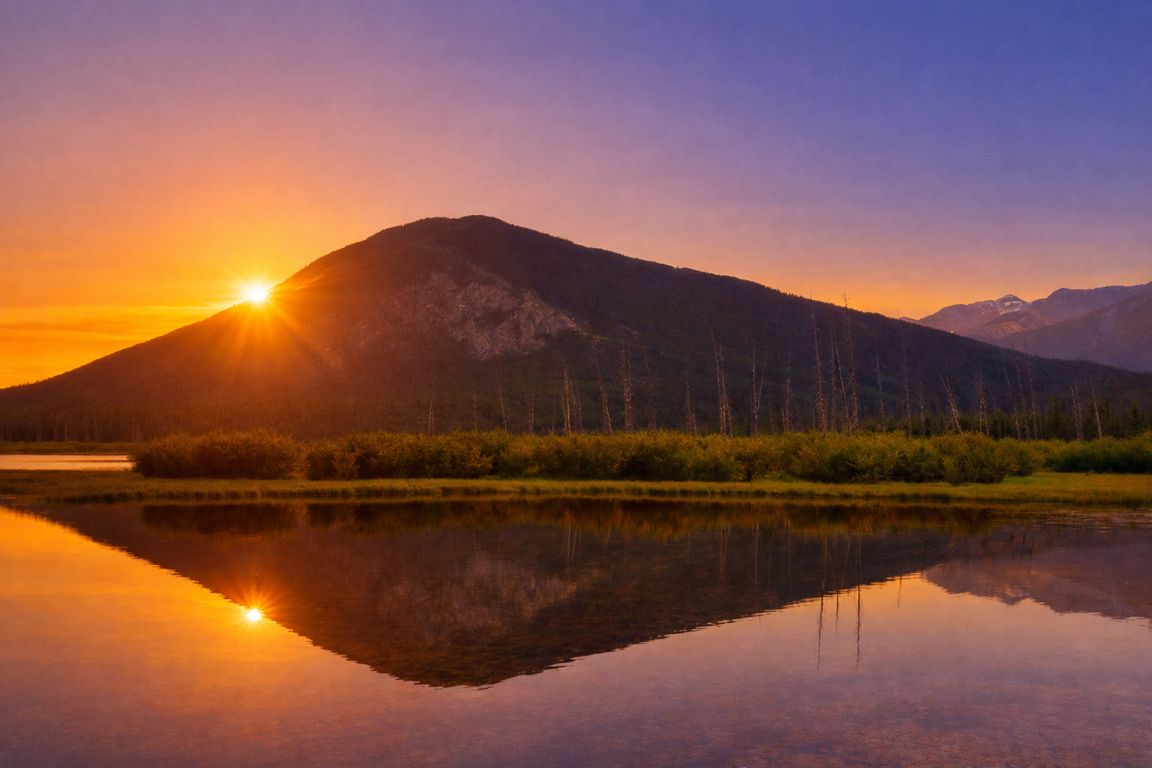 Banff is an excellent choice for senior travelers. The most iconic scenery in the park – Lake Louise, Moraine Lake, the Vermilion Lakes, Bow Valley viewpoints – is reachable by car, shuttle, or a short flat walk. The Banff Gondola, Lake Minnewanka Cruise, and Icefields Parkway are all low-exertion experiences with major payoff. The townsite has a full hospital, good restaurants, and walkable streets. Most senior visitors we guide come away saying they wish they’d come sooner.
The honest caveat is altitude. Banff sits at 1,400 metres above sea level. That’s not Cusco or even Denver, but if you’re coming from coastal BC, the Maritimes, or anywhere near sea level, you will notice it. Not as altitude sickness, most likely. More as a quiet fatigue that arrives faster than expected when you’re walking uphill. Your lungs work a little harder. Your pace slows. That’s normal, and it passes within a day or two as your body adjusts.
The other honest caveat is crowds. July and August in Banff are genuinely chaotic. Traffic, shuttle lineups, and packed viewpoints can wear down anyone, not just older travelers. September and May are different places entirely. The mountains don’t change, but the experience does.
We’ve guided travelers in their 70s and 80s who did everything on this list. We’ve also guided 65-year-olds who wanted a slower pace after a decade of hard hiking. Both experiences are valid. Banff holds both.
What Are The Best Low-Effort Activities In Banff For Seniors?
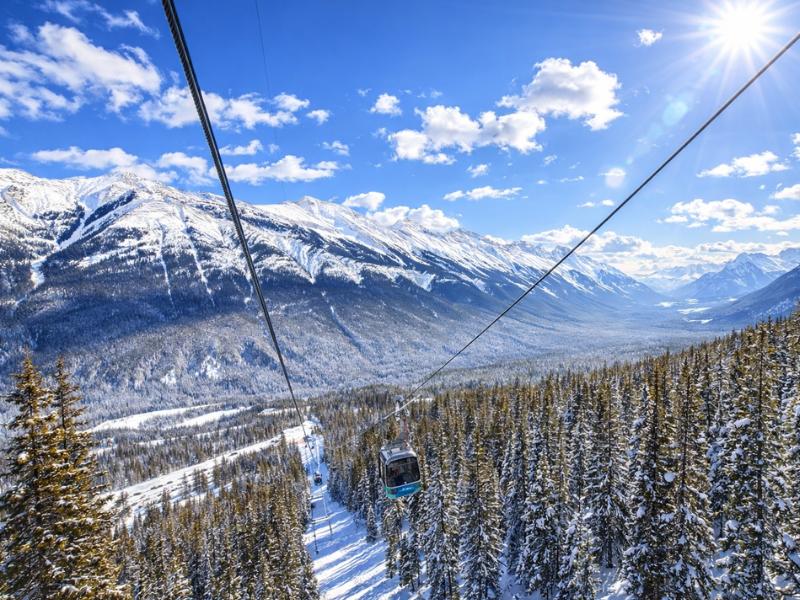
The Banff Gondola, Lake Minnewanka Cruise, the Icefields Parkway by car, afternoon tea at Fairmont Banff Springs, and a stroll along the Bow River are the top low-effort, high-reward activities for senior visitors. All require minimal walking and deliver the full visual impact of the Canadian Rockies. Most can be done regardless of fitness level.
The gondola is one of the best hours you can spend in Banff, full stop. Eight minutes in a glass cabin gets you to 2,281 metres. The upper terminal has elevators between its four levels, two restaurants, a 360-degree viewing deck, and a boardwalk section out to the historic weather observatory. The cabin doors don’t require you to step or jump. Attendants hold the car. It’s as smooth an experience as gondola riding gets.
The Lake Minnewanka Cruise is a genuine pleasure that a lot of first-time visitors skip because they’re too busy chasing the famous lakes. The boat seats 150 people, moves gently through a mountain-ringed reservoir, and the commentary is good. It opens May 8, 2026. One hour and twenty minutes. You’ll see things you won’t see from any trailhead.
The Icefields Parkway, Highway 93 North from Lake Louise to Jasper, is 230 kilometres of uninterrupted mountain scenery. You drive it. You pull off at Peyto Lake, Bow Summit, Athabasca Glacier, and as many viewpoints as you want. Peyto Lake is worth knowing: there’s a bus drop-off near the top of the viewing platform, which cuts the uphill walk significantly for those who need it. The Athabasca Glacier Snocoach rides are comfortable and specifically designed for visitors who want glacier access without hiking.
Afternoon tea at Fairmont Banff Springs is not a consolation prize for people who can’t hike. It’s a genuine Banff tradition. The Rundle Lounge views across Bow Valley are better than many viewpoints we’ve stood at on trail. Reserve ahead and ask for a window table.
A stroll along the Bow River walkway from Banff Avenue to Bow Falls takes around 20 minutes at a comfortable pace and is almost entirely flat and paved. Benches along the way. Waterfowl. The river changing colour through the afternoon. It’s one of the best free things to do in the park and almost no one talks about it in “activities” lists.
If you’d rather let our team handle the routing for a day – gondola, Minnewanka cruise, riverside time – Banff National Park Tours has been building these itineraries for over a decade. We know which days the gondola is quietest, and when the cruise fills fastest.
I’ve tested and compared the best Banff National Park tours to help you find one that matches your budget, fitness level, and what you want from the Canadian Rockies.
What Are The Best Easy Walks And Hikes For Seniors In Banff?
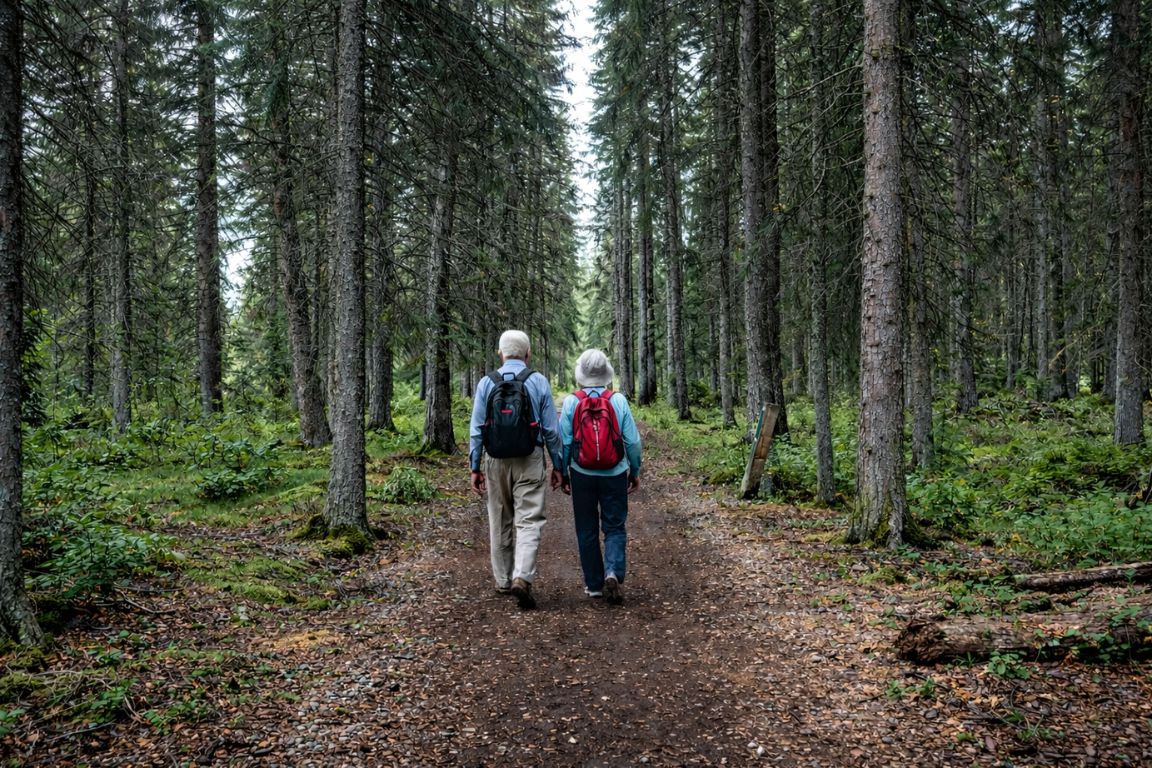 The Lake Louise Lakeshore (3.8 km round trip, almost flat), Fenland Trail (2 km loop, fully paved), Bow River Trail (paved, as far as you want to go), Johnson Lake Loop (2.4 km, gentle grades, benches), and Sundance Canyon Road (paved, gradual elevation, out-and-back on your own terms) are the five best walking options for seniors in Banff. None require a shuttle reservation. None have serious elevation gain.
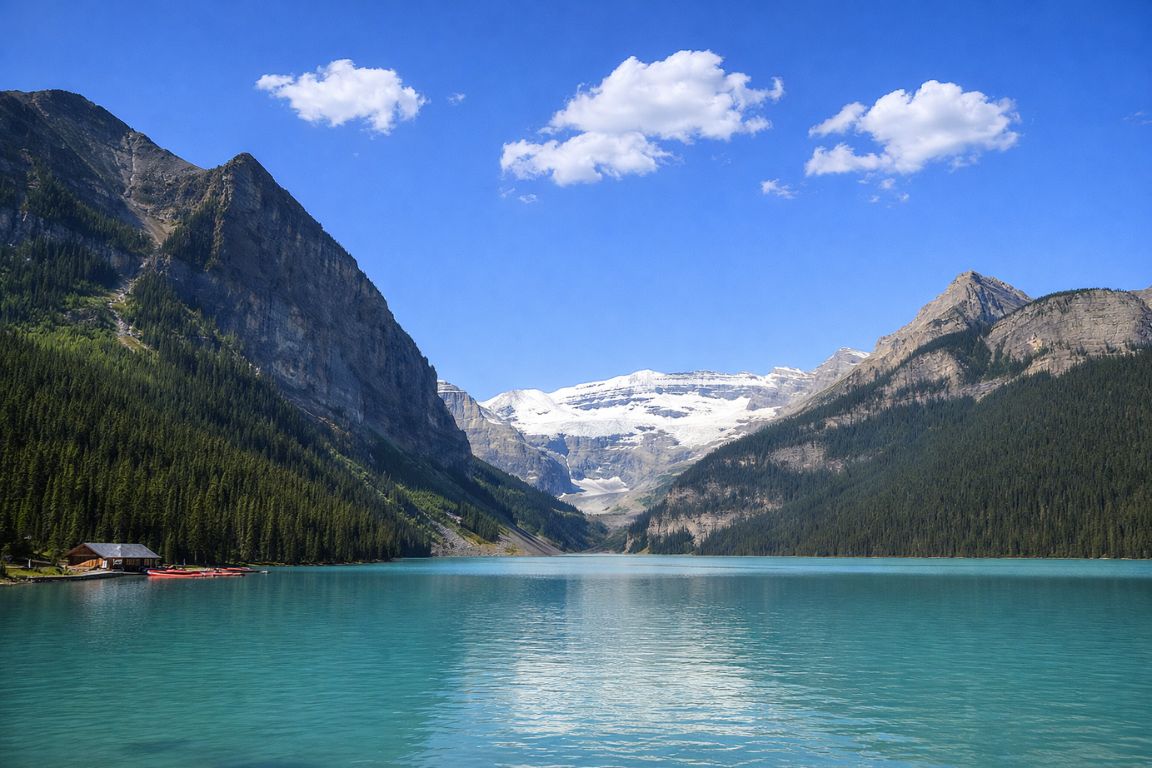
The Lake Louise Lakeshore is the walk most senior visitors end up doing whether they planned to or not. You park, you walk toward the water, and suddenly you’re on a flat paved path with one of the most photographed glacial lakes in the world on your left. The path continues 1.9 km to the far end of the lake. There’s a slight rise in the last 100 metres if you go all the way, but most people stop and turn around long before that. The view from the midway point is equal to the view from the end. Nobody is keeping score.
Fenland Trail is a 2 km loop through spruce forest behind the train station in Banff townsite. Paved surface. Flat. Birdsong. Occasional beaver ponds. It’s the trail to know about on a rest day, or when the bigger spots feel crowded.
Johnson Lake is underrated for seniors specifically. It’s a 2.4 km loop with handrails on any short uphill sections, a sandy beach, warmer water than the glacial lakes, and a picnic area. Bring a lunch. The Aquatic Invasive Species self-certification permit is required if you bring watercraft, but for walking the loop there’s nothing to book in advance.
Sundance Canyon Road, starting from Cave and Basin National Historic Site, is a paved road-turned-path that you can walk for as long or as short as you like. It follows Bow River upstream with gradual elevation gain. No hard turns, no surprise scrambles. Cave and Basin itself is worth the $5 to $10 admission, especially for the interpretive displays on the park’s origins and the thermal pool.
| Lake Louise Lakeshore | Up to 3.8 km RT | Paved/gravel | Essentially flat; park at Lake Louise Ski Resort and take free shuttle to avoid $42 parking |
| Fenland Trail | 2 km loop | Paved | Flat; near train station; wheelchair accessible |
| Bow River Trail | Your choice (4+ km one way) | Paved | Flat; multiple entry points; benches throughout |
| Johnson Lake Loop | 2.4 km loop | Gravel/dirt | Gentle grades; handrails on short uphill sections; sandy beach |
| Sundance Canyon Road | As far as you want | Paved | Gradual uphill; turn around whenever; starts at Cave and Basin |
| Vermilion Lakes Drive | Walkable or driveable | Paved road | Spectacular Mt. Rundle reflections; excellent wildlife spotting at dawn and dusk |
A note on Johnston Canyon: it comes up constantly in senior travel discussions and the answer is “it depends.” The Lower Falls section, 2.7 km round trip on metal catwalk over the canyon walls, is doable for most seniors and the payoff is extraordinary. The Upper Falls requires more time and involves some steeper sections between the two falls. If knees or stamina are a concern, go to the Lower Falls and call it there. You won’t feel like you missed anything.
Need trail recommendations? Our guide to the best hiking trails in Banff National Park tours covers everything from beginner-friendly paths to challenging all-day hikes with serious elevation gain.
How Do Seniors Get Around Banff Without Driving?
 Roam Transit is the easiest option: local routes cost $1 for seniors 65+, buses are wheelchair-accessible with fold-out ramps, and Route 1 connects the townsite to the gondola and Fairmont Banff Springs. For Lake Louise and Moraine Lake, the Roam Route 8X ($12.50 one way) and Parks Canada shuttles run regularly in summer. The Brewster Express shuttle from Calgary Airport to Banff runs year-round.
Roam Transit is a real system, not a tourist add-on. The local routes (1, 2, 4, 6) run through Banff townsite for $1 per senior ride. Route 1 hits the Banff Gondola base, the Fairmont Banff Springs, Cave and Basin, and Tunnel Mountain. That’s most of what you’d want for a Banff townsite day, all for a few dollars. Buses have fold-out ramps and low floors for anyone with mobility challenges.
For Lake Louise, Roam Route 8X runs year-round between Banff and Lake Louise at $12.50 per adult one way. A Roam Super Pass at $30/day covers all routes plus the Parks Canada Lake Connector Shuttle to Moraine Lake. If you’re doing Lake Louise and Moraine Lake in the same day, the Super Pass is better value than buying each ride separately.
The Moraine Lake shuttle detail matters here. Private vehicles are no longer permitted on Moraine Lake Road. Everyone takes the shuttle. The Parks Canada shuttle is $8/adult return. Reservations open April 15, 2026 at 8:00 am MT and popular spots fill fast. If you’re visiting in peak summer, book this the day reservations open.
Getting from Calgary Airport to Banff without driving: Brewster Express runs this route year-round, $60 to $90 per person one way. They drop off at hotels in Banff townsite. A 25% discount applies to round-trip bookings (valid through May 18, 2026). Book through their website. It’s a comfortable coach and takes about 90 minutes.
Taxis and rideshares exist in Banff townsite but availability is inconsistent, especially late evening. Most senior visitors we guide find that combining Roam Transit with one or two pre-arranged hotel shuttles covers 90% of what they want to do.
Not planning to drive? Our guide on Banff National Park tours without a car shows you how to reach Lake Louise, Moraine Lake, and the trails using Roam Transit and tour operators.
Where Should Seniors Stay In Banff?
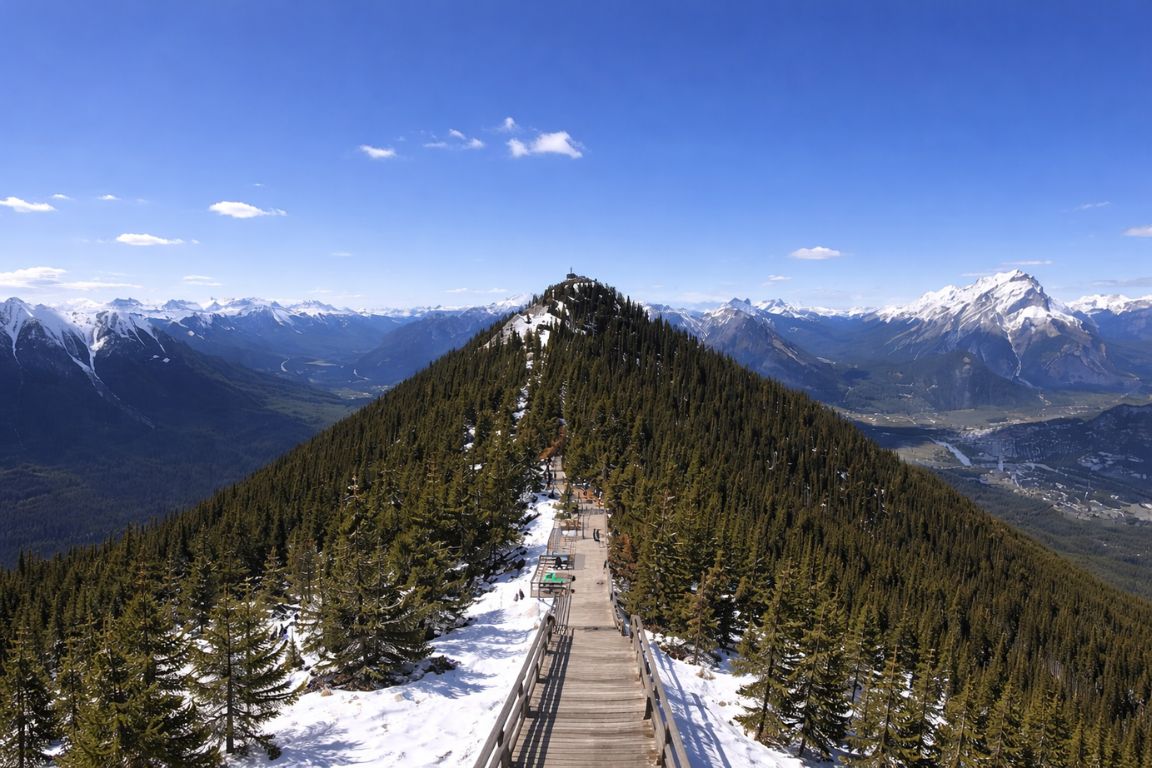 Staying in Banff townsite is the right call for most senior visitors. You’re a short walk or $1 transit ride from restaurants, the Bow River, pharmacies, and the hospital. The Fairmont Banff Springs and Rimrock Resort both offer full elevator access, accessible rooms, and are close to the gondola base. For those managing a budget, Banff Park Lodge has accessible rooms and its own parking garage with elevator access.
Staying central matters more for seniors than it does for 30-year-olds who can Uber across town at midnight. In Banff, central means the townsite. Everything useful is there. The hospital is there. The pharmacy is there. The best restaurants are there. And Roam Transit runs through it all for $1.
The Fairmont Banff Springs is the obvious flagship. Full elevator access, accessible rooms with shower seating available, excellent concierge team who know the park well, and two restaurants on-site including the Sky Bistro (reached by gondola). It’s not cheap, and rates hit $300 to $450 a night in summer. But for a special trip, the rooms overlooking Bow Valley are genuinely memorable in a way that matters at any age.
Rimrock Resort sits higher on Sulphur Mountain Road with longer mountain views. It’s accessible, well-staffed, and slightly quieter than the Fairmont. The Banff Gondola base is a short drive or shuttle away. For travelers who want a calmer atmosphere without sacrificing comfort, Rimrock is the answer.
Banff Park Lodge, in the townsite, is a more practical option. It has four accessible rooms, an elevator throughout the parking garage, and it’s walkable to Banff Avenue shops and restaurants. Rates are considerably lower than the Fairmonts. Good choice if the priority is convenience and budget management over splurge.
One thing to check when booking anywhere: confirm that the accessible room actually has the features you need. “Accessible” in Canada does not always mean the same things from one property to the next. Call ahead and ask specific questions if grab bars, roll-in showers, or ground-floor access matter to you.
What Is The Best Time Of Year For Seniors To Visit Banff?
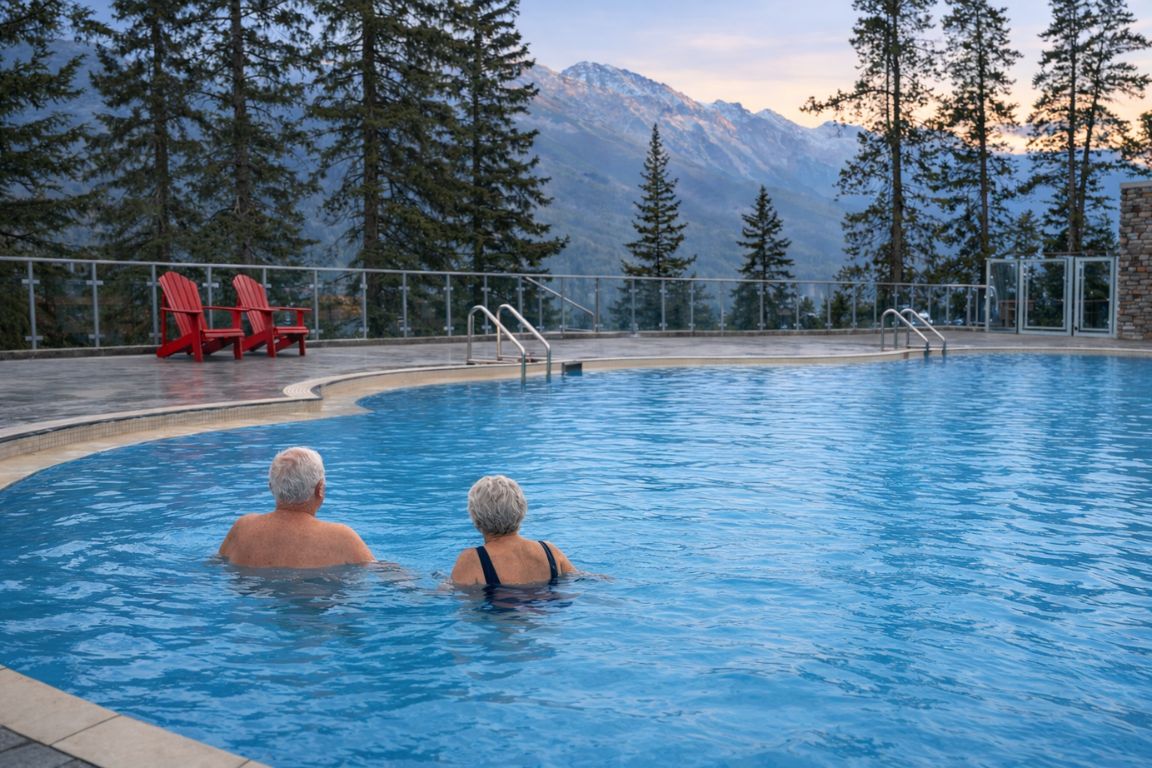 September is the best overall month for senior visitors, followed closely by May and early June. September delivers full trail access, mild temperatures, smaller crowds, and the beginning of larch season. May offers budget-friendly accommodation rates and quiet trails with spring wildlife. July and August are worth avoiding if crowds are a concern, though the Canada Strong Pass (free entry June 19 to September 7, 2026) makes summer financially attractive.
| May | 0°C to +20°C; some trails still closed; good wildflower viewing | Low | Excellent – quietest month, best prices, bears emerging |
| June | +5°C to +22°C; most trails open by mid-month; long days | Moderate and rising | Very good – Canada Strong Pass starts June 19 |
| July-August | +20°C to +25°C daytime; afternoon thunderstorms common | Peak — very busy | Fair – free entry is a plus; crowds, lineups, and heat can be tiring |
| September | +5°C to +18°C; larch season begins late month; bears in hyperphagia | Moderate and falling | Best overall – best weather, manageable crowds, larch colour |
| October | -5°C to +12°C; larch peak early month; Moraine Lake Road closes Oct 13 | Low after Thanksgiving | Good early – cold later in month; beautiful larch colour |
| Nov-April | -15°C to -25°C overnight in Jan; skiing and SnowDays Festival | Very low | Depends – excellent for non-skiers seeking quiet; ice and cold are real factors |
September’s advantage for seniors specifically comes down to two things: temperature and timing. The valley temperatures in September sit between 5 and 18 degrees. You’re not fighting heat or thunderstorm timing. The trails that were jammed in August suddenly have space. And the larch trees, those alpine conifers that turn gold before they shed their needles, hit peak colour between September 20 and October 5 most years. We’ve guided guests to Larch Valley in late September who called it the single best day of their travelling lives.
May is worth knowing about, especially for travelers who want maximum park time for minimum hassle. Hotel rates in May average $150 to $250 a night, well below summer peaks. Trails in the valley floor open in late April. The alpine routes don’t open until late June. But for senior travelers focused on Banff townsite, Lake Louise, and the Icefields Parkway, May has almost everything you need.
The season you pick completely changes your Banff trip. This breakdown of the best time to visit Banff National Park tours shows you exactly what to expect throughout the year – from summer crowds to winter magic.
What Should Seniors Pack And Plan For Before Visiting Banff?
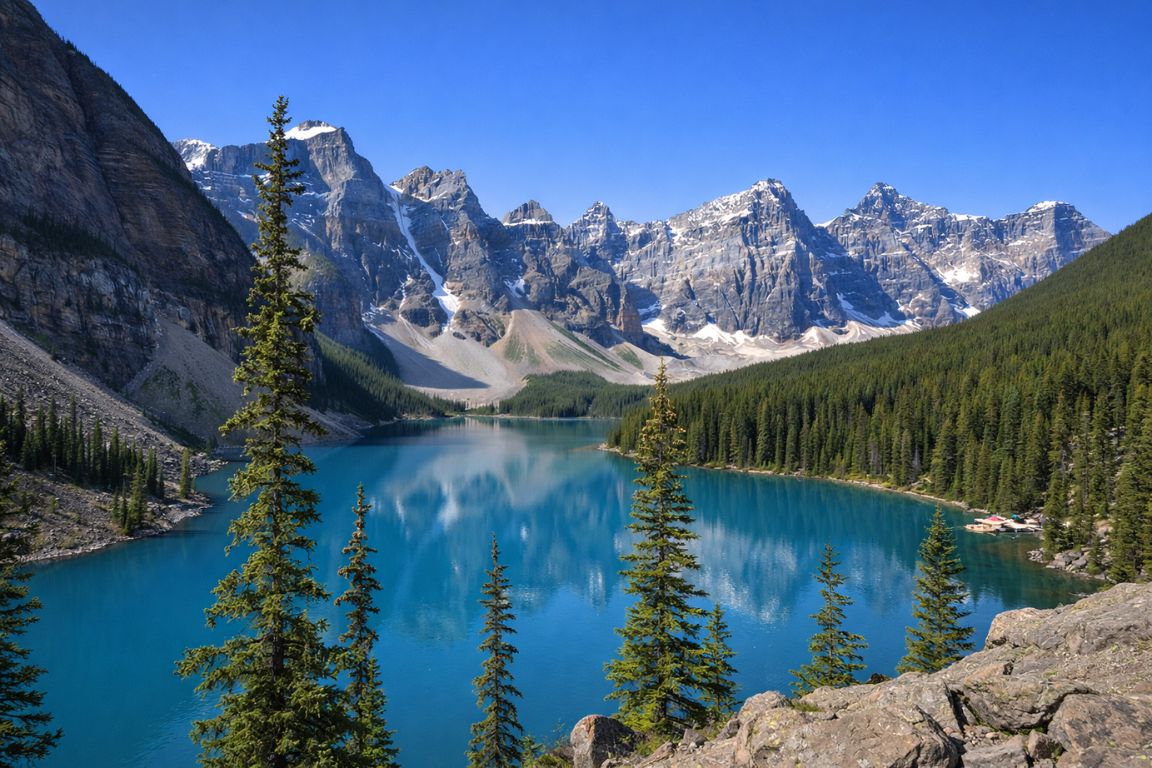 Plan for altitude, variable weather, and uneven terrain even on “easy” walks. Pack layers regardless of the season, comfortable walking shoes with grip, bear spray, medications for at least two extra days beyond your trip, and any mobility aids you rely on at home. Before you travel, a brief conversation with your doctor about altitude and physical activity at elevation is worthwhile if you have cardiovascular or respiratory conditions.
Altitude is the most underestimated factor for sea-level visitors of any age. Banff at 1,400 metres is not extreme by mountain standards. But if you’re coming from Halifax, Vancouver, or Toronto, your body will feel the difference. The effect is mostly a quiet fatigue that makes hills feel steeper than they should. It passes as you acclimatize. The standard approach: take it easy on day one. Short flat walks. Rest more than you think you need to. Don’t schedule your most ambitious activities for the first morning. By day two or three, most visitors are moving normally.
For visitors with cardiovascular conditions or respiratory issues: the Banff Gondola takes you to 2,281 metres at the top station. Some people with pulmonary problems find exertion at that altitude noticeably harder. If you have a condition that requires oxygen supplementation or that your doctor has flagged as elevation-sensitive, check with them about the gondola specifically. The rest of the park, including the townsite, Lake Louise, and even the Icefields Parkway, sits well below the threshold where altitude becomes a serious concern for most people.
Mineral Springs Hospital is in Banff townsite. It provides 24-hour emergency care. For anything beyond acute care, the nearest major hospital is in Calgary, about 90 minutes by car. Having travel health insurance that covers medical evacuation is not paranoia; it’s practical planning for any serious trip far from home.
Weather in Banff changes fast. A clear morning can turn to hail by 2 pm in July. Even for short walks, bring a waterproof layer and an extra mid-layer. The temperature at Lake Louise is consistently 3 to 5 degrees cooler than Banff townsite. Mornings at Moraine Lake in September require a proper jacket.
Bear spray is required on all trails and we mean all trails. Rent it for $10 to $15 a day or buy it for $40 to $60. The staff at the park equipment shops will show you how to carry and deploy it. Banff has around 70 grizzlies and 35 to 40 black bears. You probably won’t see one at close range, and that’s the goal. Bear spray is what keeps that outcome intact.
Want to get the planning right? This breakdown of how to plan a Banff National Park trip covers all the details most visitors only figure out after they’ve already arrived and realized they should have booked months ago.
What Are The Biggest Mistakes Seniors Make When Visiting Banff?
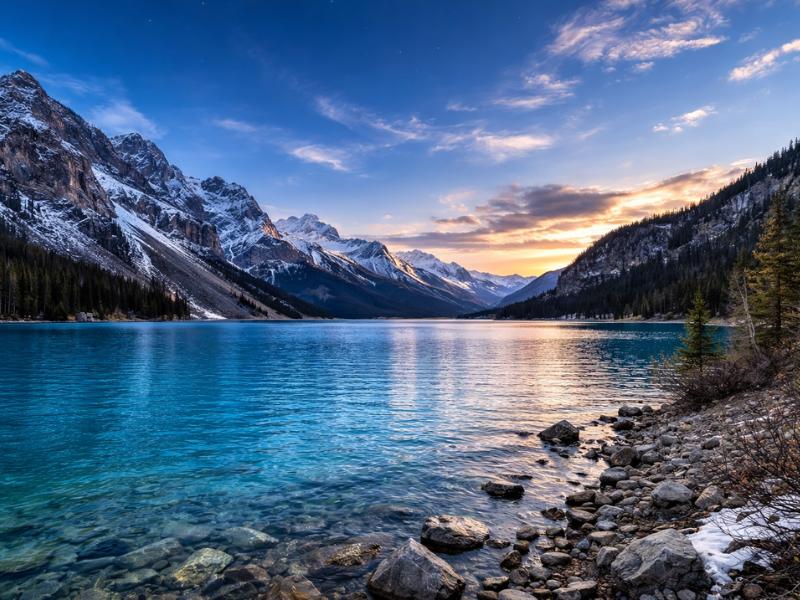
The most common mistakes are underestimating altitude on day one, booking July-August without understanding how crowded peak summer gets, scheduling too much into each day, skipping the shoulder season entirely, and not confirming accessibility features with hotels before arrival. The second-biggest mistake is assuming Banff is only for hikers. It isn’t.
We’ve guided enough groups that the patterns are clear. Here’s what actually goes wrong, and how to avoid it.
Arriving and immediately overdoing it. The altitude effect isn’t dramatic at Banff’s elevation, but stacking a long drive from Calgary with a gondola ride, a lakeshore walk, and a restaurant dinner on the same day leaves a lot of first-night senior travelers exhausted in ways they didn’t expect. Take day one slowly. You’re here to enjoy it, not to prove something.
Visiting in peak July and August without a plan. The shuttle lineups at Moraine Lake, the parking situation at Lake Louise, the gondola queue on a Wednesday in August: all of these are manageable with advance booking and early starts, but if you show up expecting an uncrowded mountain experience in July you will be disappointed. The Canada Strong Pass does make summer free-entry in 2026, which is worth something. But if you have flexibility, September is the better call.
Trying to see everything. Banff is large and the FOMO is real. But for most senior visitors, trying to see Banff, Moraine Lake, Lake Louise, the Icefields Parkway, Johnston Canyon, and the gondola in four days results in everyone being tired by day three and not fully present for any of it. Pick fewer things. Go deeper. Sitting with a coffee at the Fairmont looking at Bow Valley for an hour beats rushing through six viewpoints.
Not asking about accessibility specifics when booking accommodation. This is the one that quietly derails trips. Seniors who need grab bars in the shower, a roll-in accessible shower, or a room on the ground floor sometimes arrive to find the hotel’s “accessible room” doesn’t match their actual needs. Call. Ask specifically. It takes five minutes and prevents significant stress on arrival.
Skipping the larch season entirely. We understand why it happens. September sounds cold and uncertain. But larch season, September 20 to October 5 in a typical year, is the single most visually spectacular period in Banff. For senior travelers who can manage gentle trails and a bit of morning chill, it’s the right time. The crowds are thinner, the gold is extraordinary, and the park feels like it’s been restored to its unhurried self.
Questions before you plan? Avery and the team at Banff National Park Tours build custom itineraries for senior travelers regularly. We know the logistics, the timing, and the spots that matter most.
What Our Senior Travelers Actually Do in Banff
From our 8,600+ guided travelers, this breakdown reflects the experiences most commonly chosen by guests aged 60 and over:
| Activity | % of Senior Guests Who Did It | Satisfaction Notes |
|---|---|---|
| Banff Gondola | 94% | Consistently highest-rated single activity |
| Lake Louise Lakeshore Walk | 91% | Near-universal; most did under 2 km total |
| Icefields Parkway Drive | 78% | Many didn’t plan it and added it mid-trip |
| Lake Minnewanka Cruise | 62% | Very high satisfaction; often said they’d do it again |
| Johnston Canyon (Lower Falls) | 55% | Most stopped at Lower Falls; still called it a highlight |
| Moraine Lake by Shuttle | 49% | Those who pre-booked shuttles had significantly better experiences |
| Fairmont Afternoon Tea or Dining | 44% | Frequently cited as a trip highlight |
Frequently Asked Questions
Is Banff good for seniors with limited mobility?
Yes. Many of Banff’s best experiences are accessible with limited mobility. For wheelchair or other accessibility needs, contact the Banff Gondola operator at least 72 hours ahead to confirm arrangements for the specific visit. The Lake Louise Lakeshore, Fenland Trail, and Bow River Trail are paved or flat and suitable for wheelchairs and mobility aids. Roam Transit buses have fold-out ramps. Most major viewpoints including Vermilion Lakes, Bow Lake, and the Lake Louise area are reachable by car with accessible parking. The Banff Visitor Centre and Banff & Lake Louise Tourism can connect you with current accessibility details for specific attractions.
Do seniors get a discount on the Parks Canada Discovery Pass?
Yes. The Parks Canada Discovery Pass for seniors 65 and over is CAD $71.50 per year, compared to $83.50 for adults 18 to 64 (Verified March 2026). Daily park passes for seniors are $9.60 per day. Two seniors travelling together should buy two separate senior passes, as the Family/Group pass ($167.70) is designed for up to seven people in one vehicle and is better value for mixed-age groups. Note that from June 19 to September 7, 2026, park entry is free for everyone through the Canada Strong Pass program.
Will seniors have problems with altitude in Banff?
Most seniors do not experience altitude sickness in Banff. The townsite sits at 1,400 m (4,600 ft) and Lake Louise at 1,750 m (5,741 ft), both well below the 2,400 m threshold where altitude sickness typically begins. What many visitors do notice is a mild extra fatigue when walking uphill, especially on arrival from sea level. The standard advice: take day one slowly, stay hydrated, and plan easier activities for the first 24 to 48 hours. Seniors with cardiovascular or pulmonary conditions should consult a doctor before the trip, particularly regarding the gondola summit at 2,281 m.
What is the best month for seniors to visit Banff?
September is the best overall month for senior visitors to Banff. Temperatures are mild (5°C to 18°C), crowds are significantly lower than July and August, larch colour starts building toward month’s end, and all major attractions are open. May is the best choice for budget travellers and those who prefer very quiet trails. July and August offer free park entry through the Canada Strong Pass in 2026 but come with peak crowds, shuttle lineups, and higher accommodation prices.
Is there a hospital in Banff?
Yes. Mineral Springs Hospital is located in Banff townsite and provides 24-hour emergency care. For complex medical needs requiring specialist care, Foothills Medical Centre in Calgary is approximately 90 minutes away. Emergency dispatch for the park is 403-762-1470. Note that cell coverage is unreliable in many areas of the park outside the townsite.
Can seniors visit Moraine Lake and Lake Louise without hiking?
Yes. Both are accessible without significant hiking. Lake Louise has a flat paved lakeshore path suitable for most mobility levels. Moraine Lake requires the Parks Canada shuttle (private vehicles are no longer permitted on Moraine Lake Road), and the main viewpoint from the rockpile involves a short climb of about 20 metres. There are benches lakeside if the rockpile is too challenging. Shuttle reservations for Moraine Lake open April 15, 2026 at 8:00 am MT. The shuttle costs $8/adult return.
We’ve been building senior-friendly Banff itineraries since 2014. Private guided days, Lake Louise and Moraine Lake transport, and gondola tickets can be checked by date; confirm accessible rooms with the hotel before you arrive. Start planning with Banff National Park Tours.
Written by Avery Claire Thompson
Canadian tour guide since 2014 · Founder, Banff National Park Tours
Avery has guided over 8,600 travelers through Banff National Park and the Canadian Rockies since founding the agency.
Match The Day To Your Comfort
Compare a guided day with the independent options in this guide. Confirm your date and meeting point before booking.
Match These Options To Your Trip
Our Starting RecommendationBanff Gondola Summit Ticket
Reach Sulphur Mountain’s views without hiking the ascent.
Timed entry; ticket validity is 1 day · English
Make your own way to the Sulphur Mountain base.
Return gondola ride and summit interpretive facilities. Food, park admission and parking extra.
No strollers. Arrange accessibility requests with the operator at least 72 hours ahead. Confirm your return time.
Book The Summit Ride ↗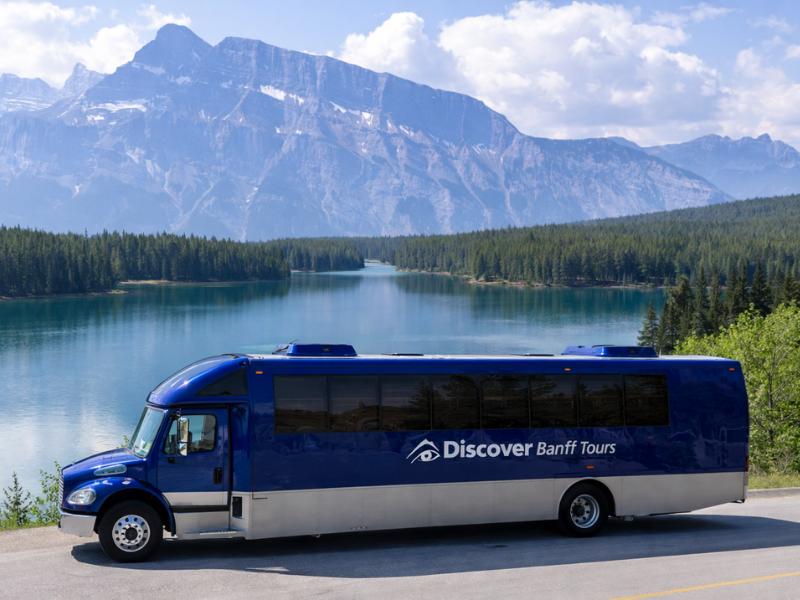 A Different Way To Spend The Day
Banff Wildlife And Viewpoints Minibus
Join Bow Falls, Surprise Corner and Lake Minnewanka in a guided morning.
3½ hours · English
Banff hotel pickup on request; otherwise the Mount Royal Hotel bus parking.
Guide, minibus, cookie and drink. Gratuities extra.
Wildlife sightings are never guaranteed. Ask about child seating and access needs before booking.
Explore Banff’s Viewpoints ↗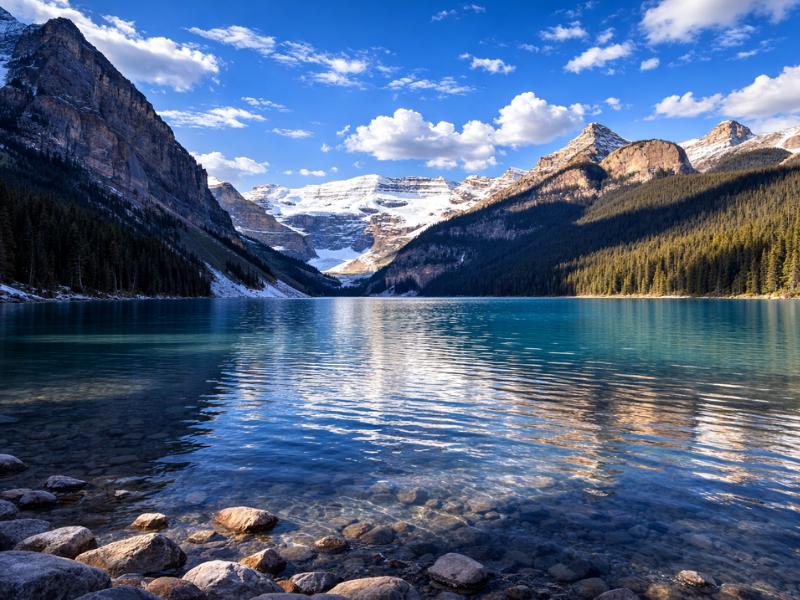 A Different Way To Spend The Day
Lake Louise And Moraine Lake Day Tour
Link the two lakes without organising separate transport.
8–10 hours · English
Pickup in Calgary, Canmore or Banff; confirm the selected meeting and end points.
Guide, transport and listed lake access. Meals and personal expenses extra.
No wheelchair access. Bring your own child seat for children under 7. Moraine Lake is seasonal.
Visit The Two Lakes ↗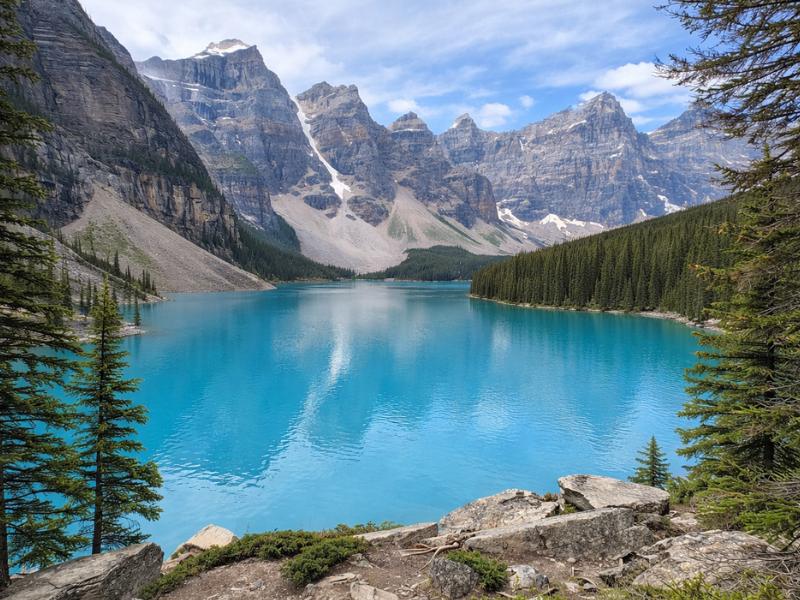 A Different Way To Spend The Day
Private Customisable Banff Day
Agree a sightseeing route around your group’s priorities.
8–11 hours · English
Request pickup or select a meeting point; returns to the meeting point.
Private vehicle, water and Parks Canada fees. Lunch and tips extra.
Moraine Lake access uses a shared shuttle. Not wheelchair accessible; moderate fitness listed. Confirm exact pickup and route.
Plan A Private Banff Day ↗No choices needed to use the recommendations above.
Work Out The Cost For Your Group
Enter complete quotes in CAD for the same people, date and itinerary. Include transport, parking, entry, food and any other extras on both sides. For shared versus private, enter the shared total first and private total second.
Use current quotes; no prices or savings are assumed.
Turn Your Plan Into A Day Out
Ask the operator about the exact access need before booking; age alone does not establish suitability.
Your Next StepBanff Gondola Summit Ticket
Reach Sulphur Mountain’s views without hiking the ascent.
Timed entry; ticket validity is 1 day · English
Make your own way to the Sulphur Mountain base.
Return gondola ride and summit interpretive facilities. Food, park admission and parking extra.
No strollers. Arrange accessibility requests with the operator at least 72 hours ahead. Confirm your return time.
Book The Summit Ride ↗Choose Your Date
Banff Gondola Summit Ticket
Open the provider’s calendar to select your date, party and departure. Availability and prices are confirmed there.
Dates On GetYourGuide
Banff Gondola Summit Ticket
Choose a date and party to see current options. Confirm the meeting point and restrictions on the listing.
More Banff Sightseeing On Viator
Browse the site’s original Viator selection of Banff day tours, wildlife outings and lake excursions. These are additional ideas, not matches to the trip form. Check dates, duration, pickup and suitability on each listing.
Open The Recommended Outing ↗