How To Plan A Banff National Park Trip
Planning Banff? Book early, allow 5-7 days, secure Moraine Lake shuttles months ahead, and consider September - the most underrated time to visit.
Book only the parts of Banff where access, routing, or guide support materially simplifies the trip. Plan the Booked Parts of Your Trip
Last updated: April 29, 2026
Your Experience Plan: Compare the lake day, a fixed-route guided hike, a short wildlife drive, and a custom private day against your dates and pace.
Banff National Park: Quick Facts
| Location | Alberta, Canada. About 1.5 hrs west of Calgary |
| Park Size | 6,641 km² (2,564 sq mi) |
| Daily Adult Pass | $12.25 CAD (Prices verified March 2026) |
| Family/Group Pass (daily) | $24.50 CAD (up to 7 people in one vehicle |
| Discovery Pass (annual) | $167.50 CAD family/group, covers all Canadian national parks |
| Youth (17 and under) | Free admission year-round |
| Moraine Lake Road | Closed to private vehicles year-round. Shuttle reservation required. |
| Canada Strong Pass | Free admission June 19 – September 7, 2026 |
| Recommended Trip Length | 5-7 days for a first visit |
| Best Booking Lead Time | 4-6 months for peak summer; 6-8 weeks for shoulder season |
Prices verified March 2026 against official Parks Canada sources.
How Far In Advance Should You Book A Banff Trip?
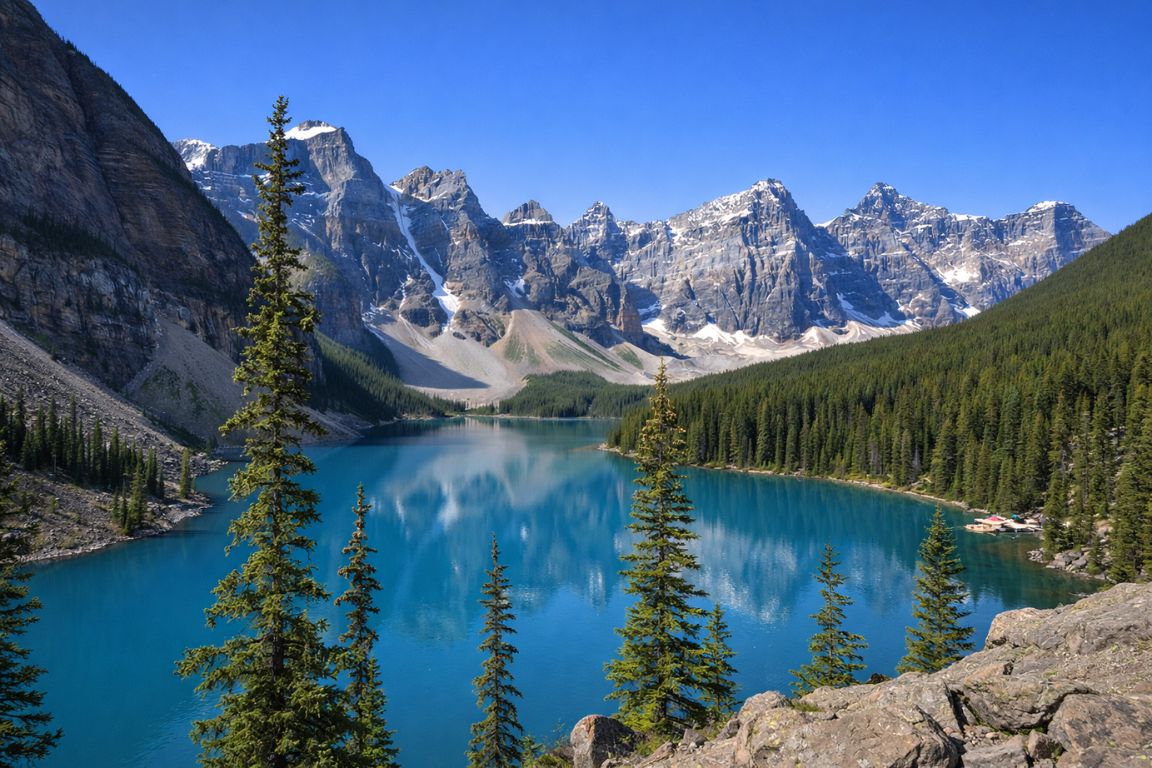 For peak summer (July-August), book accommodation four to six months out. Moraine Lake and Lake Louise shuttle reservations open in mid-April for the same year and the most popular time slots disappear within hours of release. For shoulder season in September or October, six to eight weeks is usually enough for lodging, though shuttle reservations still warrant early attention. Winter bookings for ski season need at least two to three months, especially around the holidays.
Banff rewards people who commit early. The park draws around 4 million visitors per year, and most of them want the same four things in the same four weeks of summer. What catches people off guard is not the accommodation. It’s the layered reservation system underneath it. You book the flights, book the hotel, and then discover that Moraine Lake requires a separate shuttle booking that opened in April and sold out by April 10th.
Parks Canada releases roughly 40% of Moraine Lake and Lake Louise shuttle seats when reservations open in mid-April each year, with the remaining 60% released two days before each departure date at 8 a.m. MT. The early release goes first. If Moraine Lake is a priority, you need an account set up at reservation.pc.gc.ca before opening day, not on it.
One thing that regularly trips up first-timers: campsite reservations follow the same pattern. Parks Canada’s campground booking system opens in January for the full summer season, and the most requested sites at Tunnel Mountain and Two Jack Lakeside book out fast. If you’re planning to camp, January is when that starts.
If that layer of pre-trip admin sounds like the least fun part of planning your vacation, a Lake Louise and Moraine Lake tour from Calgary, Canmore, or Banff puts both lakes on one booking.
What Is The Best Time Of Year To Visit Banff National Park?
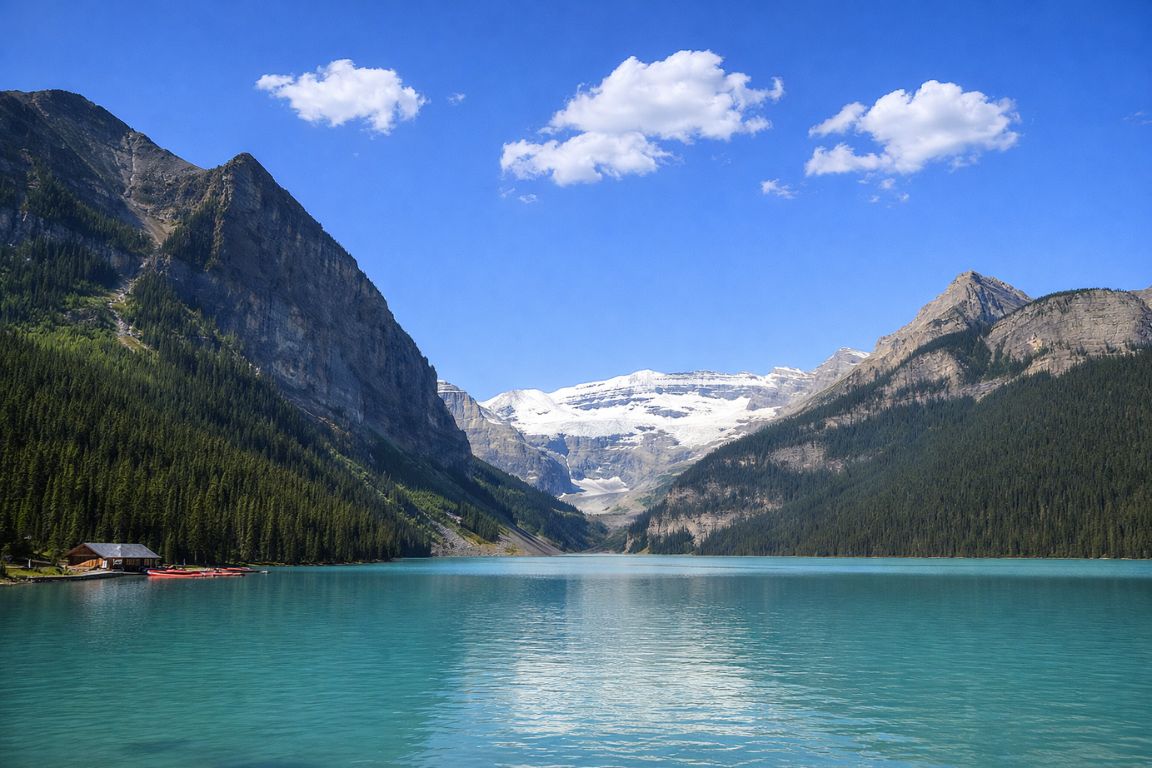 July and August offer the most open trails, the warmest temperatures, and the turquoise lakes at peak colour, but they also bring the biggest crowds and highest prices. September is the single most underrated month. Trails are clear, larch season turns the alpine gold, kids are back in school, and hotel rates start to soften. For skiing and winter scenery without peak holiday prices, late January to mid-February is the sweet spot.
There isn’t one universally right answer. The park genuinely is different across seasons, not just in weather but in what you can actually access. Here’s how we think about it:
| July-August | Full summer | Peak | Hiking, lakes, all activities open | Prices, crowds, wildfire smoke risk |
| September | Golden larch season | Moderate | Hiking, photography, value | Variable weather from mid-month |
| Oct-mid Nov | Off-season transition | Low | Budget travel, quiet trails | Some attractions closed, Moraine Lake closes mid-October |
| Dec-March | Winter wonderland | Moderate (high at holidays) | Skiing, ice walks, festive atmosphere | Cold temps, some hikes inaccessible |
| April-May | Shoulder season | Low | Late skiing, budget pricing, spring wildlife | Moraine Lake Road still closed in May, unpredictable weather |
| June | Early summer | Building | Fewer crowds than July with mostly open trails | Some alpine trails still snowpacked |
One data point worth knowing: Parks Canada records roughly 600,000 to 650,000 visitors in both July and August. September drops that by roughly a third. That’s not just a number. It’s the difference between waiting in a shuttle line and walking straight onto the bus. It’s the difference between getting a table at dinner or not.
We should also mention wildfire smoke. Western Canada’s fire season has worsened in recent years, and July and August are when smoke from BC, Alberta, and the western US states can roll in and reduce visibility for days at a stretch. In September, that risk drops significantly. It’s not guaranteed either way, but it’s worth keeping in mind when choosing dates.
Wondering when to go? Check out the best time to visit Banff National Park tours – certain months give you perfect weather while others mean dealing with massive summer crowds.
How Many Days Do You Actually Need In Banff?
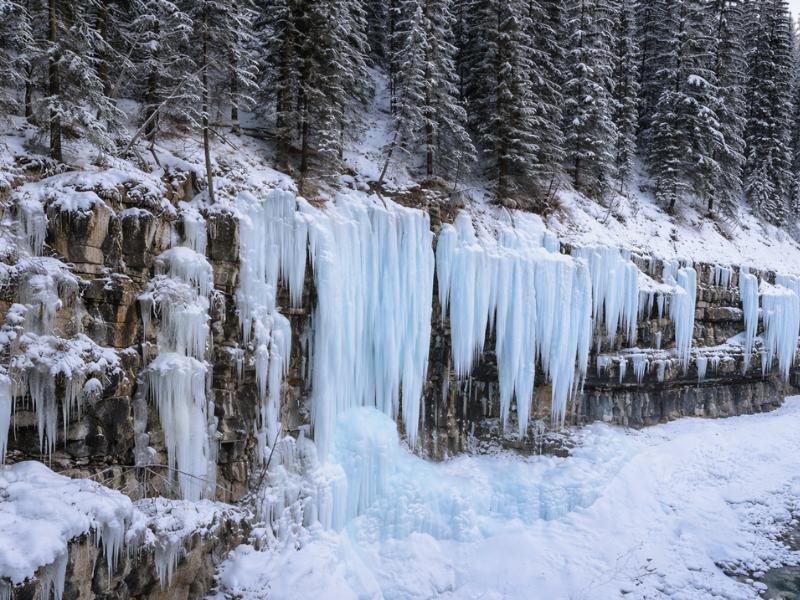
Five to seven days is the right window for a first visit that doesn’t feel rushed. Three days gives you the highlights but almost nothing with depth. Ten or more days makes sense if you’re extending into Jasper via the Icefields Parkway. Most travelers who come for a long weekend leave wishing they’d stayed longer, rarely the other way around.
Three days covers the obvious: Lake Louise, Moraine Lake, Johnston Canyon, maybe a gondola ride. You’ll see Banff. But you won’t feel it yet. The park rewards a slightly slower pace: a morning where you’re not rushing to the next shuttle, an afternoon where you follow a trail past where the day-hikers turn around.
Five to seven days lets you build in at least one full Icefields Parkway drive, a proper backcountry-adjacent hike, and a day where the plan changes because of what the weather does or what wildlife shows up on the road. That flexibility is part of what makes the trip memorable.
For families with younger kids, or anyone who wants to mix outdoor time with town time in Banff, seven days is really the sweet spot. You don’t need every minute filled. Some of the best moments in this park happen when you pull off for a viewpoint that wasn’t in the plan and end up standing in the cold staring at something you’ll talk about for years.
Wondering how long to stay? Here’s how many days you need in Banff National Park tours to hit Lake Louise, Moraine Lake, and the best hikes without feeling like you’re just ticking boxes.
What Does A Banff Trip Cost? (Passes, Accommodation, Tours)
Budget roughly $200-$350 CAD per night for accommodation in Banff townsite in peak summer; Canmore runs $100-$200 cheaper. Park passes are $12.25/day per adult or $167.50 for the annual Discovery Pass (covers all Canadian national parks for a year). A family of four spending six nights in Banff during July should budget $5,000-$8,000 CAD all-in, depending on whether they’re camping, staying in town, or splurging on the Fairmont.
The park pass math is straightforward. If your group is spending seven or more days across Parks Canada properties, and many Banff visitors also visit Jasper or Yoho on the same trip, the annual Discovery Pass pays for itself. A family/group Discovery Pass costs $167.50 CAD and covers up to seven people in one vehicle for a full year across all Canadian national parks and historic sites.
| Daily park pass (adult) | $12.25/day | Prices verified March 2026 |
| Discovery Pass (family) | $167.50/year | Covers 7 people, all national parks |
| Hotel, Banff townsite (peak) | $200-$500/night | Fairmont Lake Louise at top end |
| Hotel, Canmore (peak) | $120-$280/night | ~20 min drive to Banff East Gate |
| Campsite (unserviced) | $26.75-$34.00/night | Varies by campground and amenities |
| Parks Canada shuttle (Moraine/Louise) | Included with reservation fee ($3.50 online) | Reservation required, opens mid-April |
| Private shuttle to Moraine Lake | $39-$59/person | Commercial operators when Parks Canada is booked |
| Banff Upper Hot Springs | $19.75 adult, $64.25 family | Prices verified March 2026 |
| Guided day tour (per person) | $100-$300+ | Depends on activity and group size |
The hidden costs that surprise people: parking at Lake Louise Lakeshore runs $42 per vehicle per day during peak season. Backcountry camping fees are $15 per person per night on top of the park pass. And bear spray, which you genuinely need for many trails, runs around $50 if you’re buying rather than borrowing. Most hotels will lend it since guests can’t fly with it on departure.
We’ve detailed Banff National Park tours travel costs because this place will drain your wallet fast if you don’t understand where costs stack up – from hotels to parking to restaurant prices.
Which Areas Of Banff Should You Prioritize?
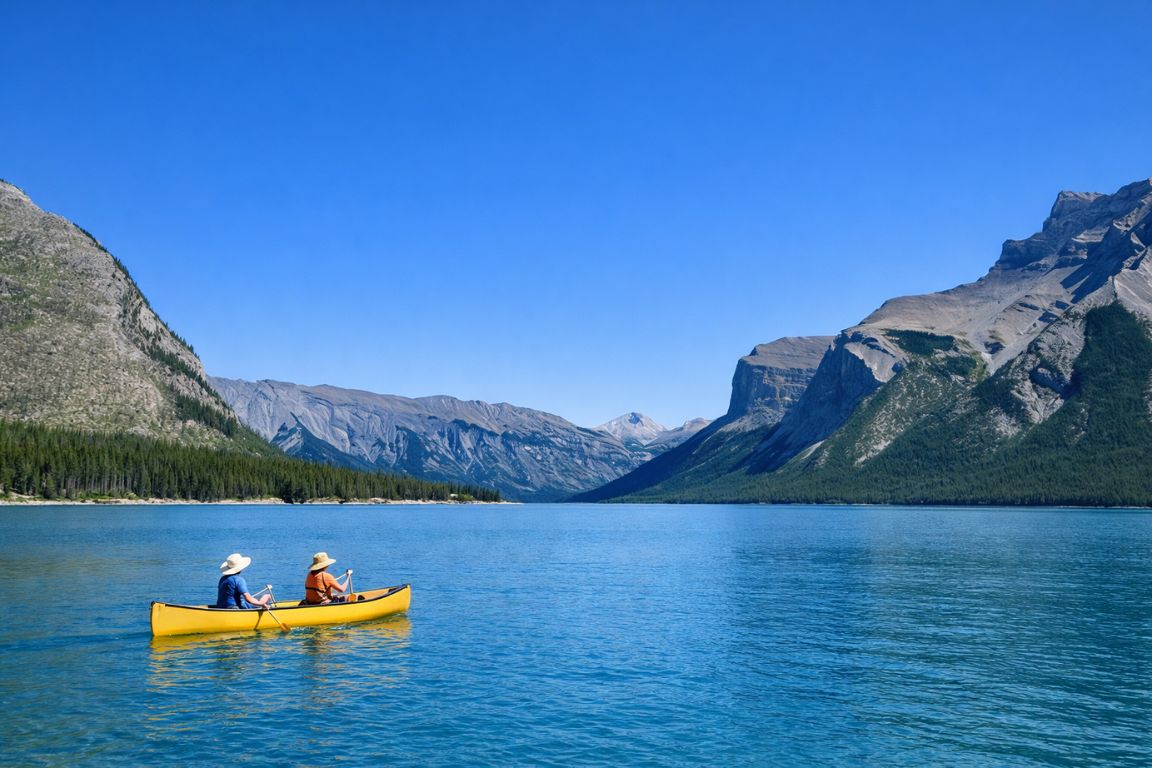 On a first visit, anchor your trip around three zones: Banff townsite and surroundings (gondola, hot springs, Lake Minnewanka, hoodoos), the Lake Louise corridor (Lake Louise, Moraine Lake, Consolation Lakes, Plain of Six Glaciers), and the Bow Valley Parkway as your scenic connector. The Icefields Parkway to Jasper deserves its own dedicated day or overnight if time allows.
The biggest mistake first-time visitors make is treating Banff and Lake Louise as interchangeable. They’re 58 km apart by highway, roughly 45 minutes, and if you’re planning a morning at Moraine Lake followed by dinner in Banff town, that’s real driving on a day that will already be full. The travelers who enjoy Banff most tend to cluster their days by zone rather than bouncing between them.
The Bow Valley Parkway (Highway 1A) is the connector that most people skip because the Trans-Canada is faster. That’s their loss. The Parkway runs parallel to Highway 1 between Banff and Lake Louise, hugs the Bow River, passes through old-growth forest, and has better wildlife sightings than almost anywhere else in the park. Elk, deer, and occasionally wolves use it. It adds maybe 20 minutes to the drive and the gap in quality is significant.
The Icefields Parkway is the stretch of Highway 93 North between Lake Louise and Jasper. It’s listed on most “world’s most scenic drives” lists for a reason. But it needs a day, a proper day, not a there-and-back sprint. The Columbia Icefield alone takes three to four hours if you’re doing the glacier walk. Build it into your trip as a dedicated day, not an afterthought.
If you want to see the main stops without spending half your trip figuring out logistics, start with the best Banff National Park tours and choose a full-day itinerary that already includes the places you care about.
Need a solid recommendation? Here are the best Banff National Park tours that consistently get it right – from small group hikes to comprehensive day trips.
What Permits And Reservations Do You Need Before You Arrive?
The essentials before arrival: (1) park pass: buy online before you arrive to skip gate queues; (2) Moraine Lake or Lake Louise shuttle: book as soon as reservations open in mid-April; (3) campsite: January for peak summer sites; (4) backcountry permit if applicable ($15/person/night). A fishing permit costs $15/day or $51.25/year if that’s on your list. Nothing else is legally required, but not having reservations for the lakes in July is the most common source of day-ruining disappointment.
Note for summer 2026 specifically: Parks Canada’s Canada Strong Pass means free admission from June 19 to September 7, 2026. No entry pass is required during that window. This is a rare opportunity. A full summer at Banff with no gate fee. But it doesn’t exempt you from shuttle reservations, campsite bookings, or backcountry permits. Those remain in full force.
One thing worth knowing about shuttle reservations: 40% of seats for the entire Moraine Lake season drop when reservations first open (mid-April). The remaining 60% release two days before each date at 8 a.m. MT. The two-day release is your safety valve if you miss opening day. But on peak dates in July, those seats go fast. Set a calendar reminder. Create your Parks Canada account beforehand. Have your credit card ready. This is not an exaggeration.
For the backcountry, Parks Canada’s reservation system (reservation.pc.gc.ca) handles trail permits. The most popular backcountry routes fill quickly once booking opens, so if wilderness camping is part of your plan, check the specific opening dates for the trails you want.
If you’re trying to see this iconic lake, here’s our Moraine Lake travel guide so you know exactly how to navigate the new shuttle-only access and road closures.
What Do Most First-Time Visitors Get Wrong About Banff?
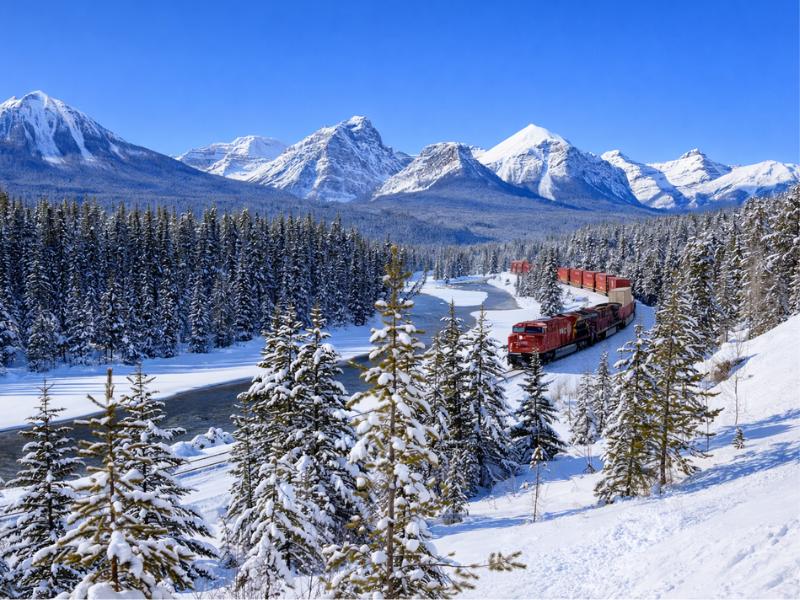
The most consistent mistake we see: arriving without shuttle reservations and assuming Moraine Lake is accessible by car. It isn’t. The road has been permanently closed to private vehicles. The second most common: underestimating distances. Banff town, Lake Louise, and the Icefields Parkway are not a short loop. They cover significant ground and every “quick detour” adds 45 minutes to an hour. Pack your days less full than you think you need to.
Over 8,600 travelers guided, and certain patterns show up without fail. Here’s what actually trips people up:
The shuttle trap. Every summer, people arrive at the Lake Louise Park and Ride expecting to walk up and get on a bus. Before 2020 they could. Now walk-up seats don’t exist on Parks Canada shuttles. You need a reservation, full stop. Private operators like Moraine Lake Bus Company do offer some flexibility, but at peak times their seats are also limited. The answer is to reserve through Parks Canada as soon as April opens.
Dressing for the photos, not the mountains. The lakes photograph brilliantly in summer gear. But at 1,731 meters elevation (Lake Louise sits at 1,731m), morning temperatures regularly hover near freezing even in July. The wind off the glaciers cuts through a light jacket. More than a few of our travelers have bought emergency fleeces at the Banff Ave shops. Layers aren’t optional. They’re how you stay long enough to actually see the place.
Ignoring cell service limitations. Once you leave the townsite or the main highway, cell service drops. Download your trail maps offline before you go. AllTrails Pro lets you cache any trail. Google Maps offline downloads work for roads but not for the details you need mid-hike. If your plan depends on looking things up on the fly, it will fail somewhere between Johnston Canyon and Lake Louise.
The Canmore parking arbitrage fail. Staying in Canmore to save money is genuinely smart. But you still need a park pass for every day you drive into Banff National Park, including days when you’re just passing through for lunch. A lot of people miss this and get caught at the gate. The park boundary starts well before the townsite.
If you’re heading to Banff’s most famous lake, here’s our complete Lake Louise guide so you know exactly what to expect and how to navigate the chaos.
Should You Hire A Guide Or Explore Banff On Your Own?
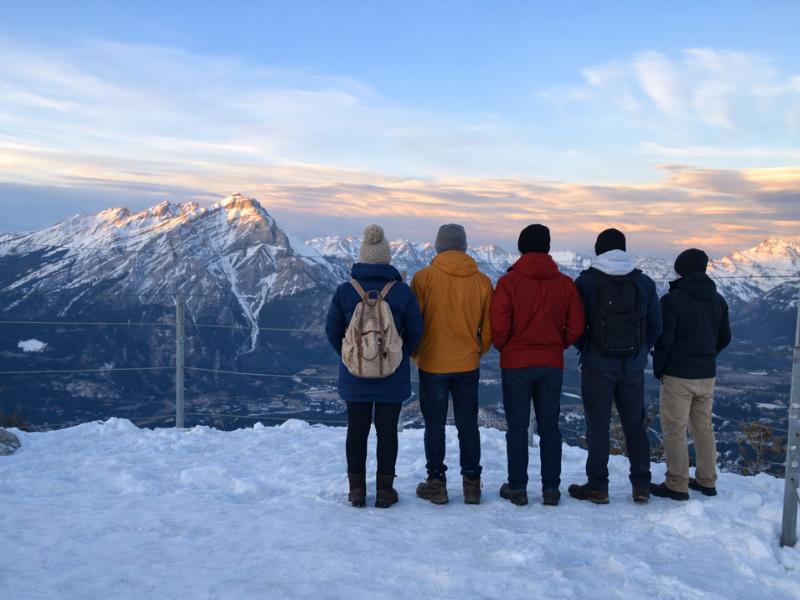
Self-guided works well in Banff if you’re comfortable with logistics, physical preparation, and moving through the shuttle and permit systems independently. Guided tours add the most value for: first-time visitors who want to see more in less time, anyone tackling higher-elevation terrain without mountain experience, families with kids, and travelers who want wildlife context they couldn’t get from a trail app. The park is safe and well-signed. What you lose going solo is depth, not safety.
The honest version: Banff is one of the more accessible national parks in the world. Trails are well-marked, signage is clear, and the shuttle systems are designed for independent travelers. You don’t need a guide to have a great trip.
But there’s a gap between “having a great trip” and “understanding what you’re looking at.” When you’re standing at the Plain of Six Glaciers with a guide who can name which glaciers are retreating, point out the exact line of the 1850 ice margin, and explain why the rock debris forms the patterns it does, you’re not just seeing it. You’re actually in it.
Wildlife is the other factor. Guides know where the bears have been grazing that week, where the bighorn sheep move in the morning, where the elk congregate during rut. They’re in radio contact with other operators and park staff. That’s not information you find on AllTrails.
For solo travelers and couples on their second or third Banff trip, self-guided is often the better call. For families, first-timers, or anyone with specific interests in alpine geology, wildlife, photography, a guided day is often the best investment in the whole trip.
How Do You Get Around Banff Without A Car?
 Banff is more car-free friendly than most people expect, but it requires planning. Roam Transit runs bus routes between Banff town, Canmore, and Lake Louise year-round. The Parks Canada shuttle covers Moraine Lake and Lake Louise from late May to mid-October with advance reservations. Getting to more remote spots, including the Icefields Parkway, Bow Valley Parkway viewpoints, Kananaskis, genuinely requires either a car or a guided tour departure from town.
Roam Transit’s Route 8X is the key service: it runs daily from downtown Banff to Lake Louise Lakeshore, year-round, with reservations available and recommended for peak season. An adult one-way fare is $12.50. The Roam Super Pass at $30 gets you unlimited rides plus access to the Parks Canada Lake Connector shuttle between Lake Louise and Moraine Lake, making it the cleanest car-free option for seeing both iconic lakes in one day.
If you’re flying in from Calgary, Brewster Express runs direct transfers from Calgary International Airport to Banff town. Several private shuttle operators also make the run. Once you’re in Banff town, the core attractions, Bow Falls, Vermilion Lakes, Cave and Basin, Tunnel Mountain trails, are walkable or bikeable. E-bike rentals are available in town, and the Bow Valley Parkway is one of the better cycling routes in the region, particularly outside of peak summer driving season when Parks Canada opens portions to cyclists exclusively.
The honest limitation: if the Icefields Parkway is on your list, a car or guided tour is really the only practical option. The stops along that highway, Bow Lake, Peyto Lake, the Columbia Icefield, are spaced out over 230 km and not served by public transit. Tour operators run departures from Banff that cover the Parkway in a day, which is actually the most efficient way to see it anyway.
Don’t have a car? I’ve broken down Banff National Park tours without a car so you know exactly how to get around using shuttles, public transit, and tour buses.
What Should You Pack For A Banff National Park Trip?
The core packing principle for Banff: dress for the mountain, not the calendar. Even in mid-July, morning temperatures at Lake Louise can sit near 2-4°C. Afternoons can reach 20°C or above. That 15-degree swing happens in a single day. Layers are the system. Beyond clothing, the non-negotiables are bear spray (required for many backcountry trails and strongly recommended for front-country hikes), proper hiking footwear, and downloaded offline maps since cell service disappears quickly once you leave main roads.
Here’s what we see people wishing they’d brought, based on our travelers consistently over the years:
| Waterproof hiking boots | Rocky, uneven terrain; sudden rain | Sneakers are fine in town, not on trails |
| Insulated mid-layer (down or fleece) | Morning cold at elevation even in summer | Packable down is ideal |
| Waterproof shell jacket | Afternoon thunderstorms are common July-August | Lightweight, packable |
| Bear spray | Bears are active and present throughout the park | ~$50 to buy; most hotels will lend if you ask |
| Trekking poles | Steep descents, rocky scree, uneven terrain | Worth it for anyone doing longer hikes |
| Sunscreen + sunglasses | UV intensity at altitude is stronger than expected | Even on cloudy days |
| Reusable water bottle | Hydration at altitude; limited refill points on trails | Minimum 1 litre per person per half-day |
| Offline maps (AllTrails Pro or downloaded Google Maps) | Cell service disappears fast outside of town | Download before you leave the hotel |
| External battery/power bank | Heavy map and photo use drains phones fast | No charging on trails |
| Printed shuttle confirmations | Cell signal at Park and Ride is unreliable | Screenshot plus print, not just the email |
A word on bear spray specifically: this is not precautionary theater. Grizzly and black bears are active throughout the park. The Lake Louise gondola runs over prime grizzly foraging territory. Trails like Bow Summit and Sentinel Pass move through bear habitat. Most encounters are non-threatening, but carry the spray, know how to use it, and keep it accessible, not buried in your pack.
What Our Travelers Tell Us: Insights From 8,600+ Guided Visitors
| % who said they wished they’d booked more days | 71% |
| % who missed Moraine Lake due to no shuttle reservation | 23% |
| Most common “wish I’d known” item | Shuttle reservation system for Moraine Lake |
| % who ranked September as their preferred month after visiting multiple seasons | 58% |
| Average trip length (guided groups) | 5.8 days |
| Top packing regret | Inadequate footwear (39%) / Insufficient layering (31%) |
Frequently Asked Questions
How much does it cost to enter Banff National Park in 2026?
A daily park pass costs $12.25 for adults, $10.75 for seniors, and $24.50 for a family or group of up to seven people in one vehicle. Youth 17 and under are free year-round. The annual Discovery Pass is $167.50 for families and covers all Parks Canada national parks and historic sites for one year. Note that from June 19 to September 7, 2026, admission is free under the Canada Strong Pass initiative. All prices verified March 2026.
Can you drive to Moraine Lake?
No. Moraine Lake Road has been permanently closed to private vehicles. The only ways to access Moraine Lake are the Parks Canada shuttle (reservation required, opens mid-April), Roam Transit Super Pass with the Lake Connector shuttle, licensed commercial shuttle operators, or guided tours. Exceptions apply only for visitors with valid government-issued accessible parking placards.
When should I book accommodation for a summer Banff trip?
For July and August, four to six months in advance is the standard recommendation. The most popular hotels in Banff town and at Lake Louise sell out well before that, particularly the Fairmont properties and any lodging along the Bow Valley Parkway. Canmore offers more availability and lower prices, but requires daily driving into the park.
Do you need a park pass if you’re just driving through Banff?
It depends. If you’re travelling through on the Trans-Canada Highway (Highway 1) and not stopping, you can use the through lane at the Banff East Gate without a pass. But if you’re stopping at any point inside the park boundary, including the townsite, viewpoints, picnic areas, or the Icefields Parkway, you need a valid pass. The Bow Valley Parkway and Icefields Parkway are specifically listed as parkways requiring a pass even in transit.
Is Banff doable without a car?
Yes, more than most people expect. Roam Transit’s Route 8X runs daily between Banff and Lake Louise. Parks Canada shuttles cover Moraine Lake and Lake Louise from late May to mid-October with advance reservations. The townsite itself is walkable. The limits: Icefields Parkway stops and remote day hike trailheads are best accessed by car or guided tour departure.
What’s the best hike for first-time visitors to Banff?
Johnston Canyon is the most accessible introduction, paved walkways through a dramatic slot canyon, two waterfall payoffs within 5.4 km round trip. If you want elevation and turquoise water, Consolation Lakes (3 km round trip from Moraine Lake) is straightforward and spectacular. For something more demanding, the Sulphur Mountain trail (6.8 km round trip, 655m gain) is one of the best full-day hikes in the park, with the option to ride the gondola back down.
Banff rewards people who plan. The park itself is generous, enormous, accessible, genuinely one of the most beautiful places on earth. The logistics just require getting ahead of them. If you would rather spend that time thinking about what you want to experience instead of when shuttle bookings open, compare current departures on the best Banff National Park tours list.
Written by Avery Claire Thompson
Canadian tour guide since 2014 · Founder, Banff National Park Tours
Avery has guided over 8,600 travelers through Banff National Park and the Canadian Rockies since founding the agency.
Plan The Booked Parts Of Your Trip
Compare a guided day with the independent options in this guide. Confirm your date and meeting point before booking.
Match These Options To Your Trip
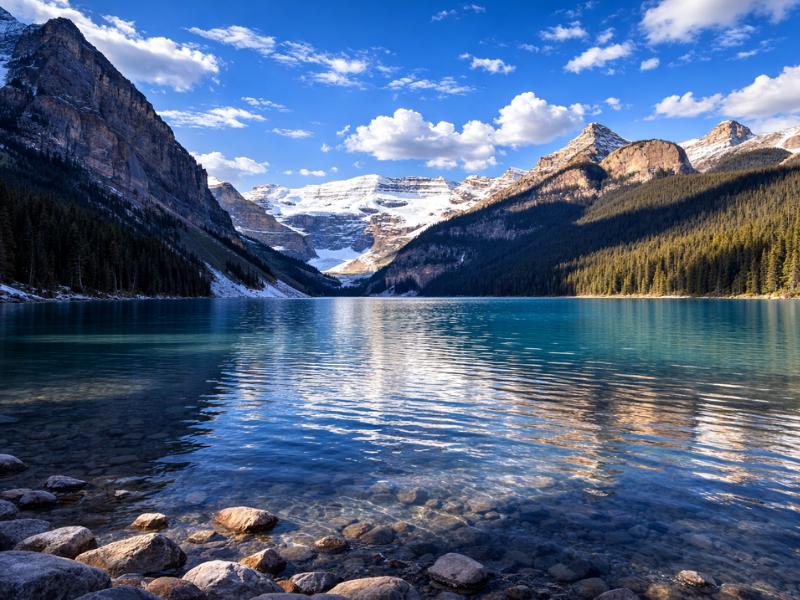 Our Starting Recommendation
Lake Louise And Moraine Lake Day Tour
Link the two lakes without organising separate transport.
8–10 hours · English
Pickup in Calgary, Canmore or Banff; confirm the selected meeting and end points.
Guide, transport and listed lake access. Meals and personal expenses extra.
No wheelchair access. Bring your own child seat for children under 7. Moraine Lake is seasonal.
Visit The Two Lakes ↗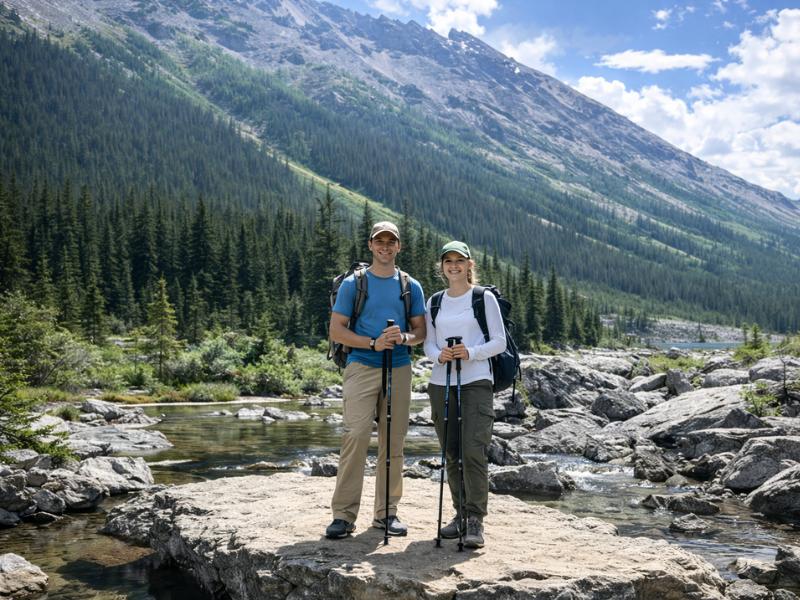 A Different Way To Spend The Day
Guided Signature Hike With Lunch
Spend the day on a named mountain trail with a guide, transport and lunch.
7 hours · English
Banff hotel pickup or the listed Mount Royal Hotel meeting point.
Certified guide, picnic lunch, hiking poles and transport. Teahouse purchases extra.
Ages 13+. Route depends on weekday and conditions. The Larch Valley route does not reach the top of Sentinel Pass.
Choose A Guided Hike ↗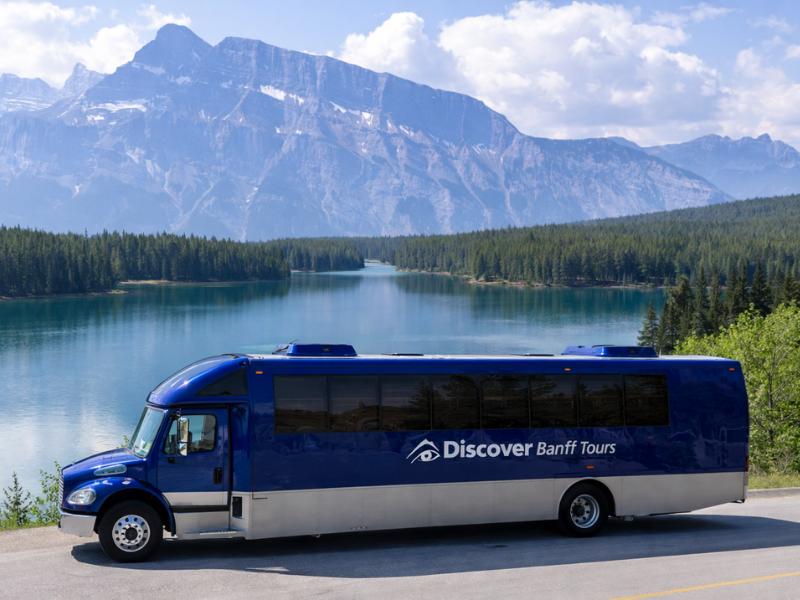 A Different Way To Spend The Day
Banff Wildlife And Viewpoints Minibus
Join Bow Falls, Surprise Corner and Lake Minnewanka in a guided morning.
3½ hours · English
Banff hotel pickup on request; otherwise the Mount Royal Hotel bus parking.
Guide, minibus, cookie and drink. Gratuities extra.
Wildlife sightings are never guaranteed. Ask about child seating and access needs before booking.
Explore Banff’s Viewpoints ↗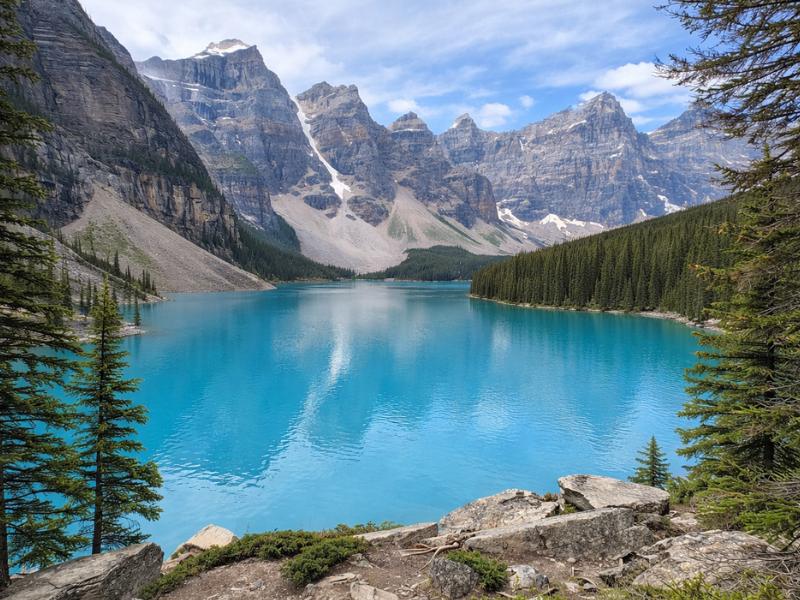 A Different Way To Spend The Day
Private Customisable Banff Day
Agree a sightseeing route around your group’s priorities.
8–11 hours · English
Request pickup or select a meeting point; returns to the meeting point.
Private vehicle, water and Parks Canada fees. Lunch and tips extra.
Moraine Lake access uses a shared shuttle. Not wheelchair accessible; moderate fitness listed. Confirm exact pickup and route.
Plan A Private Banff Day ↗No choices needed to use the recommendations above.
Work Out The Cost For Your Group
Enter complete quotes in CAD for the same people, date and itinerary. Include transport, parking, entry, food and any other extras on both sides. For shared versus private, enter the shared total first and private total second.
Use current quotes; no prices or savings are assumed.
Turn Your Plan Into A Day Out
Confirm dates, pickup details, ages, and extras for the chosen product before locking the rest of your itinerary.
Your Next StepLake Louise And Moraine Lake Day Tour
Link the two lakes without organising separate transport.
8–10 hours · English
Pickup in Calgary, Canmore or Banff; confirm the selected meeting and end points.
Guide, transport and listed lake access. Meals and personal expenses extra.
No wheelchair access. Bring your own child seat for children under 7. Moraine Lake is seasonal.
Visit The Two Lakes ↗Choose Your Date
Lake Louise And Moraine Lake Day Tour
Open the provider’s calendar to select your date, party and departure. Availability and prices are confirmed there.
Dates On GetYourGuide
Guided Signature Hike With Lunch
Choose a date and party to see current options. Confirm the meeting point and restrictions on the listing.
More Banff Sightseeing On Viator
Browse the site’s original Viator selection of Banff day tours, wildlife outings and lake excursions. These are additional ideas, not matches to the trip form. Check dates, duration, pickup and suitability on each listing.
Open The Recommended Outing ↗