Moraine Lake Travel Guide
Moraine Lake is Banff’s most photographed lake - but cars are banned. You must book a shuttle or tour to reach it. Here’s how to plan your visit.
Because private vehicles cannot use Moraine Lake Road, the shared lakes day is a genuine access solution; independent Parks Canada shuttle planning remains the clear DIY route. Choose Your Moraine Lake Access
Last updated: May 20, 2026
Your Experience Plan: Book licensed transport for a combined lakes day, or reserve Parks Canada shuttle access and keep the visit independent.
Quick Facts: Moraine Lake 2026
| Location | Valley of the Ten Peaks, Banff National Park, Alberta |
| Elevation | 1,884 m (6,181 ft) |
| Road Open | June 1 – October 12, 2026 (weather permitting) |
| Private Vehicles | Banned. Shuttle or licensed commercial operator required. |
| Parks Canada Shuttle Cost | $8 CAD adult, $4 CAD senior (65+), free under 18 (Prices verified March 2026) |
| Shuttle Reservation Launch | April 15, 2026 at 8:00 am MDT (Parks Canada) |
| Shuttle Hours | 6:30 am – 6:00 pm every 30 min; last return 7:30 pm |
| Alpine Start Shuttle | 4:00 am & 5:00 am departures from Lake Louise Lakeshore |
| Park Entry Fee | $11.25 CAD/adult day pass; FREE June 19 – Sept 7, 2026 (Canada Strong Pass) |
| Cell Service at Lake | None. Reception resumes ~5 km down Moraine Lake Road |
| Facilities | Pit toilets only. No running water, no Wi-Fi at the lake. |
| Accessible Access | Valid government-issued disabled parking placard = vehicle access permitted |
Prices verified March 2026
What Is Moraine Lake And Why Do Travelers Rate It Above Lake Louise?
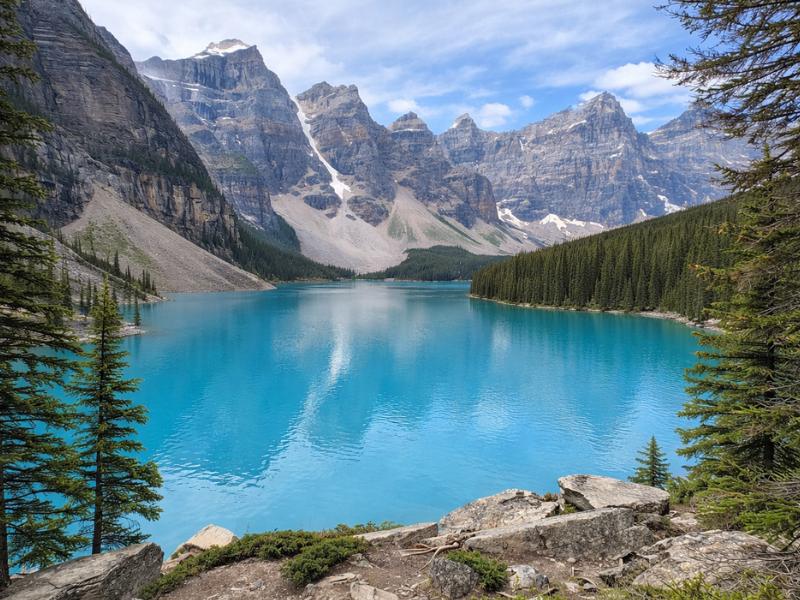
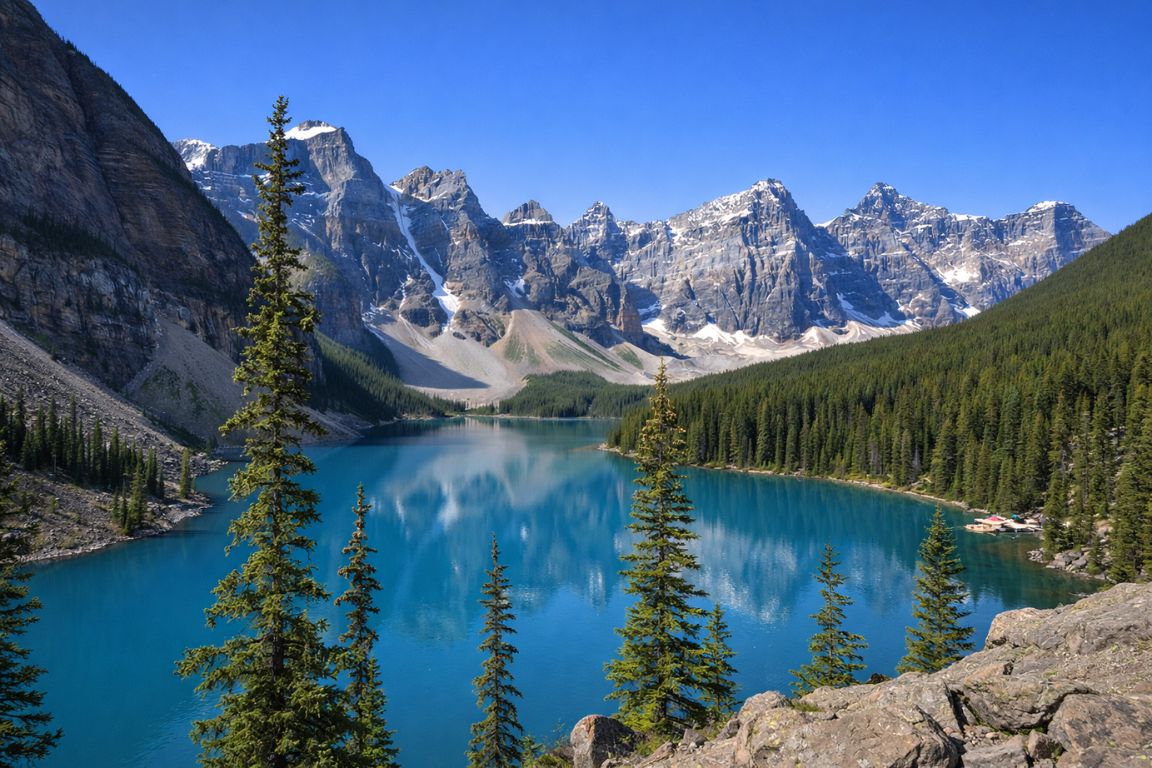 Moraine Lake sits at 1,884 metres in the Valley of the Ten Peaks, about 14 kilometres from Lake Louise. Its water runs an almost unnatural electric blue, produced by glacial rock flour suspended in the water that catches sunlight at specific wavelengths. Most travelers who visit both lakes rate Moraine’s colour more vivid and its mountain backdrop more dramatic. It appeared on Canada’s $20 bill between 1969 and 1979 – Canadians sometimes call it “the twenty-dollar view.”
The question comes up every season: which lake? After guiding over 8,600 travelers through both, we’ve heard the comparison made at the water’s edge more times than we can count. The honest answer is that they’re different experiences. But Moraine wins on one thing consistently: impact. People go quiet when they first see it. Not the polite quiet of someone trying to think of something to say. The involuntary quiet of someone whose brain briefly short-circuits.
Lake Louise has the Fairmont. It has infrastructure. It has everything you’d expect from a landmark that’s been famous for over a century. Moraine Lake has the ten peaks stacked behind it like a wall at the end of the world, no resort blocking the view, and a blue so saturated it looks like someone forgot to turn the saturation down. Multiple travelers have told us that Moraine Lake made Lake Louise feel, in their words, like a consolation prize. That’s not entirely fair to Lake Louise – but it tells you something about what Moraine does to people.
The color is at its peak vibrancy from late June through early September, when glacial melt is highest and the rock flour concentration in the water is greatest. Early June can still have ice blocks on the shore. By late September, the color shifts slightly but the larch trees turn gold, and many experienced hikers quietly prefer the lake in fall.
| Water Color | Deeper electric blue; shifts to emerald in certain light | Milky turquoise; more consistent throughout day |
| Setting | Intimate valley; ten peaks rising steeply on three sides | Grand open valley; Fairmont Chateau on the shoreline |
| Development | Minimal. Small lodge, pit toilets, canoe dock. | Full resort. Dining, hotel, canoes, year-round access. |
| Access | Shuttle only, June – mid-October | Shuttle or car (with early arrival), year-round |
| Best For | Photographers, serious hikers, larch season visitors | Families, winter visitors, luxury travelers |
| Can You Visit Both? | Yes. Parks Canada’s Lake Connector shuttle links both lakes. One shuttle ticket covers both. |
Our advice to every traveler: visit both in a single day through Lake Louise and Moraine Lake day tour. The guided day visits Lake Louise and Moraine Lake; confirm the operator’s exact transport sequence and inclusions for your date. The day tour runs 8–10 hours and visits both lakes; confirm the selected meeting point, endpoint and stop order.
How Do You Actually Get To Moraine Lake In 2026?
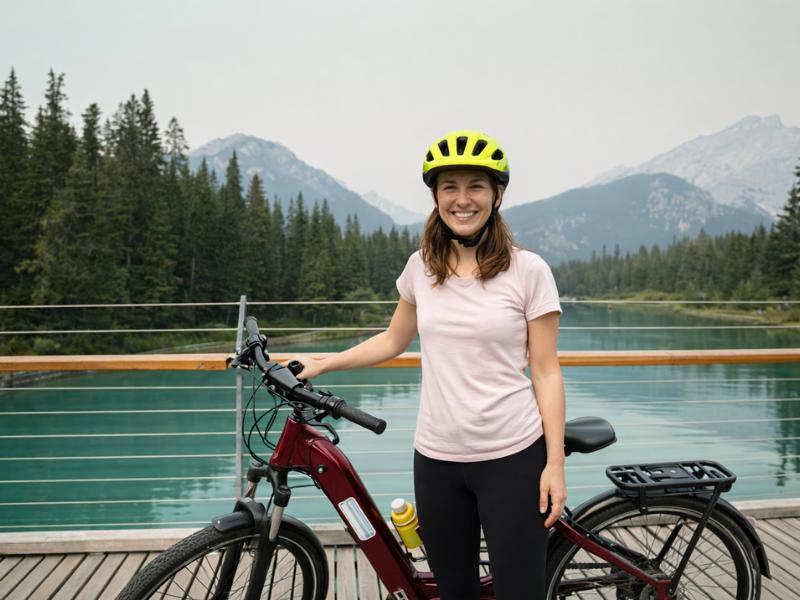
Moraine Lake Road is permanently closed to personal vehicles. In 2026, your options are: the Parks Canada Park & Ride shuttle ($8 CAD/adult, reservations open April 15, 2026), a licensed commercial shuttle ($35-$99 CAD depending on provider and time), Roam Transit via a Reservable Super Pass, or a Lake Louise and Moraine Lake day tour (best for non-locals). The road opens June 1 and closes October 12. There is no parking at the lake for private vehicles except for holders of a valid government-issued accessible parking placard and registered guests of Moraine Lake Lodge.
Before 2023, visitors were arriving at 3am just to find a parking spot. Queues of turned-away cars stretched back to the highway. The situation had become genuinely unsafe. Parks Canada’s solution was to close the road to personal vehicles entirely. It was the right call. The experience at the lake is better for it. But it means you have to plan, and plan properly.
Here is exactly how to reach Moraine Lake in 2026:
Parks Canada Park & Ride Shuttle: Park your vehicle for free at the Lake Louise Ski Resort (1 Whitehorn Road). Board the shuttle from the Park & Ride directly to Moraine Lake. The shuttle runs every 30 minutes from 6:30 am to 6:00 pm, with the last return bus from the lake at 7:30 pm. Reservations for 2026 opened April 15 at 8:00 am MDT, with 40% of the season’s seats available on that date. The remaining 60% are released on a rolling 48-hour window daily at 8:00 am MDT throughout the season. Cost: $8 CAD adult, $4 CAD senior, free for ages 17 and under. Reserve at reservation.pc.gc.ca or call 1-877-737-3783. One ticket covers both Moraine Lake and Lake Louise via the free Lake Connector shuttle.
Alpine Start Sunrise Shuttle (for early risers): Parks Canada also runs dedicated sunrise departures at 4:00 am and 5:00 am daily from June 1 to October 12. These depart from Lake Louise Lakeshore, not the Park & Ride, so you’ll need to pay for parking at Lake Louise Lakeshore ($36.75 CAD). These seats go in minutes on April 15 – if sunrise at Moraine is your priority, be at your screen at 7:59 am MDT on launch day.
Commercial Shuttles: Multiple licensed operators run their own shuttles from Banff, Canmore, and Lake Louise. Costs range from $35 CAD per adult for daytime service up to $99 CAD for sunrise options. Providers for 2026 include Moraine Lake Bus Company, Fairview Limousine, Via Shuttle, and Ten Peaks Shuttles & Tours. These have more flexible pickup locations and often include guided narration. A note: starting in 2025, a $15 Moraine Lake Commercial Vehicle Fee applies to all non-Parks Canada shuttles, which is typically absorbed into commercial pricing.
Roam Transit: If you’re based in Banff without a car, purchase the Reservable Super Pass (approximately $30 CAD for one day) for Roam Route 8X from Banff to Lake Louise Lakeshore, then transfer to the Parks Canada Lake Connector Shuttle to Moraine Lake. This is the most budget-conscious option for car-free visitors.
Cycling: The 11-km road to Moraine Lake is closed to cars, which makes it a legitimate cycling route from Lake Louise. It’s a steady uphill with no shade and mixed road shoulders during peak season, but the descent back is excellent. Early-season cycling before June 1 (when the road is snow-clear but not yet open to vehicles) is a favorite among locals.
If you'd rather have someone handle the shuttle logistics, permit windows, and timing so you can just show up and enjoy it, the Lake Louise & Moraine Lake tour includes licensed access from Calgary, Canmore, or Banff. Confirm the selected departure time with the operator and compare it with the article's independent light and crowd guidance.
If you’re relying on public transport, here’s the complete breakdown of Banff National Park tours without a car so you understand shuttle schedules and what’s actually reachable.
What Is The Best Time Of Day (and Year) To Visit Moraine Lake?
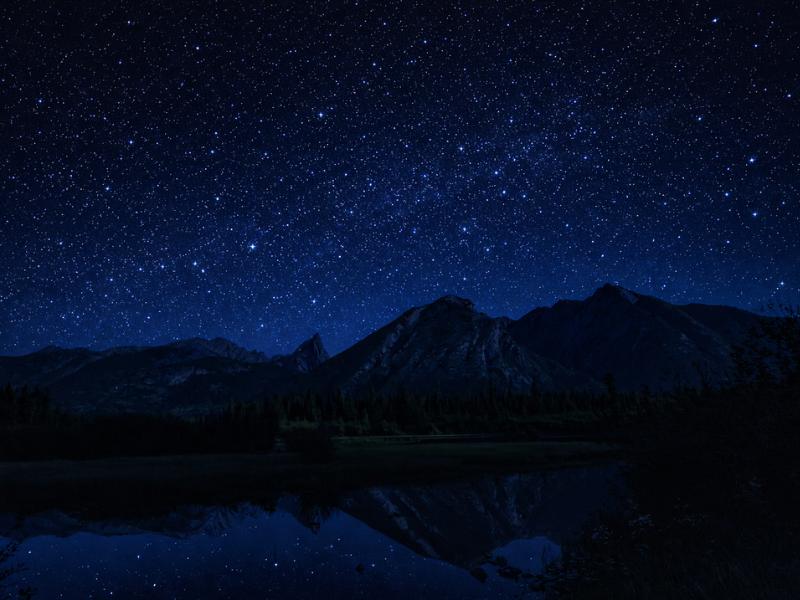
For light and solitude, arrive before 7:00 am. Morning calm means the lake surface reflects the ten peaks like a mirror, and the 4:00 am and 5:00 am Alpine Start shuttles exist specifically for this reason. For the year, late September to early October is the secret window: golden larch trees, thinner crowds, crisp air, and the same extraordinary lake. Peak color in the water runs late June through early September.
Timing at Moraine Lake is not a minor consideration. It is the visit. The difference between showing up at 6:30 am and showing up at 10:30 am is the difference between standing quietly at the rockpile with a handful of other early risers and sharing a three-foot-wide path with 400 people who are all trying to take the same photograph.
Midday, particularly on summer weekends, is the worst time. The buses stack up. The rockpile is standing room only. The famous reflection on the water disappears when the afternoon wind picks up. This is not a minor inconvenience – it genuinely changes the experience.
By season, here’s what to know: June brings the highest water level, when glacial melt is at its peak and the color is most vivid. Expect some ice patches lingering on the shore early in the month. July and August are peak season: maximum color, maximum crowds, maximum demand for shuttle seats. Late September to early October is the larch season, and for photographers and serious hikers, this is the best the lake gets. The larches in Larch Valley go pure gold. The crowds thin. The light has that autumn quality that makes everything look sharp. If your dates are flexible and hiking Larch Valley is on your list, aim for late September.
| June (from June 1) | Building – peak by mid-June | Moderate | Possible ice on shore early June; waterfalls at full force |
| July | Peak vivid blue | Very high | Best color; book shuttle well in advance |
| August | Peak vivid blue | Highest | Busiest month; Tuesday-Thursday notably quieter |
| September | Strong blue, deepening | Moderate, falling | Larches begin turning late September; excellent hiking |
| Early October (to Oct 12) | Shifting; still striking | Low | Peak larch gold; crisp air; least crowded season window |
One note on the afternoon that most guides skip: late-afternoon and evening shuttles are consistently less crowded than morning slots. If sunrise access isn’t your priority but you want a more peaceful visit, the 4:00 pm shuttle gets you there as the day-trippers leave. The light on the peaks in the early evening is genuinely beautiful. The lake reflects differently when the sun is lower and from the west. It’s worth considering.
If you’re flexible on dates, here’s the best time to visit Banff National Park tours based on weather, wildlife, larch season, and when accommodation prices actually drop.
Which Hikes At Moraine Lake Are Worth Your Time?
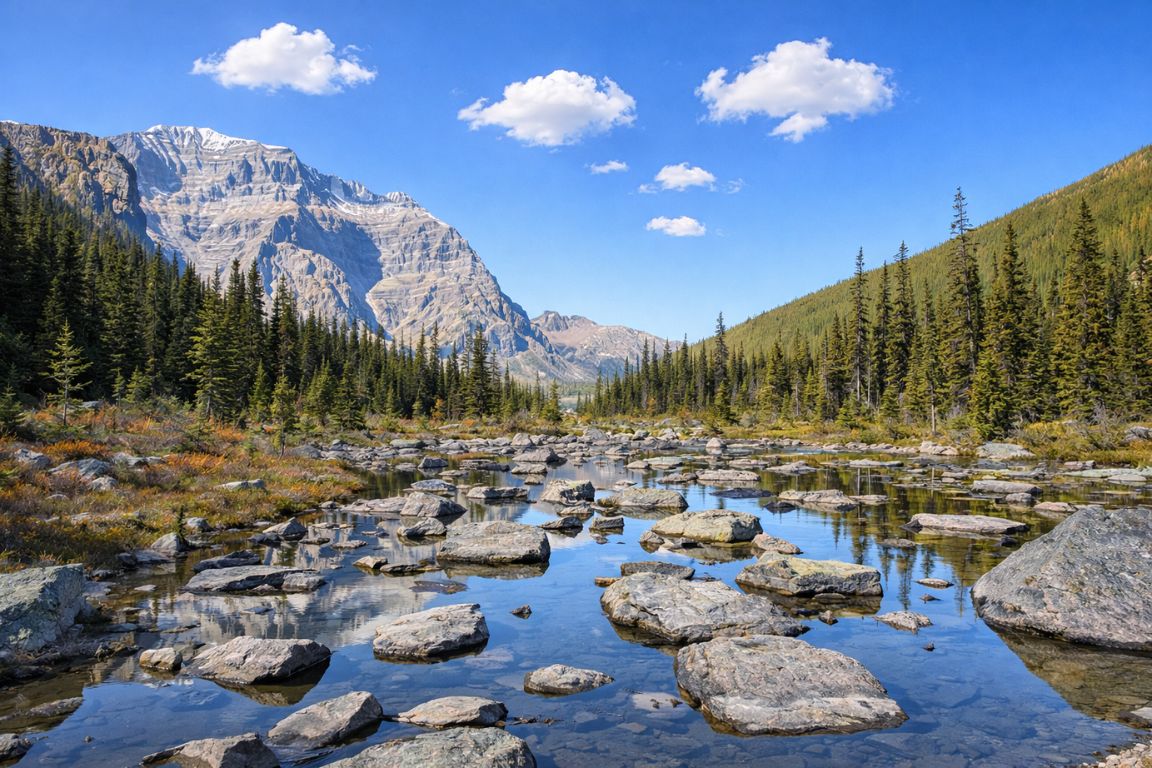 The Rockpile Trail (0.8 km return, minimal elevation) delivers the iconic postcard view and is mandatory regardless of fitness level. Consolation Lakes (6 km return, 135 m gain) is the best choice for families and moderate hikers who want to go further. Larch Valley to Minnestimma Lakes (8.9 km return, 564 m gain) is the area’s signature hike and is extraordinary in fall. Sentinel Pass (11.2 km return, 750 m gain) is for committed hikers who want one of the best viewpoints in the Rockies.
The rockpile is not optional. You will feel obligated to do it the moment you step off the shuttle and see it in front of you. Ten minutes of climbing over boulders, then you’re standing at the top with ten peaks in front of you and that blue lake below. Do it. But then, if you have more time, walk away from the crowd and get on a trail.
Here is how we’d frame the four main hikes for different visitors:
Rockpile Trail (0.8 km return, 20 min, minimal gain): Short, rocky, and entirely worth it. The view from the top is the photograph you’ve seen a thousand times. Go at sunrise if you want solitude. In the afternoon, expect company. Descend and take the Lakeshore Trail (2.6 km return) along the water’s edge if you want the other classic perspective.
Consolation Lakes (6 km return, 2 hours, 135 m gain): The trail branches left from the base of the Rockpile, crosses a boulder field – the only mildly technical section – then moves through old-growth forest before opening to the lower lake and views of Quadra Mountain, Mount Babel, and Mount Fay. It’s classified easy to moderate. Groups of 4 or more are required at certain times due to grizzly activity in the upper valley; check Parks Canada trail conditions before you go. Best done in August or September when snow is off the talus field.
Larch Valley to Minnestimma Lakes (8.9 km return, 3.5-4.5 hours, 564 m gain): This is the hike that makes people rebook flights to come back. The first kilometre is gentle. Then 10 switchbacks go straight up through the trees. It’s the hardest part of the whole trail and it ends at a bench where the forest opens and the view hits you. The Minnestimma Lakes sit in a high alpine basin with Mount Temple behind them. In September, when the larches go gold against the grey rock and blue sky, it looks like a painting. Complete the section to Sentinel Pass if you have the legs for it – another 200 metres of elevation and you’re looking down into both Larch Valley and Paradise Valley simultaneously.
Sentinel Pass (11.2 km return, 4.5-5.5 hours, 750 m gain): One of the finest high-alpine viewpoints in Banff. The trail follows Larch Valley all the way to the pass between two famous valleys. It’s exposed and the upper section is steep loose scree. Not technical, but demanding. Worth every step for fit hikers. Get there early – the crowds at larch season are real.
| Rockpile Trail | 0.8 km | Minimal | 20 min | Everyone; the iconic view |
| Lakeshore Trail | 2.6 km | Minimal | 45 min | Easy stroll; different lake angles |
| Consolation Lakes | 6 km | 135 m | 2 hours | Families; moderate hikers |
| Larch Valley / Minnestimma Lakes | 8.9 km | 564 m | 3.5-4.5 hrs | Fit hikers; larch season (Sept-Oct) |
| Sentinel Pass | 11.2 km | 750 m | 4.5-5.5 hrs | Experienced hikers; best views |
| Eiffel Lake | 11.4 km | 560 m | 4-5 hrs | Panoramic valley views; quieter than Sentinel Pass |
One piece of advice we give every group before they head up Larch Valley: do not underestimate the switchbacks. The trail looks straightforward on paper. The first kilometer is flat and enjoyable. Then the switchbacks start and they are relentless. Pack more water than you think you need, wear real hiking footwear, and give yourself the full time estimate. The people we see struggling are always the ones who said they’d be fine in sneakers with a small water bottle.
Need trail recommendations? Our guide to the best hiking trails in Banff National Park tours covers everything from beginner-friendly paths to challenging all-day hikes with serious elevation gain.
What Should You Know Before You Go? (Permits, Passes, Rules)
You need a valid Parks Canada pass to enter Banff National Park, separate from your shuttle ticket. Day passes cost $11.25 CAD per adult, $9.60 for seniors. The Discovery Pass ($83.50/adult, $167.50/family) covers all national parks for 12 months and pays for itself in under a week. Crucially: from June 19 to September 7, 2026, park admission is completely free through the Canada Strong Pass initiative. Your shuttle ticket and park pass are two separate things – both are required outside of the free admission window.
The two most common mistakes we see at the gate: travelers who booked a shuttle and assumed the park pass was included, and travelers who bought a park pass and assumed it was their shuttle ticket. They are completely separate. The shuttle books through reservation at pc.gc.ca. The park pass purchases through Parks Canada separately. When you have both in hand, you’re clear. Travelers who prefer one guided booking can compare the Lake Louise and Moraine Lake day tour with the official shuttle plan.
A few specific rules worth knowing before you arrive. Bear spray is not optional in this area – grizzly activity around Consolation Lakes valley can trigger a “groups of four or more required” restriction at trail access. Check Parks Canada’s trail condition reports before your visit. The Consolation Lakes trail restriction is more common than most visitors expect. If you're traveling as a pair, a guided tour to Lake Louise and Moraine Lake solves this instantly because your group size is covered.
Cell service goes to zero approximately 5 km down Moraine Lake Road from the lake itself. There is no Wi-Fi at the lake, no running water, and the facilities are pit toilets. This is not a day use area with amenities. Bring water, bring snacks, and download your offline maps before you board the shuttle. If you miss the last return bus at 7:30 pm, you are responsible for arranging your own transport back. Approved after-hours transport is expensive and must be called from the public pay phone at the lake. Do not count on your phone working to figure this out after the fact.
The lake is also considered backcountry by Parks Canada’s definition, which surprises visitors who expected more infrastructure. It looks accessible in photos. In practice, it is a remote alpine environment. Dress in layers, bring rain gear even on blue-sky days, and take the weather warnings seriously. Mountain weather changes in under an hour.
Where Do People Go Wrong At Moraine Lake?
The four most consistent failure points across the thousands of travelers we’ve worked with: assuming shuttle tickets are still available the week before, not knowing the park pass and shuttle are separate purchases, showing up at 10:00 am in peak season and being shocked by the crowds, and attempting Larch Valley without adequate footwear or water. Each of these is completely avoidable with a single conversation before you leave home.
We’ve run enough pre-trip briefings to know exactly where Moraine Lake trips go sideways. These are the patterns, not edge cases.
Fail Point 1: Treating shuttle booking like a suggestion. The Parks Canada April 15 launch date releases only 40% of the season’s capacity. The remaining 60% rolls out 48 hours before each departure. For popular dates in July and August, those 48-hour releases are gone within minutes of 8:00 am. Travelers who decide in June to visit in July and go online to book the Parks Canada shuttle often find the calendar showing sold out across all their dates. The workaround: check commercial shuttle providers, who have their own allocated access and often have more flexibility. Check current commercial availability if the public shuttle is unavailable; the Lake Louise and Moraine Lake day tour is one verified option.
Fail Point 2: Conflating the park pass and the shuttle ticket. We’ve seen this at the gate more than once. The shuttle ticket is not a park pass. The park pass is not a shuttle ticket. If you’re visiting outside the June 19-September 7 free window, you need both, purchased separately. Youth under 17 ride the shuttle free and enter the park free. Everyone else pays for both separately.
Fail Point 3: Arriving at 10:00 am in July or August. The shuttles stack up. The rockpile is 400 people deep. The famous calm reflection on the lake is gone because the afternoon wind has kicked up the water. None of this is catastrophic – the lake is still extraordinary – but the experience is materially different from what you’d get at 7:00 am. The traveler reviews describing Moraine Lake as “too crowded” are almost exclusively 10:00 am arrivals in August. The traveler reviews describing it as transcendent are mostly pre-7:00 am arrivals.
Fail Point 4: Underestimating physical requirements for Larch Valley. The Larch Valley trail goes from flat and enjoyable to steep and unrelenting in the space of about 200 metres. We’ve had guests turn back at the switchbacks in sandals when they were planning to reach Minnestimma Lakes. The trail is not technical. It is sustained and demanding. Pack more water than you think is necessary (at least 2 litres per person), wear real hiking footwear with ankle support, and add 30 minutes to whatever time you planned for.
Fail Point 5: Forgetting about bear spray. The Consolation Lakes trail runs through prime grizzly habitat. Parks Canada can and does impose group minimums when bears are active in the area. Bear spray is legal, available for rent in Banff and Lake Louise, and should be carried on your hip – not in your pack. If you're on a guided tour, this is handled for you. If you’re going independently, sort it before you get on the shuttle.
We’ve been sorting out exactly these logistics for travelers since 2014. If you want transport to both lakes handled, check the Lake Louise and Moraine Lake day tour; use Parks Canada separately for current trail and wildlife restrictions.
Where Should You Stay And Eat Near Moraine Lake?
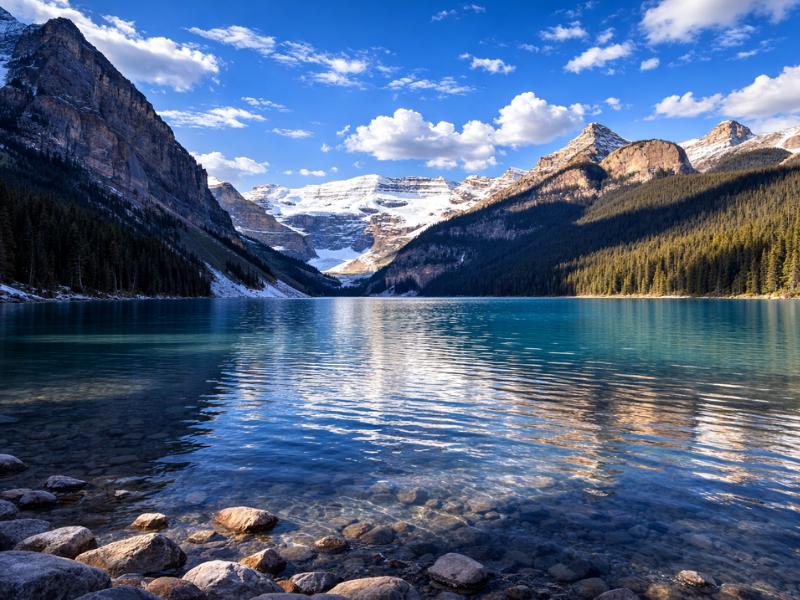
Moraine Lake Lodge is the only accommodation at the lake itself, with 2026 rates starting around $830 USD per night. It includes private vehicle access, complimentary canoeing, guided hikes, and access before and after shuttle hours. For lower-cost options, Lake Louise Village is 14 km away and offers a range of accommodations. Canmore, 90 km east, is the best value base for the whole Banff region. Dining at the lake is limited to a small deli/cafe at the Lodge; bring your own food for anything beyond a snack.
Moraine Lake Lodge is a genuinely exceptional place to stay if the budget allows. The wood-burning fireplaces in the cabins, the fact that you’re there when the tour groups are gone, the complimentary canoe access at dawn – it’s one of those properties where the premium is actually worth paying. Expect $830-$1,300 USD per night depending on room category. No TVs, no telephones in the rooms, no spa. What you get is the lake out your window and permission to be there when nobody else is. Rooms fill early – book months ahead for any 2026 summer dates.
For everyone else, Lake Louise Village puts you 20-25 minutes from the Park & Ride by car. It has a grocery store at Samson Mall where you can pick up trail food, several mid-range hotels, and the Fairmont Chateau Lake Louise for another luxury option on the water (though not at Moraine). Baker Creek By Basecamp is a well-regarded option about 8 km from Lake Louise on the Bow Valley Parkway – quieter, more rustic, genuinely charming.
Canmore is a favorite base for travelers who want to keep costs lower. Accommodation rates run 20-35% below Banff town’s prices. You’re 45 minutes from the Park & Ride shuttle lot, which is a real commute to add to an early-morning start – but for travelers spending several days in the area exploring multiple sites, the savings are meaningful. Banff townsite is also a legitimate base; it’s further from the Park & Ride but Roam Transit covers the gap if you don’t have a car.
On food: the Lodge has a small deli/cafe open during the day for snacks and prepared items, and the Walter Wilcox Dining Room for proper meals (dinner mains in the $30-$60 CAD range). That’s the entirety of dining at the lake. If you’re not staying at the Lodge, pack your lunch before you board the shuttle. The Samson Mall in Lake Louise Village has a deli and grocery option. Banff has the widest selection of restaurants and provisions in the area.
Is A Guided Tour Worth It At Moraine Lake?
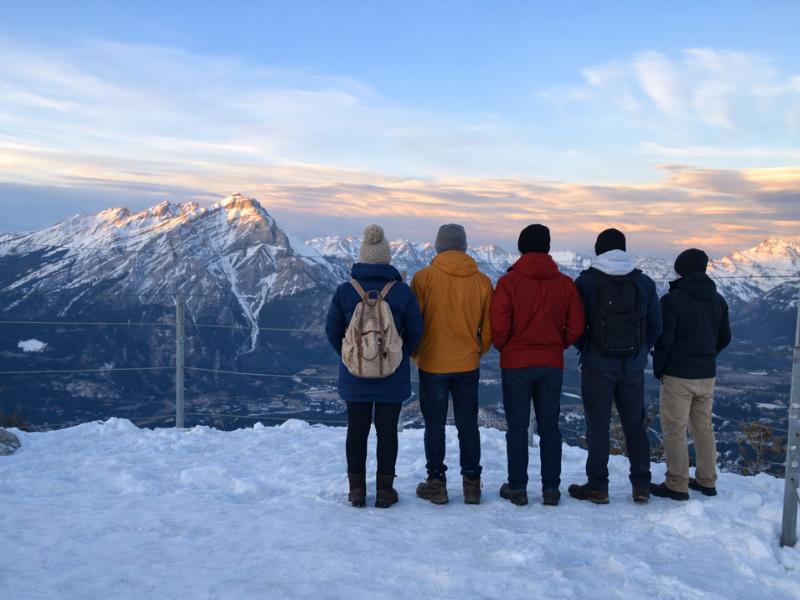
For first-time visitors, travelers visiting in pairs (Consolation Lakes requires groups of four when bears are active), anyone who wants sunrise access without navigating the Parks Canada reservation system, and travelers who want the context behind what they’re seeing – a guided tour adds real value. It’s not just logistics. The geological story of the lake, the grizzly habitat in the valleys, the names of the peaks and what they mean – these things change the experience.
The honest case for going independently: the Parks Canada shuttle is cheap, the rockpile view is obvious and requires no explanation, and the logistics are manageable if you do your research. Plenty of travelers do it beautifully on their own.
The case for a guide is different. It comes down to what you want the day to be. The lake is remarkable. The lake with the story of how glaciers ground the rock flour that creates that color, how the Ten Peaks were named in Stoney Nakoda numbers (Heejee, Nom, Yamnee, Tonsa, Sapta, Shappee, Sagowa, Saknowa, Neptuak, Wenkchemna), and why the rockpile exists at all — that’s a different day. A knowledgeable guide turns Moraine Lake from a very beautiful photograph into a place you actually understand. Lake Louise and Moraine Lake day tour
The practical advantages also add up. Guided tours have licensed vehicle access, which solves the shuttle booking window entirely. Group size requirements on bear-active trails are automatically met. Itinerary is handled. Permits are handled. If something changes – trail closure, weather, wildlife restriction – a guide adapts. Going solo means adapting alone at a lake with no cell service.
If you’re feeling overwhelmed by all the decisions, here’s how to plan a Banff National Park trip so you don’t waste time figuring out permits and transportation on the fly.
From Our 2025 Client Groups at Moraine Lake
Based on post-trip surveys from guided Moraine Lake day trips, Banff National Park Tours, 2025 season.
| Metric | Result |
|---|---|
| Travelers who said guide added significant value beyond logistics | 80-90% |
| First-time visitors to Banff in our groups | 65-80% |
| Groups who reached Larch Valley on guided hike vs. solo attempt | 90-95% vs. 55-70% |
| Most common first comment on arriving at the lake | “It’s exactly like the photos” / “It’s better than the photos” (split roughly 50/50) |
| Travelers who said they would return to Moraine Lake | 90-98% |
Standing data: Banff National Park Tours has guided 8,600+ travelers since 2014.
The lake at 4:00 am, before the first bus arrives. Still water, ten peaks, the beginning of light on Mount Fay. That’s what we show our groups on the Alpine Start. It is one of the few places in the world that earns the word “stunning” without any irony at all.
Questions about visiting Moraine Lake? Avery and the team are here daily. Check availability for the Lake Louise and Moraine Lake tour. We've guided 8,600+ travelers through this exact experience and we're happy to answer anything before you book.
Frequently Asked Questions
- Can you drive to Moraine Lake in 2026?
- No. Moraine Lake Road is permanently closed to personal vehicles year-round. The only exceptions are holders of a valid government-issued accessible parking placard and registered guests of Moraine Lake Lodge. All other visitors must use Parks Canada’s Park & Ride shuttle, a licensed commercial shuttle, Roam Transit, or a guided tour.
- When do Moraine Lake shuttle reservations open for 2026?
- Parks Canada opens reservations on April 15, 2026 at 8:00 am MDT. Forty percent of the season’s seats go on that date. The remaining 60% are released daily at 8:00 am MDT, two days before each departure date, on a rolling basis throughout the season.
- Is the park pass included in the shuttle ticket?
- No. They are completely separate. The Parks Canada shuttle ticket covers your transport to and from the lake. Your Banff National Park entry pass is a separate requirement. Note: park admission is free for all visitors June 19 to September 7, 2026 through the Canada Strong Pass initiative. Outside of those dates, a day pass costs $11.25 CAD per adult.
- What time does the Moraine Lake shuttle start?
- The regular Park & Ride shuttle begins at 6:30 am, running every 30 minutes until 6:00 pm. The last return shuttle from the lake departs at 7:30 pm. Parks Canada also operates Alpine Start sunrise shuttles at 4:00 am and 5:00 am from Lake Louise Lakeshore (separate reservation required, limited seats).
- When is Moraine Lake most beautiful?
- The water color peaks from late June through early September, when glacial melt is highest. For the unique experience of golden larch trees surrounding the trails, late September to early October is spectacular. For solitude at any time, arrive on the first shuttle of the day or visit on a weekday.
- Do I need bear spray at Moraine Lake?
- Bear spray is strongly recommended for all hikers in the area. The Consolation Lakes trail runs through active grizzly habitat; Parks Canada can impose a “groups of 4 or more required” restriction when bears are present. Bear spray can be rented in Banff and Lake Louise. Carry it accessible on your hip, not stored in your pack.
Written by Avery Claire Thompson
Canadian tour guide since 2014 · Founder, Banff National Park Tours
Avery has guided over 8,600 travelers through Banff National Park and the Canadian Rockies since founding the agency.
Choose Your Moraine Lake Access
Compare a guided day with the independent options in this guide. Confirm your date and meeting point before booking.
Match These Options To Your Trip
Our Starting RecommendationLake Louise And Moraine Lake Day Tour
Link the two lakes without organising separate transport.
8–10 hours · English
Pickup in Calgary, Canmore or Banff; confirm the selected meeting and end points.
Guide, transport and listed lake access. Meals and personal expenses extra.
No wheelchair access. Bring your own child seat for children under 7. Moraine Lake is seasonal.
Visit The Two Lakes ↗A Different Way To Spend The DayPrivate Customisable Banff Day
Agree a sightseeing route around your group’s priorities.
8–11 hours · English
Request pickup or select a meeting point; returns to the meeting point.
Private vehicle, water and Parks Canada fees. Lunch and tips extra.
Moraine Lake access uses a shared shuttle. Not wheelchair accessible; moderate fitness listed. Confirm exact pickup and route.
Plan A Private Banff Day ↗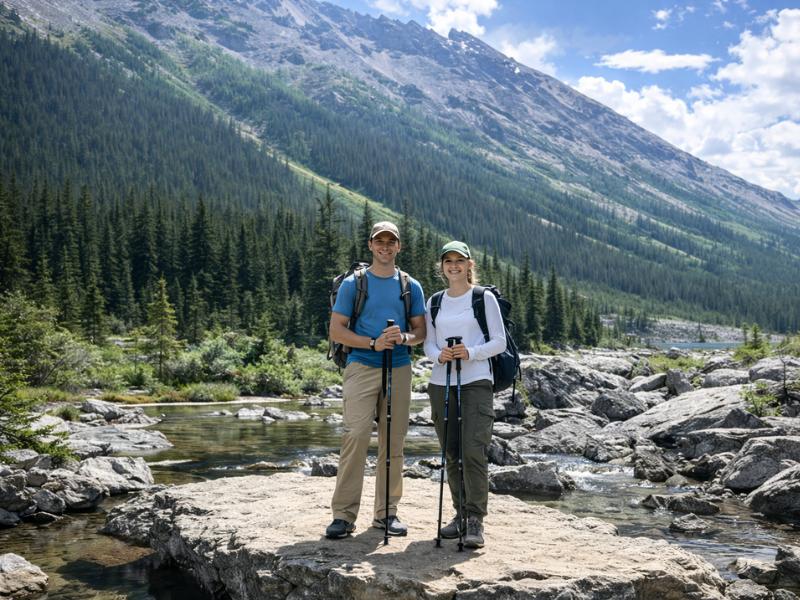 A Different Way To Spend The Day
Guided Signature Hike With Lunch
Spend the day on a named mountain trail with a guide, transport and lunch.
7 hours · English
Banff hotel pickup or the listed Mount Royal Hotel meeting point.
Certified guide, picnic lunch, hiking poles and transport. Teahouse purchases extra.
Ages 13+. Route depends on weekday and conditions. The Larch Valley route does not reach the top of Sentinel Pass.
Choose A Guided Hike ↗No choices needed to use the recommendations above.
Work Out The Cost For Your Group
Enter complete quotes in CAD for the same people, date and itinerary. Include transport, parking, entry, food and any other extras on both sides. For shared versus private, enter the shared total first and private total second.
Use current quotes; no prices or savings are assumed.
Turn Your Plan Into A Day Out
Secure a licensed lakes tour if access certainty matters, or use the official shuttle route when independence matters more.
Your Next StepLake Louise And Moraine Lake Day Tour
Link the two lakes without organising separate transport.
8–10 hours · English
Pickup in Calgary, Canmore or Banff; confirm the selected meeting and end points.
Guide, transport and listed lake access. Meals and personal expenses extra.
No wheelchair access. Bring your own child seat for children under 7. Moraine Lake is seasonal.
Visit The Two Lakes ↗Choose Your Date
Lake Louise And Moraine Lake Day Tour
Open the provider’s calendar to select your date, party and departure. Availability and prices are confirmed there.
Dates On GetYourGuide
Guided Signature Hike With Lunch
Choose a date and party to see current options. Confirm the meeting point and restrictions on the listing.
More Banff Sightseeing On Viator
Browse the site’s original Viator selection of Banff day tours, wildlife outings and lake excursions. These are additional ideas, not matches to the trip form. Check dates, duration, pickup and suitability on each listing.
Open The Recommended Outing ↗