Best Time To Visit Banff National Park
Best time for Banff? Summer has warm weather and open trails, September brings golden larch season and fewer crowds, and winter is prime for skiing.
Your month changes which Banff experience fits, so use season as a filter and confirm live dates before booking. Match a Tour to Your Season
Last updated: April 29, 2026
| Peak Summer | July-August | Very High | All activities, warmest weather, full trail access |
| Early Summer | June | Moderate-High | Wildflowers, fewer crowds than July, long days |
| Fall | September-October | Low-Moderate | Larch season, wildlife, photography, value |
| Winter | December-March | Moderate (high at holidays) | Skiing, ice walks, frozen waterfalls |
| Shoulder Spring | April-May | Low | Budget travel, late skiing, spring wildlife |
Moraine Lake Road opens June 1 and closes mid-October annually. Park passes verified March 2026.
Your Experience Plan: The lake day suits the open-road season, the guided hike follows fixed weekday routes, the icewalk covers winter, and wildlife sightings are never guaranteed.
What Is The Best Overall Time To Visit Banff National Park?
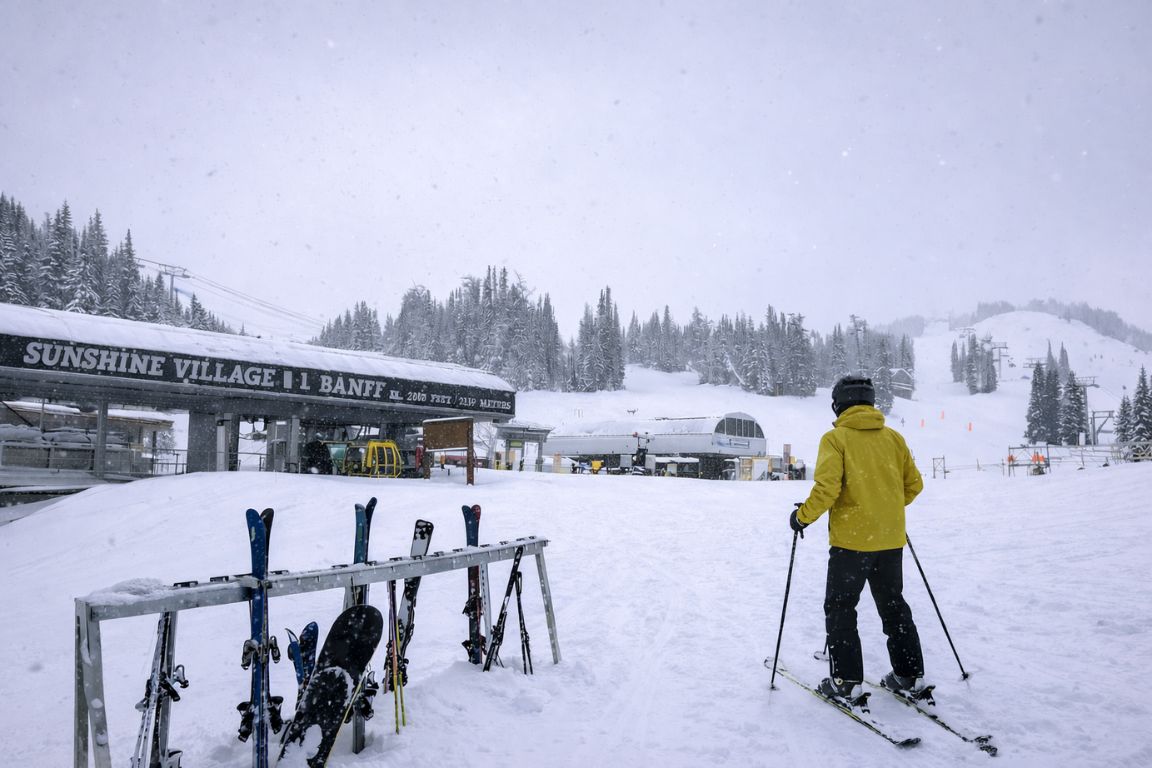 The honest answer is that Banff rewards every season with something genuinely different. For most first-time visitors who want everything open and the weather on their side, late June through early September is the target window. For travelers who have been once and want the version of Banff that fewer people know about, September is the answer. And for anyone drawn to snow, silence, and world-class skiing, January through March delivers a park that feels like a completely different place.
After guiding more than 8,600 travelers through this park since 2014, we’ve watched certain patterns repeat themselves. The people who leave most satisfied are usually the ones who matched their visit to what they actually wanted, not to what the calendar said was “peak season.” Someone who wants to ski Sunshine Village in January and someone who wants to hike to Larch Valley in late September are both having the best Banff experience possible, they’re just having different ones.
What we can say plainly: if Moraine Lake is on your list, your window is June 1 through mid-October, and you need a shuttle reservation either way. If you’re chasing the turquoise lakes at their most vivid, July and August are when glacial melt peaks and the water colour is most intense. If you want the alpine larches, those rare deciduous conifers that turn brilliant gold before losing their needles, you have roughly ten days in the third week of September to catch them at peak. Miss that window and you’ve missed it entirely for the year.
The one universal truth: Banff is never truly off-season. The park draws visitors year-round for a reason. Whatever month you choose, the mountains don’t disappear.
We’ve mapped out how to plan a Banff National Park trip based on what actually matters – seasonal timing, where to base yourself, and which hikes require advance planning.
What Is Banff Like In Summer? (June, July, August)
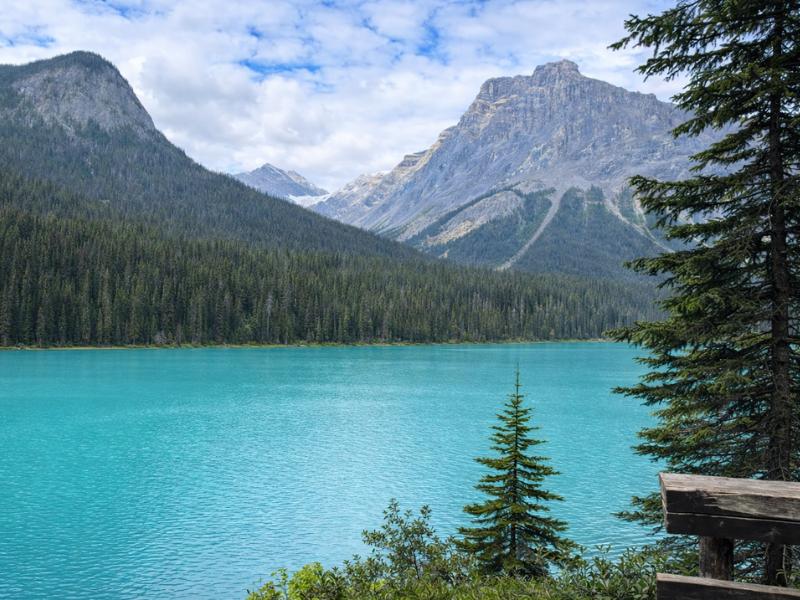
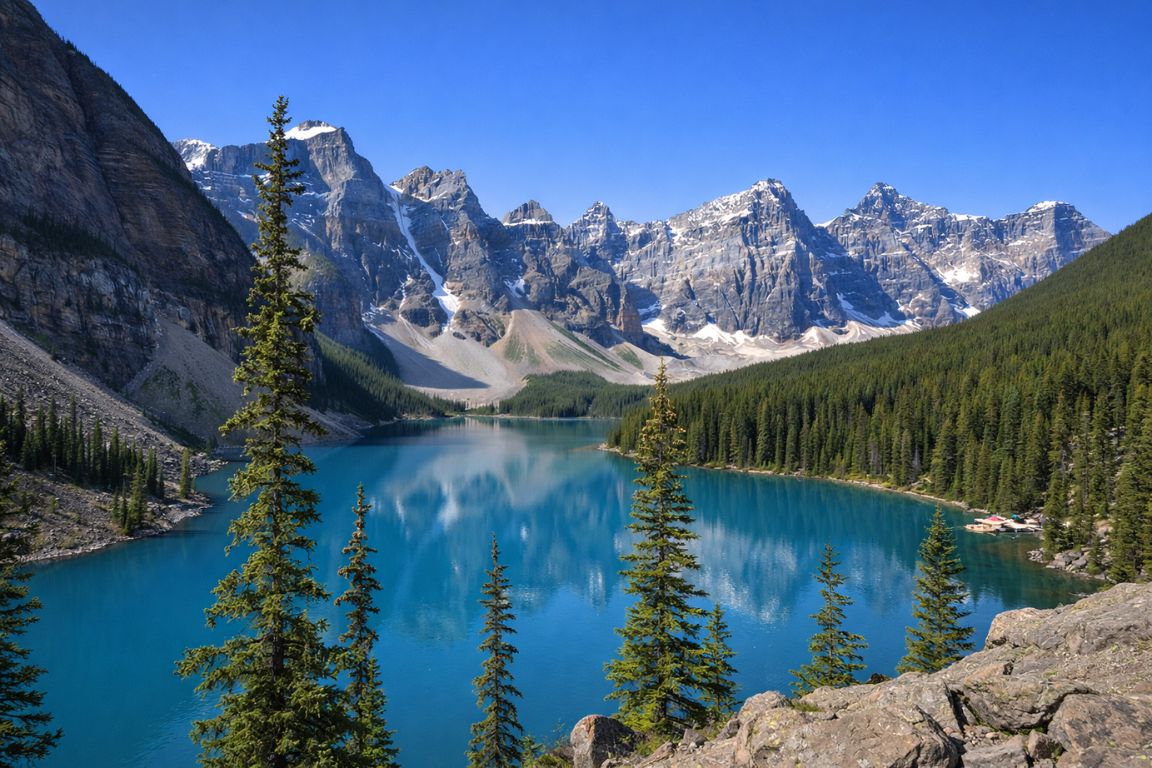 Summer is the fullest version of Banff. Every trail is open, every shuttle is running, Moraine Lake is accessible, and the lakes are at peak turquoise. It’s also the most crowded and most expensive window of the year. July and August see around 600,000 to 650,000 visitors each month. If you’re visiting in peak summer, the experience is still extraordinary, it just requires more planning and earlier starts than any other season.
The lakes don’t reach their peak colour until mid-July when glacial melt is at maximum. Before that, they’re still beautiful, just slightly more subdued. What many people don’t realize is that June, especially the last two weeks, can be the sweet spot for summer visitors who want most of the access with noticeably fewer crowds. School is still in session in many regions, accommodation prices haven’t fully peaked yet, and the days are already long, with light until after 9 p.m.
July is the warmest month, averaging around 16°C (61°F) in the townsite and up to 22°C on the warmest afternoons. It’s also the wettest, with afternoon thunderstorms that can roll in fast. Mornings are almost always clear. If you’re hiking, start early, finish before 2 p.m., and you’ll miss most of the weather.
August is nearly identical to July in terms of access and activities, slightly cooler by the month’s end, and the wildfire smoke risk, which can be significant in July, tends to ease. By late August, the very first hints of fall appear in the valley bottoms and bear activity increases as they forage before hibernation. It’s a transitional month that some experienced travelers prefer to July precisely because of that shift.
The non-negotiables for summer: book accommodation four to six months out, secure your Moraine Lake shuttle reservation when bookings open in mid-April, and set your alarm. The people standing at the lakeshore when the light hits the water at 7 a.m. are the ones who planned ahead.
Summer logistics in Banff, shuttle bookings, permit windows, accommodation timing, have layers that catch people off guard. If you want the two lake visits and transport handled together, the verified Lake Louise and Moraine Lake day tour runs 8–10 hours; confirm dates and endpoints.
Planning a summer visit? I’ve rounded up all the Banff National Park tours summer activities so you know what’s possible beyond just hiking – from canoeing to wildlife tours to alpine experiences.
Why Do Experienced Travelers Love Banff In Fall? (September, October)
September is the month that converts people. The crowds that defined July thin out after Labour Day. Hotel rates soften. The trails are still clear, the days still warm enough for serious hiking, and then, around the third week of the month, the alpine larches turn. Stands of gold appear above the treeline against grey rock and blue sky, and Larch Valley becomes one of the most photographed landscapes in Canada. It lasts about ten days. Then it’s over.
Larch season is genuinely unlike anything else in the park. Alpine larches are rare deciduous conifers that grow above 2,000 metres in the rocky subalpine zone. For most of the year they look like any other conifer. Then in mid-September they transform, turning brilliant gold before shedding their needles entirely by early October. The peak window, based on consistent patterns, runs roughly September 15 to October 5, with the most vivid colour usually concentrated in the last ten days of September.
The best larch hikes are concentrated around Moraine Lake (Larch Valley and Sentinel Pass, 11.1 km return, 749 m elevation gain), Lake Agnes from Lake Louise, Healy Pass from Sunshine Village, and the trails around Arnica and Taylor Lakes. All of them reward the effort. All of them are busy during peak larch season, but nowhere near July-August busy.
October is the transition month. Early October can still be warm and clear. By mid-October, Moraine Lake Road closes for the season and the first serious snowfall arrives at elevation. The park empties. Hotel prices drop again. The trails that remain open are largely crowd-free. It’s a genuinely beautiful time to visit, just with a narrower activity menu than September.
One wildlife note for fall that we mention to every September traveler: September is elk rut season. Bull elk bugle through the valleys from late August through mid-October, and herds move through areas like Vermilion Lakes, the Banff Springs Golf Course loop, and the Fenland Trail near town. It’s one of the more primal things you can witness in the park. Keep your distance, bull elk during rut are unpredictable and more aggressive than they appear.
If you’re considering a fall trip, here’s everything about fall in Banff National Park tours so you understand larch timing, crowd levels, and when early snow shuts things down.
What Can You Do In Banff In Winter? (November To February)
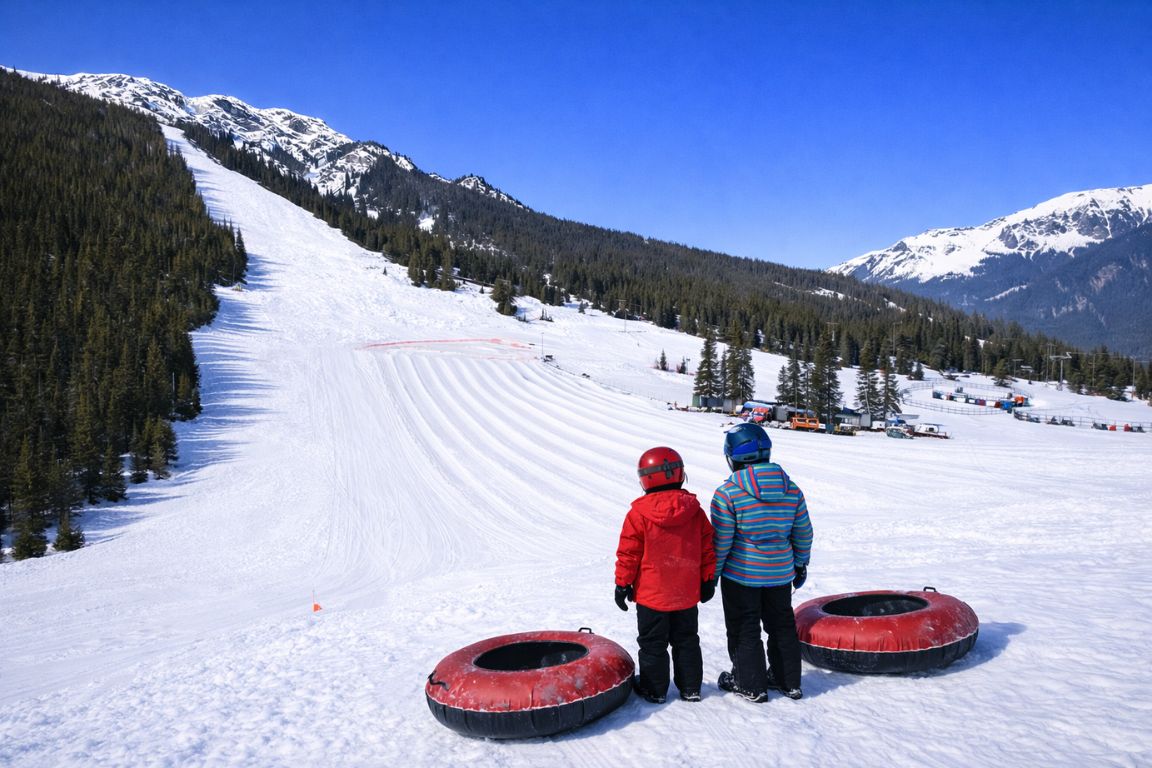 Winter Banff is a genuinely different destination. Three world-class ski resorts, Sunshine Village, Lake Louise Ski Resort, and Mt. Norquay, operate within the park boundaries. The frozen waterfalls at Johnston Canyon become an ice walk that is one of the most surreal experiences in the park year-round. Hotel rates are lower than summer, the town takes on a festive character, and for anyone who connects with mountains in their quieter state, winter delivers something summer simply cannot.
Sunshine Village runs one of the longest ski seasons in North America, typically open from late November through late May. Lake Louise Ski Resort opens in early November. Mt. Norquay is the smaller, locals-preferred option right above town. Together, they give Banff a genuine claim to being one of the best ski destinations on the continent, not just in Canada.
The Johnston Canyon ice walk deserves its own mention. The canyon that draws summer crowds for its waterfalls transforms in winter into a cathedral of ice. Interpretive guided walks run through the canyon on packed ice paths with crampons. The upper falls freeze into a column of blue-green ice that is, without exaggeration, one of the most beautiful natural things in the Canadian Rockies. Book ahead if you’re visiting around the holidays.
January is the coldest month, with average lows around -15°C (5°F) and the possibility of dropping to -30°C on the coldest nights. This isn’t casual weather. But the cold also means clarity: winter days in Banff often have the sharpest light of any season, the snow on the peaks is pristine, and the elk and deer move closer to the townsite where human activity keeps predators at bay. Bighorn sheep come down to lower elevations in winter and are commonly spotted along the Minnewanka Loop and Mt. Norquay Road.
For value-seekers: late January and early February, after the holiday rush clears, is the quietest and cheapest window in the ski season. The snow is excellent, the lift lines are short, and accommodation rates drop to their winter floor.
Don’t assume Banff shuts down in winter. This guide to Banff National Park tours winter activities shows you everything the park offers from December through March when the crowds disappear and the mountains turn white.
Is Spring A Good Time To Visit Banff? (March, April, May)
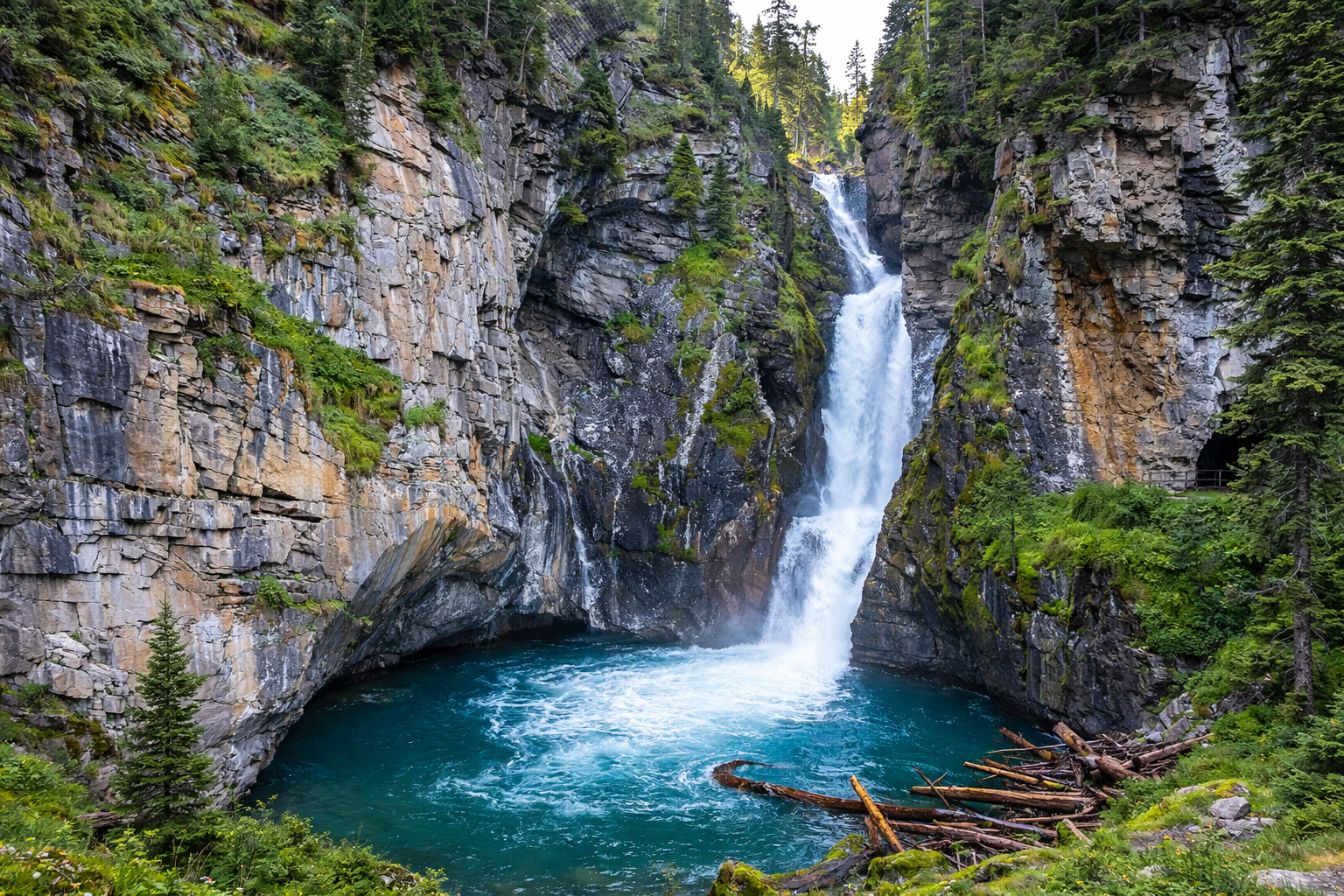 Spring is Banff’s most unpredictable season, which makes it both a risk and a reward. March brings some of the year’s heaviest snowfall but also strong light and uncrowded slopes. April is a genuine shoulder-season sweet spot: ski resorts are still open, low-elevation hikes start coming to life, accommodation is available and affordable, and the park has a quiet energy that summer visitors never experience. May is full of promise but full of caveats too, Moraine Lake stays closed until June 1, many alpine trails remain snowpacked, and the weather swings wildly between spring warmth and late-season storms.
March is still firmly winter. Average temperatures hover between -8°C and 2°C. The snowpack in the mountains is at its deepest, and Sunshine Village and Lake Louise are both in peak ski season. Banff’s SnowDays festival runs in January, and the Ice Magic Festival at Lake Louise typically runs in late January through February, but March still catches the tail end of winter event season. For anyone visiting on spring break and happy to ski, March is an excellent month that most people overlook in favour of the more obvious December holidays.
April is the transition. Temperatures begin climbing, averaging 2°C to 10°C. Days lengthen noticeably. The ski resorts start winding down, though Sunshine Village’s high elevation often keeps it open into late May. Low-elevation trails around the townsite begin to clear: Fenland Trail, the Hoodoos, Vermilion Lakes drives. Wildlife emerges earlier in April, with bears leaving hibernation and bighorn sheep moving to roadside salt licks. It’s one of the better months for wildlife sightings at lower elevations.
May is genuinely beautiful and genuinely complicated. Valley bottoms green up, wildflowers start, and the lakes begin to thaw. But Moraine Lake Road stays closed until June 1 regardless of conditions. Many higher trails remain snowpacked and potentially avalanche-prone well into the month. Check Parks Canada’s trail condition reports before planning any backcountry or alpine hiking. If the goal is fewer crowds and lower prices with some hiking, May works well for lower-elevation trails. If Moraine Lake or high alpine routes are the priority, wait for June.
Wondering if early season is worth it? Check out our guide on spring in Banff National Park tours – fewer crowds and lower prices but unpredictable weather and trail closures.
When Is Banff The Most Crowded And How Do You Avoid It?
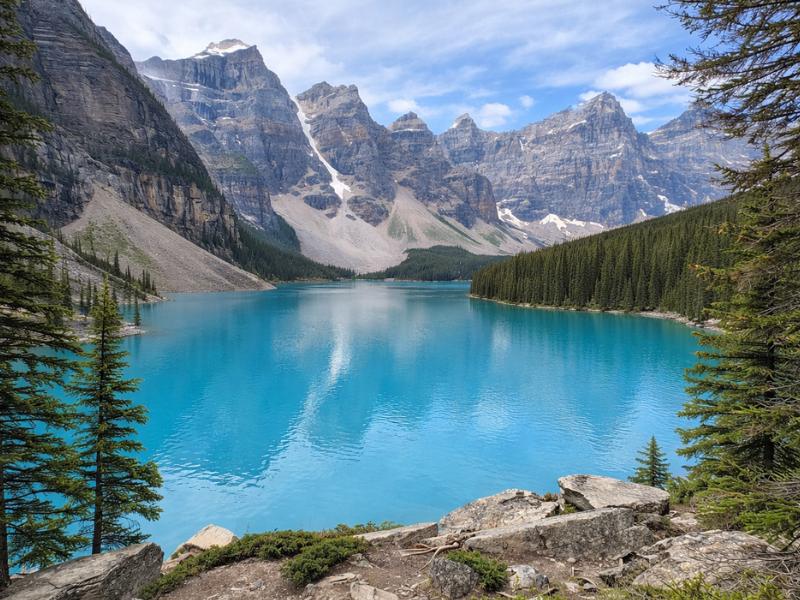
The peak crowd window is July 1 through Labour Day weekend in early September, with July and August each drawing around 600,000 to 650,000 visitors. The most congested single spots are Moraine Lake, Lake Louise Lakeshore, and Johnston Canyon between 10 a.m. and 4 p.m. on any summer weekend. The most effective crowd-avoidance strategies are timing-based, not location-based: the park is large enough that crowds concentrate at a handful of sites, and simply moving before 8 a.m. or after 5 p.m. transforms the experience at even the most popular locations.
A few practical crowd-avoidance realities we’ve learned from years of guiding:
Weekdays are meaningfully less busy than weekends in summer. Albertans love this park and weekend day-trip traffic from Calgary and Edmonton is significant. If you can structure your Moraine Lake or Lake Louise days to fall Monday through Thursday, the difference is real.
The Bow Valley Parkway (Highway 1A) is the single most underused road in the park. It runs parallel to the Trans-Canada between Banff and Lake Louise, is slower, and offers dramatically better wildlife sightings and scenery. Most visitors default to the highway. The Parkway rewards the ones who don’t.
Shoulder month selection is the most powerful tool. September crowds are roughly one-third of July peak levels, according to Parks Canada visitor data. Late June is another window: post-school-year visitors have arrived but peak July hasn’t hit yet, and most of the key attractions are fully open. October has become increasingly popular for larch tourism, but even at its busiest it’s nowhere near summer levels.
We’ve been reading Banff’s crowd patterns for over a decade. If you want to see the best of the park on a specific set of dates, check Banff tours by departure date and pick one that matches when you’re arriving.
What Is The Best Month To Visit Banff For Hiking?
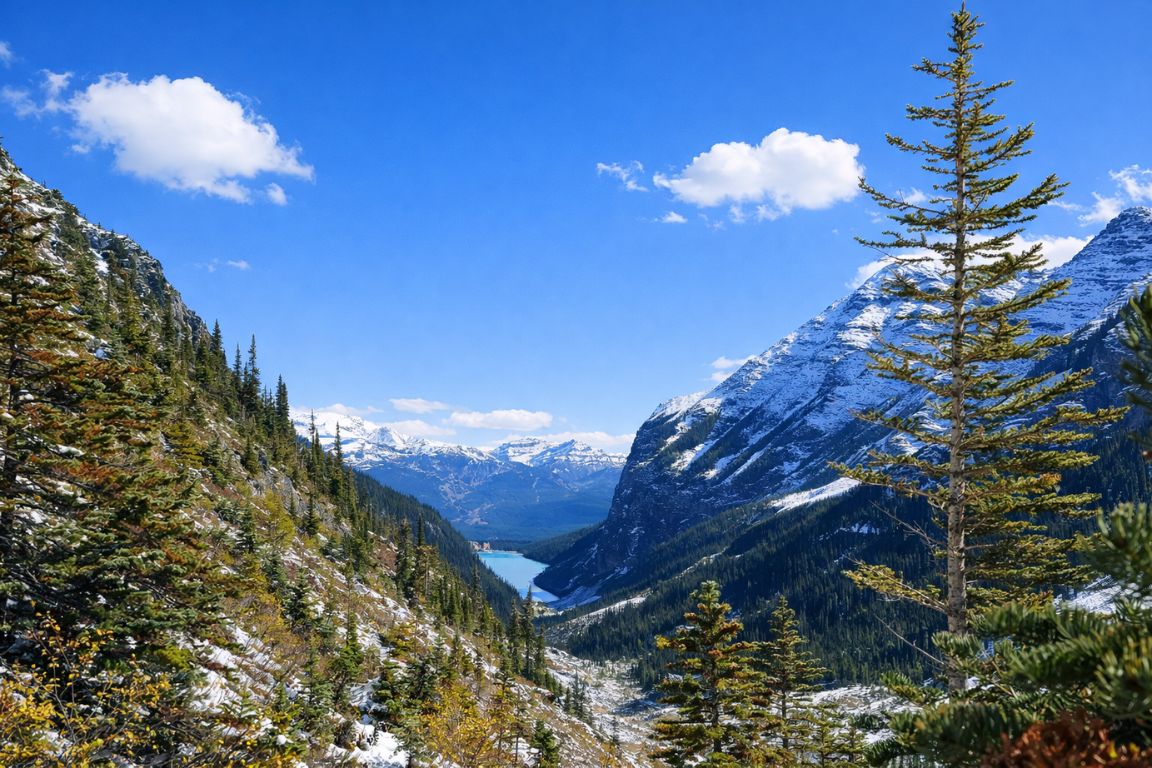 For pure hiking quality, September wins. Temperatures are in the ideal 10-18°C range, almost every trail that opened in summer remains open, wildfire smoke has typically cleared, and the larch window adds a visual layer that no other month can match. July and August offer the most trail access of any period, including higher-elevation alpine routes that may still carry snow in June. For anyone targeting specific objectives like Sentinel Pass or the Plain of Six Glaciers, the July through mid-September window is your reliable access period.
| June | Moderate, lower trails open, alpine snowpacked | Cool, some mud | Valley hikes, Johnston Canyon, Fenland |
| July | Full access | Warm, afternoon storms | All routes including alpine, busiest |
| August | Full access | Warm, smoke risk eases | All routes, slightly less busy than July |
| September | Full access until mid-month closures begin | Ideal 10-18°C, stable | Larch Valley, Sentinel Pass, all major routes |
| October | Limited, alpine snow returns, Moraine closes | Variable, cold | Lower trails, Sulphur Mountain, Bow River loop |
The larch timing matters more than most non-locals realize. Peak larch colour runs roughly September 15 to October 5 each year, concentrated in the last ten days of September. The Larch Valley trail from Moraine Lake (shuttle required) and Healy Pass from Sunshine Village are the two most celebrated routes. Both are accessible in summer but visually transformed in larch season.
One thing we tell every hiker regardless of month: download your trail maps offline before you leave the hotel. Cell signal disappears fast outside the townsite and main roads. AllTrails Pro lets you cache any trail for offline use. Having a physical map as backup isn’t excessive, it’s just sense.
Banff Month-by-Month: What To Expect Every Month Of The Year
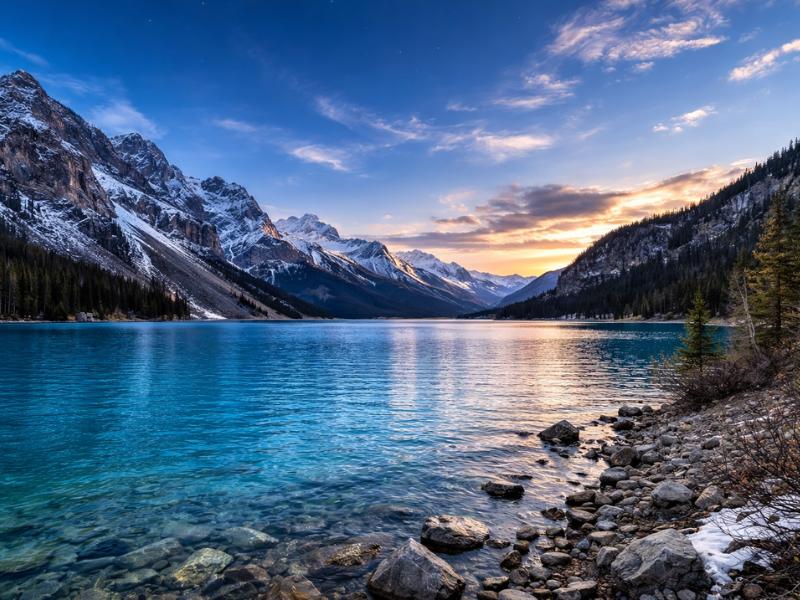
A quick reference for trip planning. Each month is genuinely distinct in this park.
January
The coldest month and one of the most beautiful. Average lows hit -15°C (5°F) with the possibility of -30°C on extreme nights. But the cold brings crystalline clarity: the peaks are blanketed in fresh snow, the light is sharp, and the town takes on a quieter, more local character after the holiday rush. Ski season is in full swing at all three resorts. Johnston Canyon ice walk is at its most dramatic. Days are short, around 8.5 hours of light. Bring serious cold-weather layers and don’t underestimate it.
February
Technically the driest month of the year, with only around 26mm of precipitation. Temperatures warm slightly from January’s lows, averaging around -6°C to -0.5°C. Late January through February is the most underrated ski window: holiday crowds have cleared, snow conditions are excellent, and accommodation prices are at their winter floor. Wildlife is active in the townsite area, with elk and bighorn sheep visible at lower elevations. Days are lengthening noticeably by month’s end.
March
Paradoxically, March often sees Banff’s heaviest snowfall of the year. Average temperatures hover around -4°C to 6°C, with genuinely warm spring afternoons possible. The ski resorts are in top form, Sunshine Village and Lake Louise often offering their best conditions of the season. Spring break brings families and the park gets its second-busiest winter traffic. Lower elevation walks around the townsite begin to clear. The first wildlife of spring emerges cautiously by month’s end.
April
A hidden gem month. Temperatures range from 2°C to 10°C. Sunshine Village often stays open into late April or early May, offering uncrowded late-season skiing with spring sun. Low-elevation trails around Banff townsite open up. Bears begin emerging from hibernation in April, and bighorn sheep move to roadside salt licks in numbers that make wildlife sightings almost guaranteed along certain stretches. Accommodation is affordable. The park has an energy that feels like anticipation. Worth strong consideration for budget-conscious travelers and wildlife enthusiasts.
May
Shoulder season in full effect. Average daytime highs reach 15°C in the valley. Lakes begin to thaw and turn colour. Wildflowers emerge at lower elevations. The catch: Moraine Lake Road stays closed until June 1, many alpine trails carry avalanche risk well into the month, and the weather oscillates between spring warmth and surprise snowstorms. Lower elevation hikes work well. The Icefields Parkway viewpoints become accessible but the Columbia Icefield experience typically doesn’t open until mid-May. Check trail conditions with Parks Canada before planning any high routes.
June
The gateway month. Moraine Lake opens June 1. Most major trails become accessible. The days are extremely long, with light until after 9 p.m. near the summer solstice. Average highs climb into the high teens Celsius and the park fills with wildflowers. June is also the wettest month, averaging around 73–130mm of precipitation, mostly from afternoon thunderstorms. Crowds are building but nowhere near July levels. June is genuinely underrated for visitors who want summer access with slightly more breathing room.
July
Peak everything. The most sunshine hours of the year, 11+ hours per day on average. Temperatures hit 20°C and occasionally push to 30°C on the hottest days. Every trail is open. The lakes are fully turquoise. Every shuttle is running. The park is at its most spectacular and its most crowded simultaneously. Roughly 600,000 to 650,000 visitors arrive this month. Shuttles sell out, accommodation was booked months ago, and popular viewpoints like the Lake Louise lakeshore are lined with people by mid-morning. Still deeply worth it. Just arrive before 8 a.m. at anywhere popular.
August
Nearly identical to July in terms of access and temperature, but with a few meaningful differences. Wildfire smoke, which can be significant in July, typically eases in August. The days start shortening noticeably by month’s end. Late August sees bears in the valleys foraging heavily before hibernation, increasing wildlife sighting opportunities. The end of August marks the beginning of elk rut, and the first hints of fall appear in valley vegetation. A slightly calmer version of July, for most practical purposes.
September
The month that changes people’s minds about Banff. After Labour Day, crowd levels drop by roughly a third from peak summer. Temperatures settle into the ideal hiking range of 10-18°C. The skies are often the clearest of the year. Then, around September 15, the larch trees begin their transformation. By September 20 to 25, Larch Valley, Sentinel Pass, Healy Pass, and the trails above Lake Agnes are draped in gold. This window lasts only ten days. Bears are active and feeding heavily in preparation for hibernation, some of the best bear sightings of the year happen in September along the Bow Valley Parkway. Elk rut is in full swing, with bull elk bugling through the valleys. September is, for many of our most experienced travelers, their favourite month in the park.
October
Early October can still offer golden larches and clear skies, but conditions shift fast. The first significant alpine snowfall typically arrives in early to mid-October. Moraine Lake Road closes mid-month. The Columbia Icefield experience wraps up. What remains: excellent lower-elevation hiking, the Johnston Canyon ice walk beginning to form, dramatically reduced crowds, and hotel prices that drop to shoulder-season levels. It’s a quieter, more atmospheric version of the park. Bring layers and check trail conditions before heading out.
November
The quietest month in Banff. The ski resorts begin opening by late November (Mt. Norquay typically first, followed by Lake Louise in early November, then Sunshine Village by late November). Summer attractions have closed. Most restaurants and shops remain open in the townsite. The park itself is stunning in the transition to winter, with early snowfall on the peaks and frozen edges on the lakes. Accommodation rates are at their lowest of the year. For travelers who want Banff without any crowds and are happy walking, shooting photography, or getting in early-season skiing, November is genuinely special.
December
Winter sets in fully and the festive season brings visitors back in numbers. The town of Banff is lit for Christmas, the ski resorts are running, and the Johnston Canyon ice walk is one of the best holiday-season activities in the Canadian Rockies. Average temperatures drop to around -9°C to -15°C. Around the holidays (Christmas through New Year), accommodation prices spike and the park gets its busiest winter traffic. Book early for the holiday window. For value in December, the first two weeks, before the holiday rush, offer excellent conditions at far more reasonable prices.
We’ve created a detailed Banff National Park tours by month guide because what you see in July is completely different from January or September – different activities, weather, and crowds.
When Is The Best Time To See Wildlife In Banff?
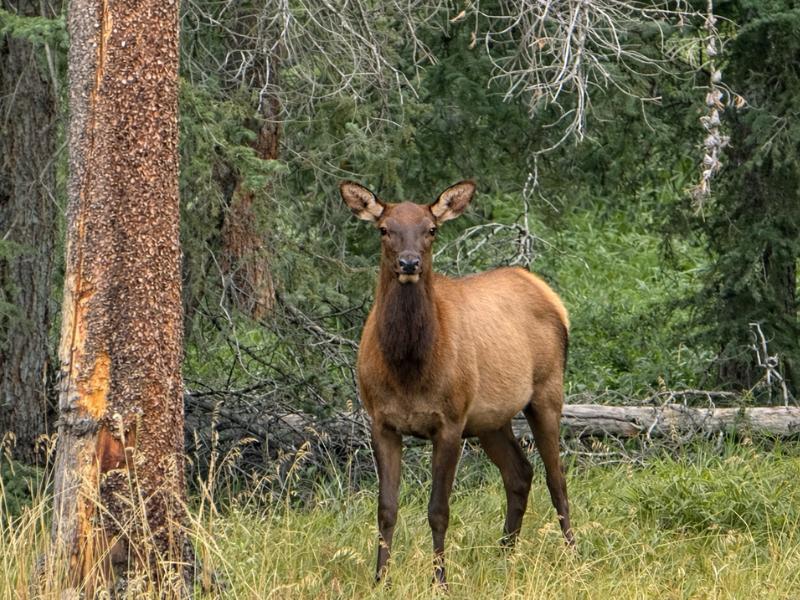
For sheer variety and frequency of sightings, late August through October is the most rewarding wildlife window. Bears are in hyperphagia, feeding intensively before hibernation, and more visible at valley level. Elk rut runs from late August through mid-October, with bull elk bugling and herding along the Bow Valley. Bighorn sheep descend to lower elevations in late fall and winter. Spring (April through June) is the other strong window, with bears emerging from dens and elk calves appearing in May and June. Summer offers the most diverse sightings, but the crowds also push wildlife off the most visible routes.
| Grizzly Bear | Late April-October (peak: July-September) | Bow Valley Parkway, Lake Louise gondola area, Icefields Parkway |
| Black Bear | May-October | Bow Valley Parkway, forest edges along highway corridors |
| Elk | Year-round (peak: September rut) | Vermilion Lakes, Banff Springs Golf Course loop, Fenland Trail |
| Bighorn Sheep | Year-round (lower elevations: Oct-May) | Minnewanka Loop, Mt. Norquay Road, Sulphur Mountain gondola top |
| Moose | Spring and fall (dawn and dusk) | Vermilion Lakes, Lake Minnewanka shoreline |
| Wolf | Winter (easier to track in snow) | Bow Valley Parkway at dawn or dusk, rare sighting, not guaranteed |
| Mountain Goat | Summer (high elevation) | Icefields Parkway near Jasper boundary, Bourgeau Lake hike |
A note on timing within any day: most large mammals are active at dawn and dusk. If you drive the Bow Valley Parkway before 8 a.m. or after 6 p.m. during any season, your sighting odds improve dramatically. The animals haven’t disappeared in summer, they’ve adjusted their patterns around midday human traffic. Early and late, the Parkway consistently delivers.
Bears deserve specific attention for safety: maintain a minimum 100 metres from bears and wolves at all times. Carry bear spray and know how to use it. Do not approach, feed, or follow wildlife regardless of how habituated they appear. The elk during rut are particularly underestimated, a bull elk in September weighs up to 500 kg and moves fast. Admire from a respectful distance.
A guided wildlife-and-viewpoints drive offers a structured 3.5-hour route through listed Banff stops. Pickup is available on request, and no specific animal sighting is guaranteed.
Every month in Banff is worth showing up for. The question is what you want to experience when you get here. Avery and the team have guided travelers in every season since 2014 and know this park in each of its faces. Browse the current Banff tour list and start from the season you want.
What Our Travelers Tell Us About Timing
| % who said September was their favourite month after visiting multiple seasons | 58% |
| Most common timing regret among summer visitors | Arrived too late in the morning for popular sites (42%) |
| % of guided groups who reported wildlife sightings on the Bow Valley Parkway | 79% |
| Average visitor who saw elk rut in September rated it top experience of the trip | 67% |
| % who said larch season exceeded expectations | 84% |
| Most underestimated season by first-time visitors | Winter (December-February) |
Frequently Asked Questions
What is the best month to visit Banff National Park?
September is the single month most experienced travelers ultimately prefer: ideal hiking temperatures, larch season turning the alpine gold, reduced crowds after Labour Day, and excellent wildlife activity. For first-time visitors prioritizing full access and warmest weather, July and August remain the most popular choice, though they require the most planning and earliest starts at popular sites.
When is larch season in Banff?
Larch season runs from mid-September to early October each year, with peak colour concentrated in roughly a ten-day window around September 20 to October 1. The exact timing shifts slightly year to year based on temperature and weather patterns. The most celebrated larch hike is Larch Valley and Sentinel Pass, starting from Moraine Lake, which requires a shuttle reservation from early June through mid-October.
Is Banff worth visiting in winter?
Absolutely. Three world-class ski resorts operate within or adjacent to the park. The Johnston Canyon ice walk is one of the most extraordinary experiences in the Canadian Rockies. Wildlife is active and visible at lower elevations. The town of Banff maintains a festive energy through the winter months. Hotel rates are lower than summer outside of the holiday window, and the park has a quieter, more contemplative character that many visitors find deeply satisfying.
When does Moraine Lake open and close?
Moraine Lake Road typically opens June 1 and closes to shuttle access in mid-October each year. Private vehicles are permanently banned from the road. The only ways to reach Moraine Lake are via Parks Canada shuttle (reservation required, opens mid-April), Roam Transit Super Pass with Lake Connector shuttle, licensed commercial operators, or a guided tour.
What is Banff like in September?
September is arguably Banff’s finest month. Crowds are roughly a third of July peak levels. Temperatures are ideal for hiking at 10–18°C. Larch season turns the subalpine zone gold from mid-to-late month. Bears are highly active in the valleys preparing for hibernation. Elk rut brings bugling and dramatic wildlife behaviour through the valleys. Hotel rates soften from peak summer pricing. Most trails remain open through the month.
What is the cheapest time to visit Banff?
The cheapest windows are the shoulder seasons: late April through May, and late October through mid-November. These periods fall between the ski season and summer rush, and between summer and the winter ski season respectively. Accommodation rates drop significantly, crowds are minimal, and the park is still beautiful. The tradeoff is some closures of seasonal attractions and less predictable weather.
Written by Avery Claire Thompson
Canadian tour guide since 2014 · Founder, Banff National Park Tours
Avery has guided over 8,600 travelers through Banff National Park and the Canadian Rockies since founding the agency.
Match A Tour To Your Season
Compare a guided day with the independent options in this guide. Confirm your date and meeting point before booking.
Match These Options To Your Trip
 Our Starting Recommendation
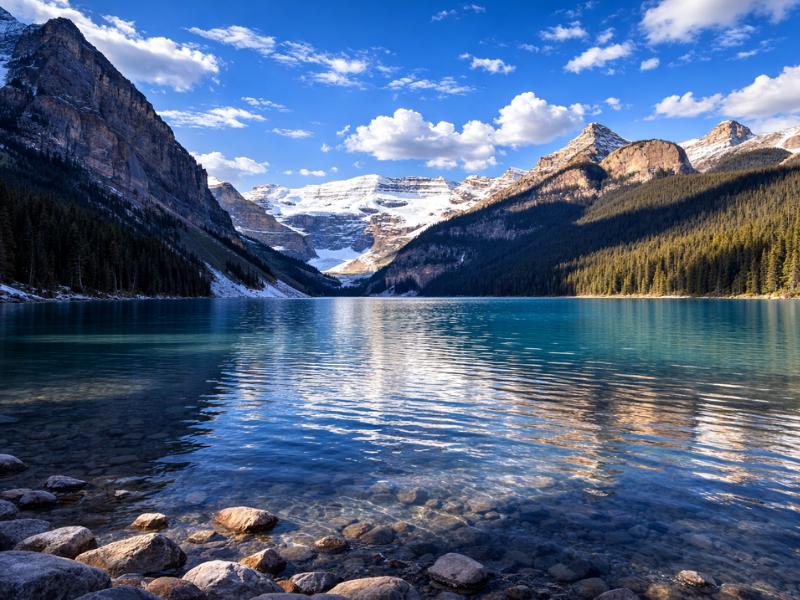
Lake Louise And Moraine Lake Day Tour
Link the two lakes without organising separate transport.
8–10 hours · English
Pickup in Calgary, Canmore or Banff; confirm the selected meeting and end points.
Guide, transport and listed lake access. Meals and personal expenses extra.
No wheelchair access. Bring your own child seat for children under 7. Moraine Lake is seasonal.
Visit The Two Lakes ↗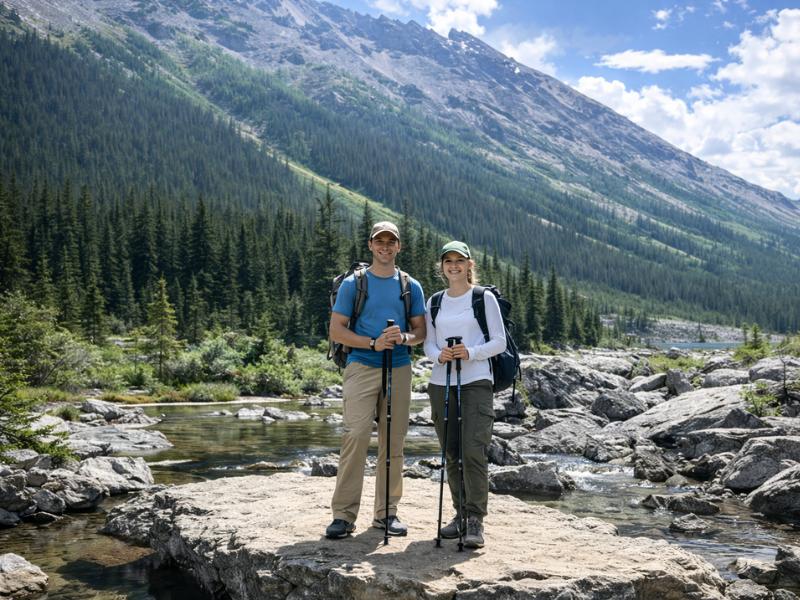 A Different Way To Spend The Day
Guided Signature Hike With Lunch
Spend the day on a named mountain trail with a guide, transport and lunch.
7 hours · English
Banff hotel pickup or the listed Mount Royal Hotel meeting point.
Certified guide, picnic lunch, hiking poles and transport. Teahouse purchases extra.
Ages 13+. Route depends on weekday and conditions. The Larch Valley route does not reach the top of Sentinel Pass.
Choose A Guided Hike ↗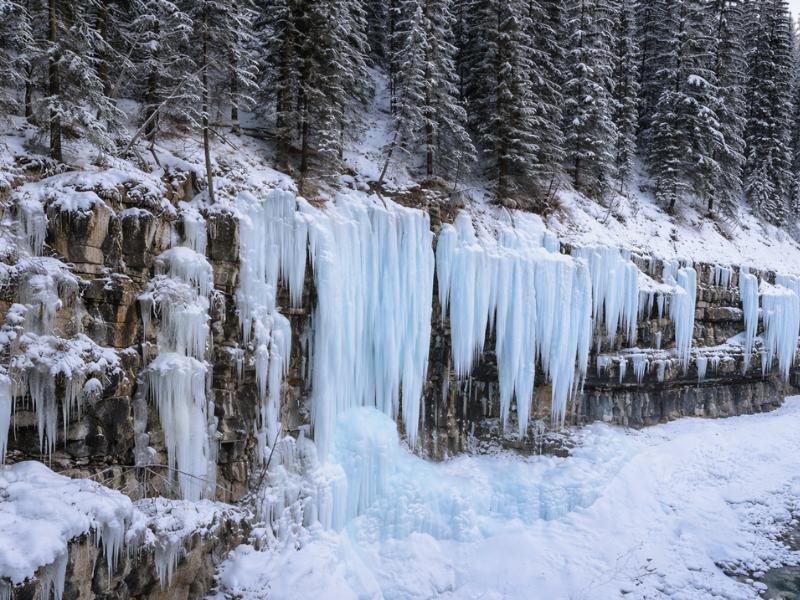 A Different Way To Spend The Day
Johnston Canyon Guided Icewalk
Walk to frozen waterfalls with a guide, ice cleats and poles provided.
4 hours · English
Banff pickup; confirm the listed morning or afternoon meeting time.
Guide, transport, ice cleats, poles, hot chocolate and cookie. Tips extra.
Ages 8+. A 5.4 km round trip with 135 m elevation gain. Moderate fitness and your own winter clothing needed.
Walk The Frozen Canyon ↗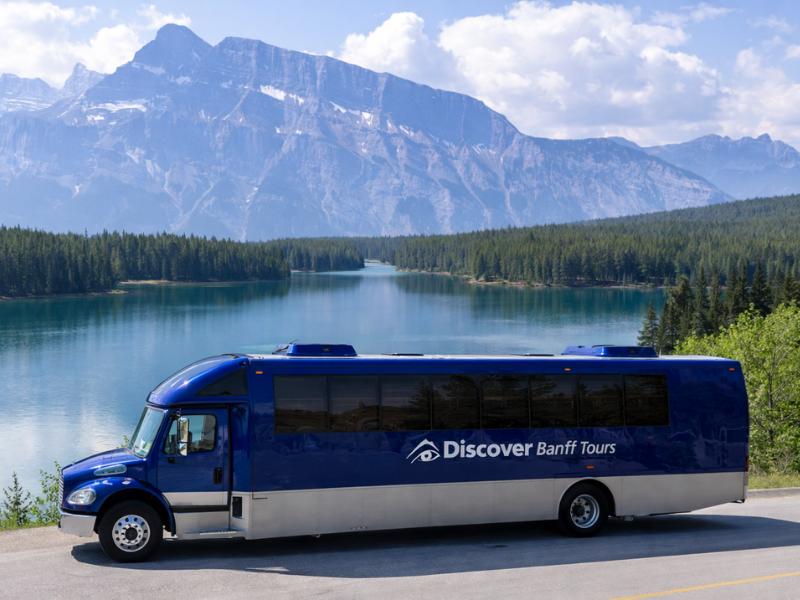 A Different Way To Spend The Day
Banff Wildlife And Viewpoints Minibus
Join Bow Falls, Surprise Corner and Lake Minnewanka in a guided morning.
3½ hours · English
Banff hotel pickup on request; otherwise the Mount Royal Hotel bus parking.
Guide, minibus, cookie and drink. Gratuities extra.
Wildlife sightings are never guaranteed. Ask about child seating and access needs before booking.
Explore Banff’s Viewpoints ↗No choices needed to use the recommendations above.
Work Out The Cost For Your Group
Enter complete quotes in CAD for the same people, date and itinerary. Include transport, parking, entry, food and any other extras on both sides. For shared versus private, enter the shared total first and private total second.
Use current quotes; no prices or savings are assumed.
Turn Your Plan Into A Day Out
Treat seasonal labels as planning guidance and confirm the operator's dates before you commit to flights or hotels.
Your Next StepLake Louise And Moraine Lake Day Tour
Link the two lakes without organising separate transport.
8–10 hours · English
Pickup in Calgary, Canmore or Banff; confirm the selected meeting and end points.
Guide, transport and listed lake access. Meals and personal expenses extra.
No wheelchair access. Bring your own child seat for children under 7. Moraine Lake is seasonal.
Visit The Two Lakes ↗Choose Your Date
Lake Louise And Moraine Lake Day Tour
Open the provider’s calendar to select your date, party and departure. Availability and prices are confirmed there.
Dates On GetYourGuide
Guided Signature Hike With Lunch
Choose a date and party to see current options. Confirm the meeting point and restrictions on the listing.
More Banff Sightseeing On Viator
Browse the site’s original Viator selection of Banff day tours, wildlife outings and lake excursions. These are additional ideas, not matches to the trip form. Check dates, duration, pickup and suitability on each listing.
Open The Recommended Outing ↗