Banff Summer Activities
Summer in Banff means turquoise lakes, open alpine trails, and peak crowds. Plan early, book shuttles, and start hiking before 7am.
A guided summer experience is most useful where shuttle access, a full-day trail plan, or crowd timing would otherwise dominate your day. Choose Your Summer Banff Day
Last updated: April 29, 2026
Summer in Banff runs late June through August and is the fullest version of the park – every trail open, lakes at turquoise peak, all facilities running. The non-negotiables are getting to Moraine Lake and Lake Louise (shuttle reservations required, no private vehicles at Moraine Lake), hiking at least one alpine route, and being on the trail before 7 am if you want the experience without the crowd noise. The park is worth every bit of the effort summer demands. It just demands planning.
| Summer window | Late June through August; September still excellent for hiking |
| Typical valley temps | 20-25°C daytime; 8-12°C overnight; alpine always colder |
| Park pass (daily adult) | CAD $12.25 – Verified March 2026 |
| Free admission 2026 | June 19 to September 7 (Canada Strong Pass) |
| Moraine Lake Road | Closed to private vehicles year-round; shuttles June 1 to October 12, 2026 |
| Shuttle reservations open | April 15, 2026 at 8 am MT (40% of seats); rolling 48-hr window for remaining 60% |
| Parks Canada shuttle cost | CAD $8/adult return; youth 17 and under free |
| Lake Louise shuttles | May 16 to October 13, 2026 |
| Alpine passes snow-free | Most by mid-July; prime alpine hiking July to mid-September |
| Lake Minnewanka Cruise | Opens May 8, 2026; runs to October 12 |
| Banff Gondola | Open year-round; dynamic pricing – book 48+ hrs ahead for best rate; 8-min ride to summit |
| Banff Upper Hot Springs | Open year-round; 38°C pool; on Sulphur Mountain |
| Sunset (July) | Around 10 pm; usable light until nearly 11 pm |
| Emergency / Banff Dispatch | 403-762-1470; cell coverage unreliable throughout park |
The alarm goes off at 4 am. You are not excited about this. The coffee hasn’t brewed yet and the sky outside is still completely dark and your body is doing the thing where it refuses to accept that this is a real plan. Then you’re standing at the edge of Moraine Lake as the first light hits the peaks, and the water is a color that doesn’t look like it belongs in the real world, and there are maybe thirty other people within sight and it is completely, utterly silent except for the wind off the glacier.
That is the version of Banff in summer that we’ve been helping people find for over a decade. The version where the logistics fade into the background and what’s left is just the park itself, doing what it does at that elevation in that light. It takes some effort to get there. Every bit of it is worth it.
Your Experience Plan: Make the two-lake day the default for first visits, then switch to the hike, gondola, or wildlife outing when that better matches your pace.
What Are The Best Things To Do In Banff In Summer?
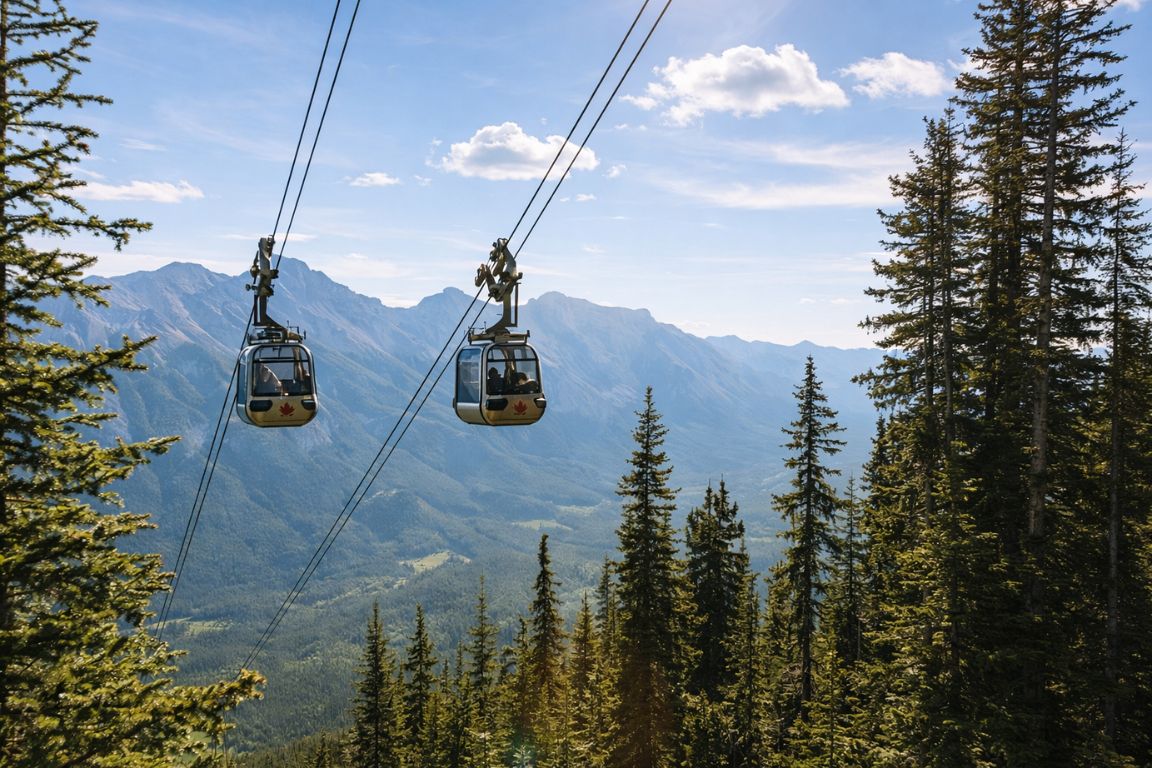 The summer highlights in Banff are: hiking alpine trails that are only accessible from mid-July, visiting Moraine Lake and Lake Louise with a pre-booked shuttle, paddling or cruising on Lake Minnewanka, riding the Banff Gondola to the summit of Sulphur Mountain, driving the Icefields Parkway, and soaking in the Upper Hot Springs after a long trail day. Summer is also the best season for wildlife watching at dawn and dusk, wildflower meadows in the subalpine, and evening light that runs until nearly 10 pm.
Summer in Banff isn’t complicated to understand. The whole park opens. The high alpine passes clear of snow by mid-July. The lakes hit their peak turquoise. Temperatures in the valley reach 20 to 25°C on a good day. Evenings stay light until well past 9 pm, which changes what a day in the mountains even means. You’re not racing against a 7 pm sunset – you have time.
What makes summer require planning is the visitor volume. The park saw over 4.2 million visitors in fiscal year 2024/25, with the majority concentrated between June and August. Every year, a meaningful percentage of those visitors has a frustrating experience because they showed up without knowing how the logistics work. The people who have great summer trips are not luckier than the ones who don’t. They just planned. The rest of this article covers exactly what that planning looks like.
Overwhelmed by tour choices? Check out our breakdown of the best Banff National Park tours – it cuts through the marketing hype and shows you what each one really offers.
What Are The Best Summer Hikes In Banff?
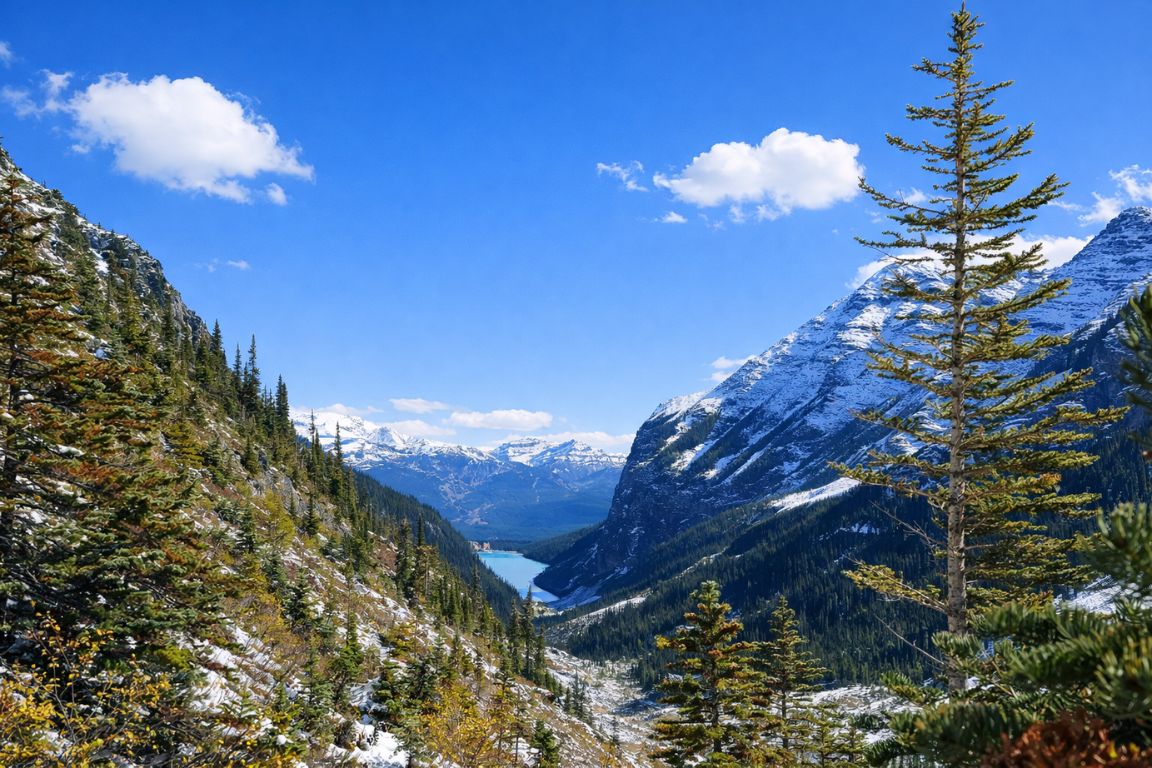 Summer unlocks the full trail network across all elevations. The standout hikes are: Plain of Six Glaciers (14 km RT, 365 m gain, teahouse at 7 km), Sentinel Pass via Larch Valley (11.6 km RT, 725 m, 2,611 m summit), Lake Agnes and Big Beehive (7-10 km RT, 385–494 m gain), Johnston Canyon to the Ink Pots (10.5 km RT), and the Icefields Parkway corridor hikes like Parker Ridge and Helen Lake. For the full breakdown of trail distances, difficulty, and timing, see our complete Banff hiking trails guide.
The single thing that separates a summer hiking experience from anything you can do in spring or fall is access to the alpine passes. Sentinel Pass, at 2,611 m, requires Moraine Lake to be open (it opens June 1) and the upper trail to be snow-free, which typically happens mid-July. The Plain of Six Glaciers teahouse, sitting improbably against grey moraine at the end of a long trail above Lake Louise, is accessible by late June or early July. These are not places you can reach in May.
| Sentinel Pass via Larch Valley | 11.6 km | 725 m | Requires Moraine Lake shuttle; most dramatic summit in the park; snowshoes/microspikes until mid-July |
| Plain of Six Glaciers | 14 km | 365 m | Teahouse at 7 km; Abbot Pass viewpoint at end; starts at Lake Louise; shuttle required |
| Lake Agnes + Big Beehive | 10 km | 494 m | Teahouse at Lake Agnes; Big Beehive summit adds stunning Bow Valley view; starts at Lake Louise |
| Johnston Canyon to Ink Pots | 10.5 km | 215 m | Iron catwalks through slot canyon; Ink Pots are cold-spring pools; trailhead via Bow Valley Pkwy |
| Parker Ridge (Icefields Pkwy) | 5 km | 250 m | Best accessible glacier view in the park; short effort, big payoff; opens July |
| Consolation Lakes | 6 km | 65 m | Easy; accessed from Moraine Lake; boulder field crossing; quiet alternative to Sentinel Pass |
| Healy Pass | 18.4 km | 655 m | Wildflower meadows mid-July through August; no shuttle required; excellent larch in fall |
| Tunnel Mountain loop | 4.8 km | 260 m | Walkable from downtown; best for first mornings in town; good views of Rundle and Bow Valley |
One honest observation from a decade of guiding summer hikers: the crowds disperse remarkably fast once you gain elevation. The rockpile at Moraine Lake can feel overwhelming at 9 am. Take the Larch Valley trail fifteen minutes past the trailhead and the crowd thins. By the time you’re in the meadow at the base of the peaks, you may have the view largely to yourself. Most visitors in summer don’t hike far, and that’s a fact worth using.
Afternoon thunderstorms are common throughout July and August. Plan to be off exposed ridgelines by 1 or 2 pm on unstable-looking days. The storms move fast in the Rockies and lightning at elevation is serious. Starting early solves this problem entirely – a 6 am departure gets you to most summits by midday with room to descend before weather builds.
We’ve rounded up the best hiking trails in Banff National Park tours so you’re not stuck wondering which routes are worth the effort versus which are overhyped tourist traps.
How Do You Actually Get To Moraine Lake And Lake Louise In Summer?
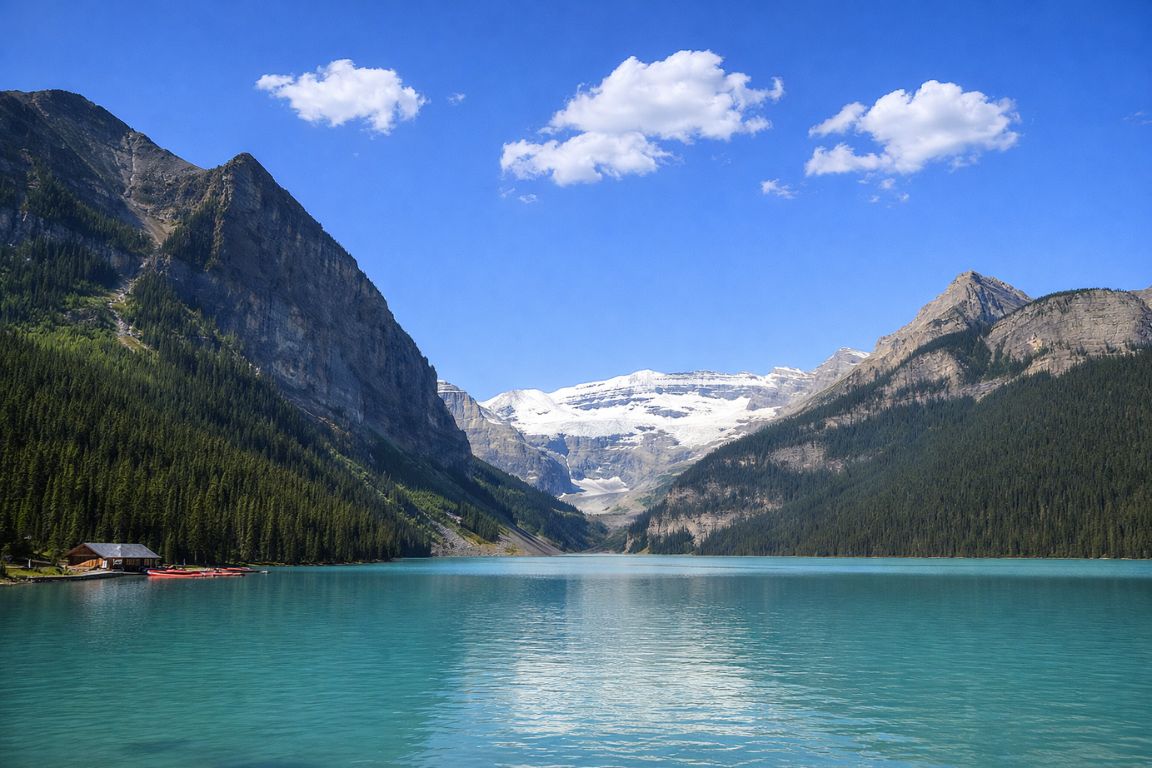 Moraine Lake Road is closed to private vehicles year-round. Parks Canada shuttles run June 1 to October 12, 2026 from the Lake Louise Park and Ride. Reservations open April 15, 2026 at 8 am MT – 40% of seats are released that day, and the remaining 60% open on a rolling 48-hour window. The shuttle costs CAD $8 per adult return. One reservation gives access to both lakes via the Lake Connector shuttle. Book through reservation.pc.gc.ca or call 1-877-737-3783.
This is the single logistics question that catches the most first-time Banff summer visitors. Private vehicles have been prohibited at Moraine Lake since June 2023. The parking lot that used to exist there is gone as a public option. If you want to see Moraine Lake, your path runs through a shuttle or a guided tour.
Need the logistics breakdown? Our Moraine Lake travel guide walks you through everything from booking shuttles to avoiding the crowds to what time you need to wake up.
The Parks Canada shuttle system is the most affordable option at $8 per adult return. The catch is availability. Tickets for popular dates in July and August, particularly weekends, sell out on April 15. If you miss that launch date, your next best move is the rolling 48-hour window: Parks Canada releases additional seats at 8 am MT exactly two days before each departure date. This means checking on April 16 for April 18 departures, and so on through the season.
If the Parks Canada shuttle is sold out, there are commercial alternatives. The Moraine Lake Bus Company runs from the Lake Louise area with flexible timing. Radventures and other operators run guided tours that include Moraine Lake with hotel pickup from Banff. These cost more but come with a guide and remove all the logistics from your plate. For sunrise specifically, the Alpine Start Shuttle departs from Lake Louise Lakeshore at 4 am and 5 am daily, putting you at Moraine Lake before the standard shuttle service begins. Reservations required.
| Parks Canada shuttle | CAD $8/adult RT | Budget travelers; independent hikers | Reservations via reservation.pc.gc.ca; April 15 launch; 48-hr rolling window |
| Moraine Lake Bus Company | Higher than Parks Canada | Flexibility; no reservation window pressure | Runs from Lake Louise area; sunrise options available |
| Guided tour (e.g. Radventures) | Higher; varies by operator | Travelers wanting a guided experience with hotel pickup | Often includes both lakes; some include breakfast stop |
| Alpine Start Shuttle | Parks Canada pricing; parking fee at lakeshore applies | Sunrise access; photographers; early risers | 4 am and 5 am daily from Lake Louise Lakeshore; reservation required |
| Roam Transit Route 8X | Roam pass or fare | Walk-up access when Parks Canada sold out | No reservation required; runs Banff to Lake Louise; no direct Moraine Lake access |
| Accessible parking placard | Park pass required | Visitors with government-issued accessible parking permits | Vehicle access granted to Moraine Lake and Lake Louise on first-come basis |
One timing insight that doesn’t get mentioned enough: Lake Louise parking at the lakeshore itself fills completely before 7 am on peak summer days. The Park and Ride at Lake Louise Ski Resort, where shuttle passengers board, has over 2,000 spaces and stays manageable. If you’re driving to Lake Louise rather than taking a shuttle from Banff, plan to be in the Park and Ride lot by 7 am at the latest on busy weekends. This is not a comfortable hour for most people on vacation. It is the hour that makes the difference.
Planning a visit? Check out our complete Lake Louise guide – it covers parking nightmares, best viewing times, and activities most visitors don’t know about.
We’ve been navigating these logistics for guests since 2014 and the systems change every season. If you want the lakes without coordinating the timing yourself, the Lake Louise and Moraine Lake tour includes pickup from Banff, Canmore, or Calgary.
What Water Activities Are Available In Banff In Summer?
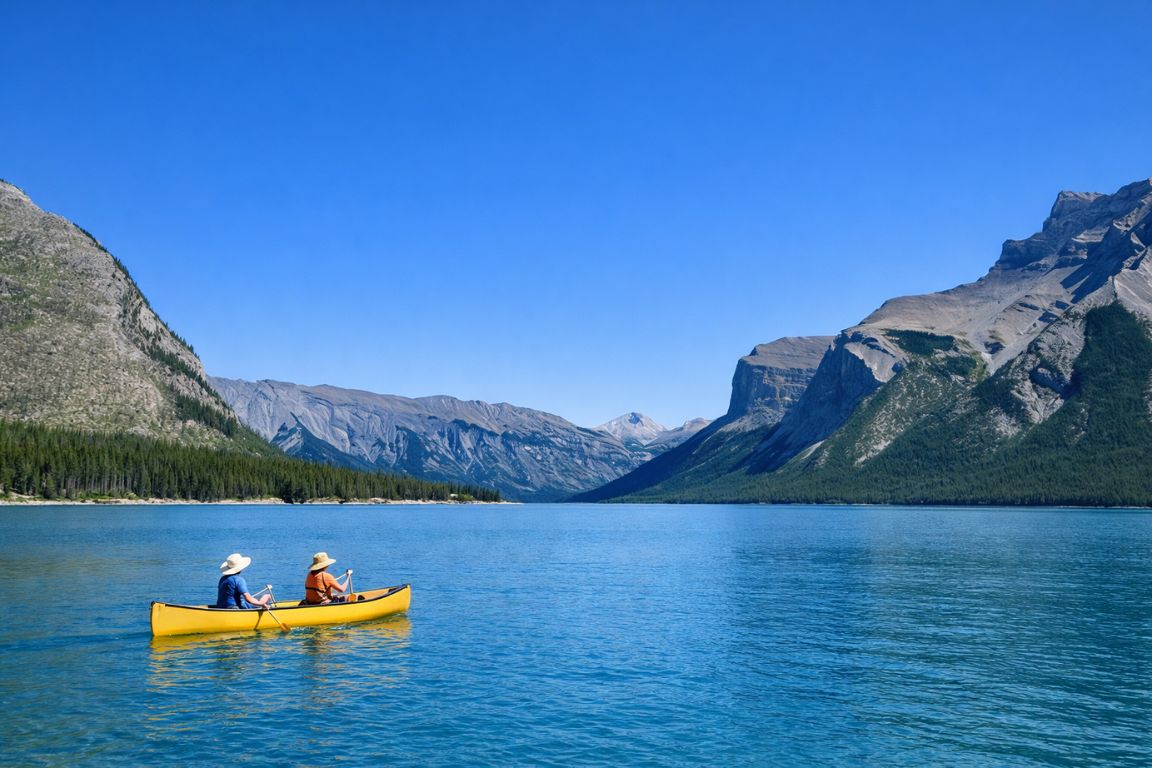 The main water activities in summer Banff are: the Lake Minnewanka cruise (1-hour guided tour on the park’s largest lake), kayak, canoe, and motorboat rentals at Lake Minnewanka, paddleboarding on various smaller lakes, whitewater rafting on the Kicking Horse River nearby, and canoeing on Lake Louise and Bow River. Lake Minnewanka is the only lake in Banff National Park where motorized boats are permitted.
Lake Minnewanka sits 11 km east of the Banff townsite and spans 21 km in length and 142 m at its deepest point. It’s a different scale than the famous glacier lakes, and on a summer afternoon the wind can push real swells across open water. The guided cruise runs about one hour with a knowledgeable guide covering the lake’s geological history, the Stoney Nakoda people who used the area, and the submerged village of Minnewanka Landing, flooded when a dam was built in 1941 and now a popular scuba diving site. The cruise season opens May 8, 2026, running daily through October 12.
Kayak and canoe rentals start at approximately $55 to $65 per hour. Motorboat rentals, 16-foot aluminum boats with outboard motors, run roughly $95 to $105 per hour. Rentals operate on a first-come basis from the boathouse – arrive first thing in the morning or late afternoon to avoid waiting. All rentals include life jackets and basic safety equipment. One regulation worth knowing before you bring your own watercraft: Parks Canada requires a self-certification AIS (aquatic invasive species) prevention permit for all non-motorized watercraft before entering any lake or river in the park. The permit is free and available from Parks Canada.
Canoeing on Lake Louise is something most visitors walk straight past. Wooden canoe rentals are available at the boathouse on the lake’s north shore, and paddling to the far end of the lake with Victoria Glacier filling the horizon is one of the quieter summer experiences in the park. It gets busy but not unmanageable, and the water is shallow enough near the shore to feel manageable for families. The lake is cold. Genuinely cold, as glacier lakes run, which keeps most people from swimming but makes the canoe experience even better on a warm day.
What Non-Hiking Activities Are Worth Your Time In Banff In Summer?
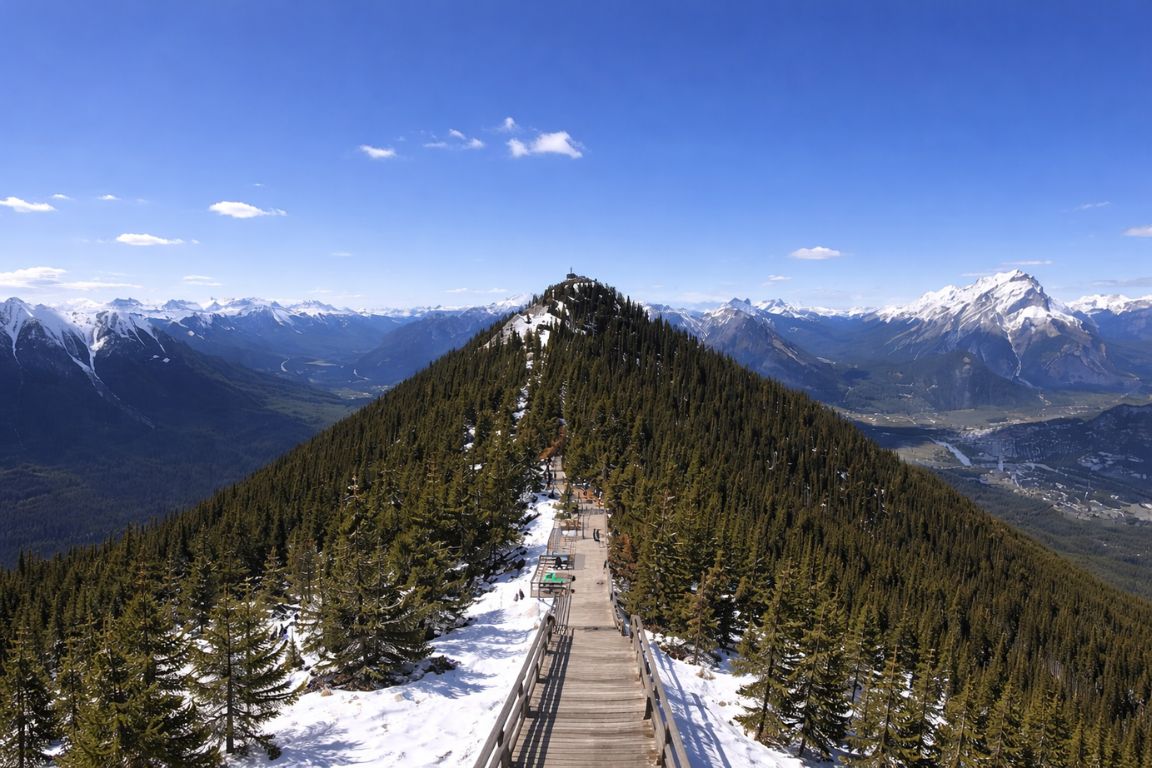 Beyond hiking and water activities, the standout summer experiences are: the Banff Gondola to the summit of Sulphur Mountain (8-minute ride, 360-degree views of six mountain ranges, 2 km boardwalk to Sanson’s Peak), the Banff Upper Hot Springs (38°C pool at 1,585 m), the Icefields Parkway drive (230 km between Banff and Jasper via some of the most spectacular mountain scenery on the continent), wildlife watching at dawn and dusk along the Bow Valley Parkway and Vermilion Lakes Drive, and the Banff Farmers Market (Wednesdays, Central Park, summer-long).
The Gondola question comes up constantly: is it worth it? Yes, with the right approach. The 8-minute ride to the summit of Sulphur Mountain at 2,281 m gives you the Bow Valley laid out completely below, six mountain ranges in view, and the town of Banff looking tiny in the bottom of its valley. The experience improves significantly if you walk the 2 km ridge boardwalk to Sanson’s Peak rather than staying at the summit building. The crowds thin as you move along the ridge. The views get better. The Cosmic Ray Station at the end is a genuine National Historic Site, a stone observatory where weather data was recorded continuously from 1903 onward. It takes maybe 20 minutes each way and most people skip it because they didn’t know it was there.
The Gondola operates on dynamic pricing – book at least 48 hours ahead for the best rates. Kids ride free before noon with one free child admission per paying adult. If you plan to hike up Sulphur Mountain on the trail (5.5 km, 655 m elevation gain, 1.5 to 3 hours depending on pace), you can buy a one-way ticket down at half the regular admission price. This is a legitimately good option on a summer morning when you want the workout but not the return descent on your knees.
The Icefields Parkway deserves its own separate day. The 230 km highway between Lake Louise and Jasper is routinely called one of the great drives on the planet, which sounds like marketing until you’re actually on it. Bow Lake, Peyto Lake (the wolf-head-shaped turquoise lake visible from the Bow Summit viewpoint), Parker Ridge for the best accessible glacier view in the park, and the Columbia Icefield are all along this corridor. Budget 6 to 8 hours minimum if you plan to stop meaningfully. Traffic builds by mid-morning in July and August; an early start from Lake Louise at 6 or 7 am is the right move.
Wildlife watching in summer has a specific rhythm. Bears are in the high alpine through August feeding on berries and avalanche slopes. Elk are in the valleys and around the townsite. Bighorn sheep appear reliably on the rocky roadcuts along the Minnewanka Scenic Drive and near the Banff Gondola base. Dawn and dusk are the active windows. The Bow Valley Parkway slow drive at 6 am, even in summer, remains one of the best wildlife experiences in the park. Questions about timing a wildlife morning are exactly what our guides answer daily. The verified Banff wildlife and viewpoints minibus runs 3.5 hours, with Banff pickup available on request and no guarantee of sightings.
How Crowded Is Banff In Summer And How Do You Manage It?
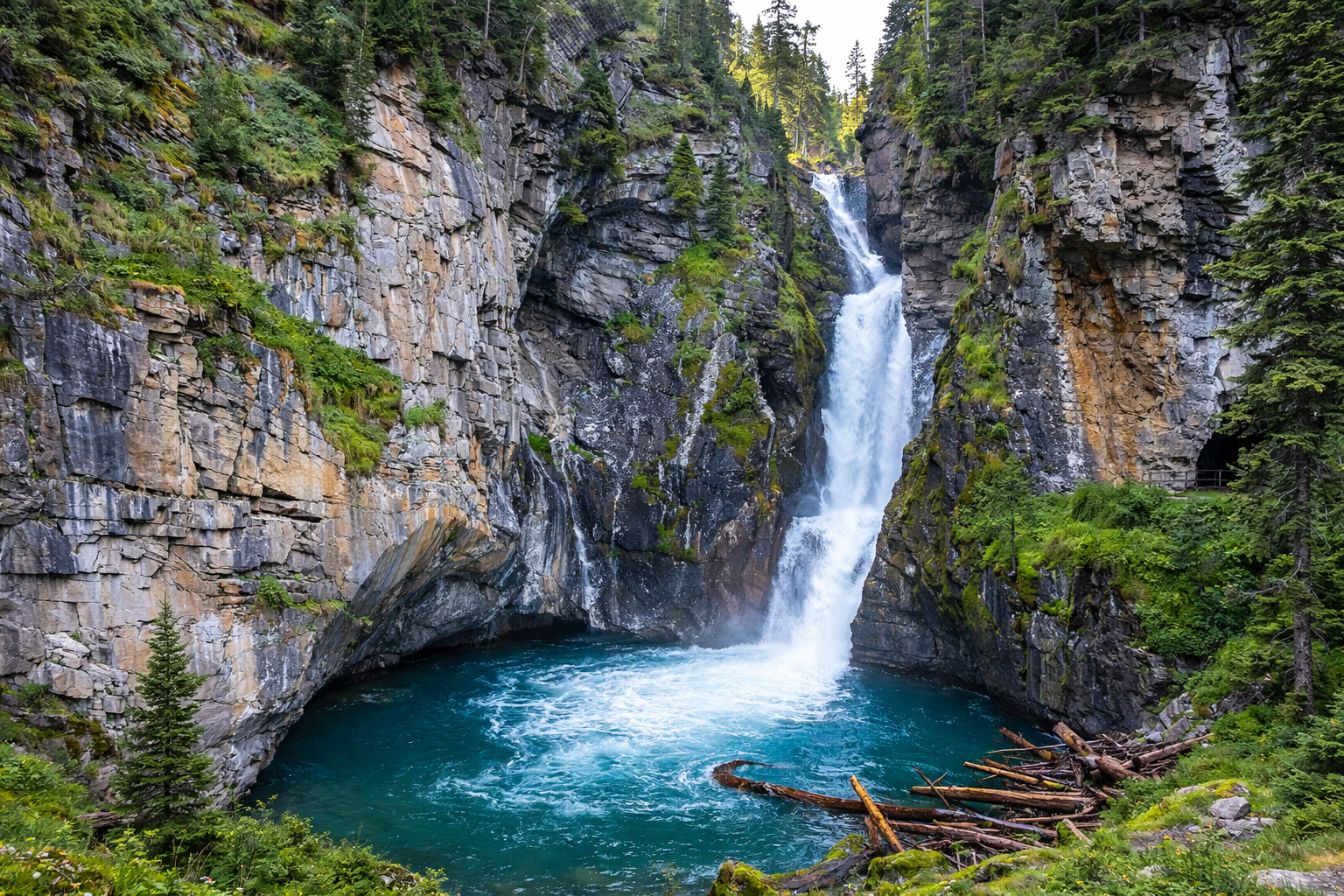 Summer Banff is genuinely crowded. July and August collectively see over 4 million vehicles entering the park and its townsite. The specific pressure points are: Moraine Lake and Lake Louise (managed by mandatory shuttles), Johnston Canyon (lines at the falls by 10 am on weekends), the Banff Gondola midday, and Banff Avenue afternoons. The management strategy that actually works: arrive at major sights before 7 am, hike past the first 1 km at any trailhead, and use evening light from 7 to 10 pm when day-tripper crowds have thinned.
Here is an observation we’ve made over years of guiding in peak season: more than 85% of visitors to the park never get further than 2 km from a parking lot. The park covers 6,641 square kilometres. If you walk, you leave most of the people behind. It’s that straightforward, and it’s that reliable.
The other number worth knowing: the sun doesn’t set in Banff until around 10 pm in July. That gives you a second window in the evening that most visitors completely ignore because they’re at dinner. The last two hours of daylight at Lake Louise, from around 8 pm onward, are some of the quietest and most photographable of any summer day. Same at Moraine Lake, if you timed your shuttle to arrive in late afternoon and stay until the last run. Plan for dinner at 10 pm and use the evening.
| Arrive at major sights before 7 am | Parking fills, crowds stack up between 9 am and 3 pm; morning light is better anyway | Early alarm; no other changes needed |
| Hike past the first 1 km | Crowd density drops fast above the trailhead; most people don’t walk far | 20-30 extra minutes beyond the popular lookout |
| Use evenings (7-10 pm) | Day-trippers and tour groups leave; light is warm; park is peaceful | Shift dinner and downtime to midday instead |
| Visit popular hikes on weekdays | Weekends bring Albertans and Calgary day-trippers; weekdays are noticeably quieter | Schedule flexibility required |
| Use transit from Banff townsite | Eliminates parking stress entirely; Roam Transit covers most major sites | Marginally slower than driving; no parking anxiety |
| Book Moraine Lake shuttle at April 15 launch | 40% of seats release that morning; popular dates fill fast | One calendar reminder; 10 minutes to book |
One thing we tell every summer guest that isn’t obvious until you’ve experienced it: the most popular things in Banff are popular because they’re genuinely extraordinary. Don’t let the crowd narrative talk you out of Moraine Lake or Lake Louise. Go. Just go at the right time, and go with a plan for what you’re doing once you get there.
Wondering when to go? Check out the best time to visit Banff National Park tours – certain months give you perfect weather while others mean dealing with massive summer crowds.
What Should You Pack For Banff In Summer?
 Summer packing for Banff centers on layers you can shed and add quickly. Valley temperatures reach 20-25°C but alpine air runs 10°C colder, and afternoon thunderstorms are common in July and August. Bring a waterproof shell (not water-resistant), sun protection rated for high elevation, and bug spray for any trail near water or through meadows. Bear spray is required for off-pavement hiking and must be clipped to your body.
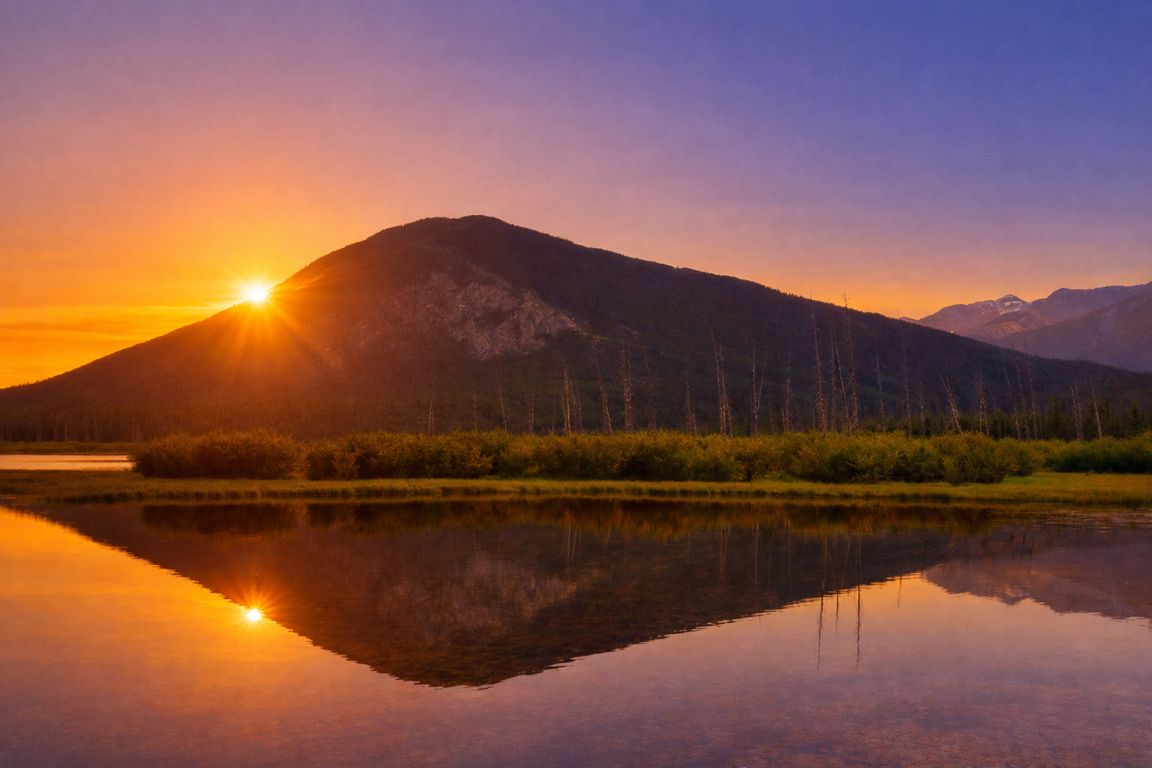
The bug situation in summer is one thing that almost every first-time visitor underestimates. The wetlands around Vermilion Lakes, the lower sections of valley trails, and anywhere near standing water or meadows will have mosquitoes in June and July. They bite through thin fabric. Bring proper bug spray and keep it accessible, not at the bottom of your bag.
| Waterproof shell jacket | Afternoon thunderstorms are common July-August; water-resistant fabrics saturate in sustained rain |
| Mid-layer (fleece or light insulated) | Alpine temps run 10°C below valley; teahouses and summits get cold fast |
| Waterproof hiking boots | Early morning trail dew and snowmelt patches at elevation; trail runners get wet fast on alpine routes |
| Bear spray (240 mL canister) | Required for all off-pavement hiking; must be holstered on body, not in pack; available at visitor centres |
| SPF 30+ sunscreen | UV intensity at elevation hits harder than at sea level; reflected light off snow and water amplifies it |
| Bug spray (DEET-based) | Meadows and lakeside trails have serious mosquitoes in June and July; they bite through light fabric |
| Offline map (Gaia GPS or similar) | Cell coverage fails throughout the park; do not depend on data signal for navigation |
| Headlamp | Useful for very early starts; light lingers late but having one for emergencies matters |
| Trekking poles | Useful on steep descents from alpine routes; significantly reduces knee strain on long days |
| Extra water (2+ litres) | No reliable water sources on many popular summer trails; refills at teahouses available but not guaranteed |
What Are The Biggest Mistakes People Make In Banff In Summer?
The five biggest summer mistakes: not booking Moraine Lake and Lake Louise shuttles before April 15, arriving at major sights after 9 am expecting parking or crowds to be manageable, not carrying bear spray on hikes, assuming afternoon weather will stay clear, and treating the park as one long checklist rather than building in time to actually be somewhere without rushing to the next thing.
The shuttle booking window is the one that costs people the most, because it’s so easy to fix with one calendar reminder and it’s so hard to recover from once you’ve missed it. July weekend dates at Moraine Lake sell out within hours of the April 15 release. If you’re traveling in July and August, mark April 15 now. Set the alarm for 7:59 am MT. Book before breakfast.
The bear spray issue is a different kind of mistake, and it’s one we feel responsible for being direct about. Parks Canada does not mandate bear spray on all hikes, but every guide we know treats it as non-negotiable from May through November. The park had 114 grizzly bear incidents and 391 black bear incidents in 2025. Bears are active, mobile, and encountered unpredictably. Spray that’s at the bottom of a daypack is spray that won’t be accessible in the three seconds you have to use it. Get a holster. Wear it.
The afternoon weather assumption catches a surprising number of hikers each summer. July and August afternoons in the Rockies build clouds fast. A clear 10 am sky above Sentinel Pass can turn into lightning at 2 pm. The rule we use: be off exposed ridgelines by 1 pm on unsettled days, no exceptions. An early start solves this entirely and also puts you at the best sights before the crowds, which is its own reward.
The last one is harder to quantify but we see it every season. People come to Banff with a list of nine things to do in four days and spend the whole trip in transit between objectives. The park doesn’t reveal itself to people moving that fast. The best version of a summer trip has maybe four things on the list and some open time to sit at a lake in the evening and just watch the light change on the water. Leave room for that. It’s what people actually remember.
What Our Summer Guests Get Right and Wrong: Field Observations
Based on guided summer tours and post-trip feedback across multiple seasons.
| Observation | Share of Summer Guests | Notes |
|---|---|---|
| Arrived at Moraine Lake after 9 am expecting it to be manageable | ~34% | Primarily first-time visitors; most recovered with shuttle education |
| Said the Gondola boardwalk walk to Sanson’s Peak was the best part of that experience | ~71% | Consistently underrated element; most people who do it say they wish they’d known earlier |
| Wished they’d budgeted a full day for the Icefields Parkway rather than a half day | ~58% | Common regret; the stops compound; 230 km is long when you actually stop |
| Said an evening at Lake Louise (after 7 pm) was their favorite moment of the trip | ~44% | Evening light consistently rates higher than midday visits in post-trip feedback |
| Had bear spray accessible (holstered, not packed) on hikes | ~52% | Still too low; we make this part of the pre-hike brief on every guided tour |
Frequently Asked Questions
Can you drive to Moraine Lake in summer 2026?
No. Moraine Lake Road has been closed to private vehicles since June 2023. To reach Moraine Lake, you need to book a Parks Canada shuttle (reservations open April 15, 2026 at 8 am MT), use a commercial shuttle like the Moraine Lake Bus Company, or book a guided tour. The only exceptions are visitors with government-issued accessible parking placards and registered Moraine Lake Lodge guests.
How early do you need to arrive at Lake Louise in summer?
If you’re driving, the Lake Louise Park and Ride parking lot (at Lake Louise Ski Resort) is your destination, not the lakeshore parking. For popular summer weekends, arriving at the Park and Ride before 7 am gives you comfortable access. The lakeshore parking fills before 7 am on busy days. If you’re taking the Parks Canada shuttle from Banff, book ahead and let the shuttle take care of timing.
What is the best summer hike in Banff for first-timers?
Johnston Canyon to the Ink Pots (10.5 km RT) is the best first-timer summer hike: dramatic slot canyon walkways, two waterfall payoffs, and the reward of the Ink Pots cold-spring pools at the end. If you want elevation and a teahouse, Lake Agnes (7 km RT from Lake Louise) adds 385 m of gain with a historically significant teahouse at the top. Both are accessible without a guide and don’t require technical experience.
Is the Banff Gondola worth it in summer?
Yes, particularly if you walk the boardwalk to Sanson’s Peak rather than staying at the summit station. The 360-degree views of six mountain ranges are genuinely impressive, and the ridge boardwalk quiets down past the first 500 m. Book at least 48 hours ahead for better dynamic pricing. Early morning (before 9 am) gives you the best light and the smallest crowds.
Do I need bear spray for Banff summer hikes?
We treat it as mandatory for any trail that’s not paved and heavily trafficked. The park recorded over 500 bear incidents in 2025 alone. Carry a 240 mL canister holstered on your body – not in your bag – and know how to use it. Bear spray is available at Banff visitor centres and most outdoor gear retailers in town.
When is the free admission period in Banff in 2026?
The Canada Strong Pass offers free park admission from June 19 to September 7, 2026. Youth 17 and under are always free year-round regardless of the program. Shuttle fees, gondola tickets, and attraction admissions are not included in the free admission – only the park entry fee itself.
Ready to plan your Banff summer?
Getting the logistics right makes the difference between a frustrating peak-season trip and the one people talk about for years. We’ve run summer tours in this park since 2014 – the early mornings, the shuttle coordination, the alpine hikes, the evening light at Lake Louise. If you want someone to handle the planning while you focus on the experience, start with the best Banff National Park tours guide.
Written by Avery Claire ThompsonCanadian tour guide since 2014 · Founder, Banff National Park Tours
Avery has guided over 8,600 travelers through Banff National Park and the Canadian Rockies since founding the agency.
Choose Your Summer Banff Day
Compare a guided day with the independent options in this guide. Confirm your date and meeting point before booking.
Match These Options To Your Trip
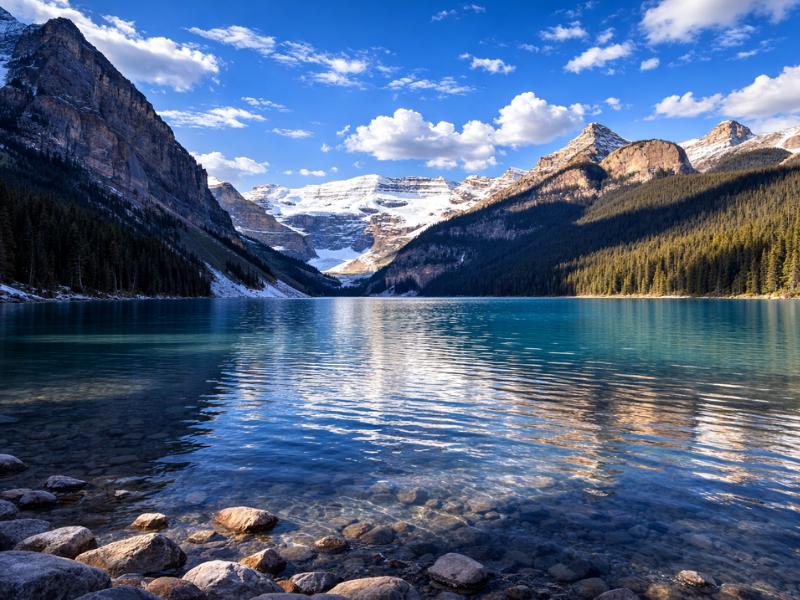 Our Starting Recommendation
Lake Louise And Moraine Lake Day Tour
Link the two lakes without organising separate transport.
8–10 hours · English
Pickup in Calgary, Canmore or Banff; confirm the selected meeting and end points.
Guide, transport and listed lake access. Meals and personal expenses extra.
No wheelchair access. Bring your own child seat for children under 7. Moraine Lake is seasonal.
Visit The Two Lakes ↗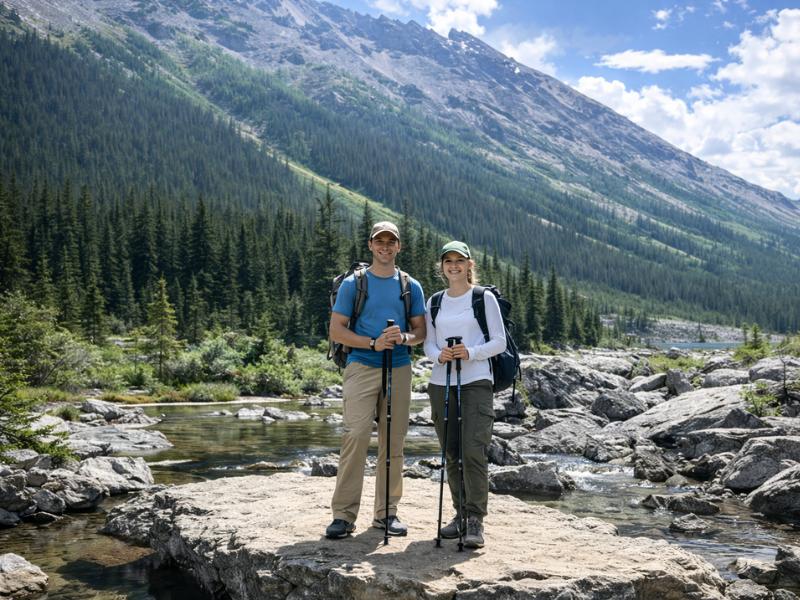 A Different Way To Spend The Day
Guided Signature Hike With Lunch
Spend the day on a named mountain trail with a guide, transport and lunch.
7 hours · English
Banff hotel pickup or the listed Mount Royal Hotel meeting point.
Certified guide, picnic lunch, hiking poles and transport. Teahouse purchases extra.
Ages 13+. Route depends on weekday and conditions. The Larch Valley route does not reach the top of Sentinel Pass.
Choose A Guided Hike ↗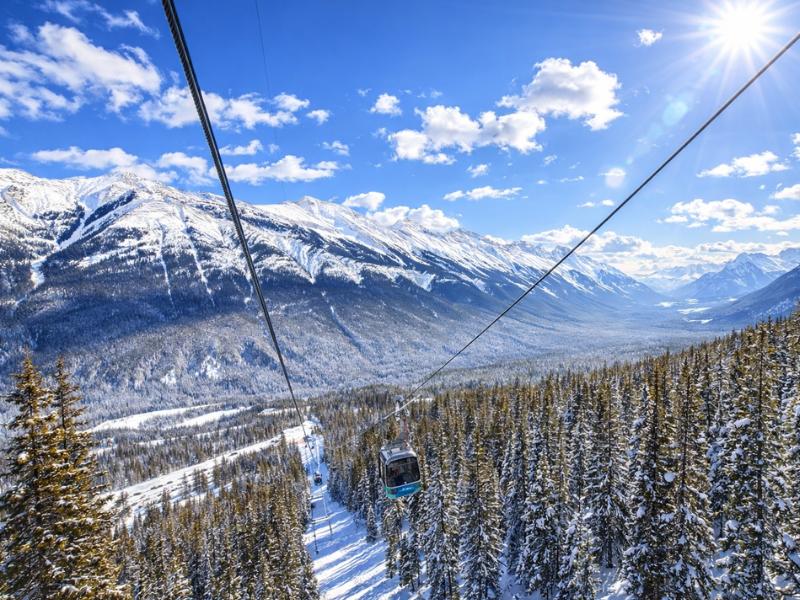 A Different Way To Spend The Day
Banff Gondola Summit Ticket
Reach Sulphur Mountain’s views without hiking the ascent.
Timed entry; ticket validity is 1 day · English
Make your own way to the Sulphur Mountain base.
Return gondola ride and summit interpretive facilities. Food, park admission and parking extra.
No strollers. Arrange accessibility requests with the operator at least 72 hours ahead. Confirm your return time.
Book The Summit Ride ↗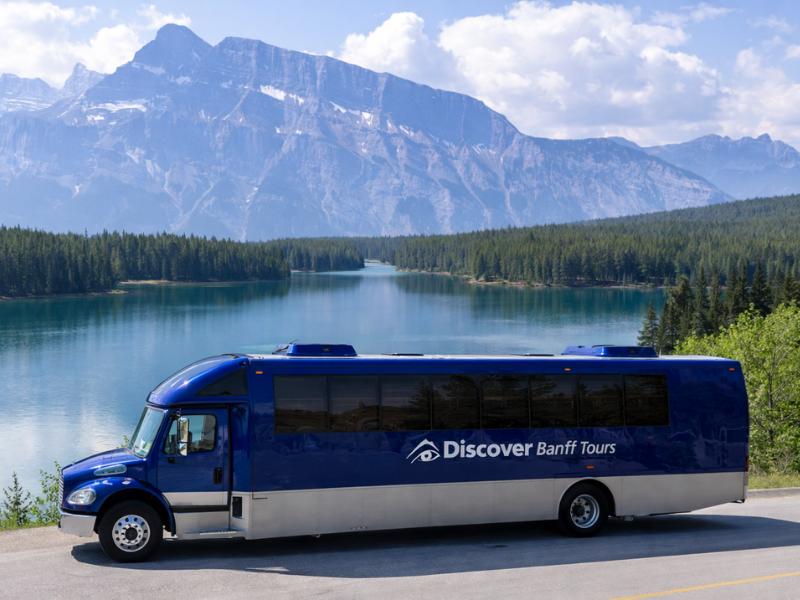 A Different Way To Spend The Day
Banff Wildlife And Viewpoints Minibus
Join Bow Falls, Surprise Corner and Lake Minnewanka in a guided morning.
3½ hours · English
Banff hotel pickup on request; otherwise the Mount Royal Hotel bus parking.
Guide, minibus, cookie and drink. Gratuities extra.
Wildlife sightings are never guaranteed. Ask about child seating and access needs before booking.
Explore Banff’s Viewpoints ↗No choices needed to use the recommendations above.
Work Out The Cost For Your Group
Enter complete quotes in CAD for the same people, date and itinerary. Include transport, parking, entry, food and any other extras on both sides. For shared versus private, enter the shared total first and private total second.
Use current quotes; no prices or savings are assumed.
Turn Your Plan Into A Day Out
Reserve the access-sensitive day now and keep water activities, town walks, and scenic drives flexible.
Your Next StepLake Louise And Moraine Lake Day Tour
Link the two lakes without organising separate transport.
8–10 hours · English
Pickup in Calgary, Canmore or Banff; confirm the selected meeting and end points.
Guide, transport and listed lake access. Meals and personal expenses extra.
No wheelchair access. Bring your own child seat for children under 7. Moraine Lake is seasonal.
Visit The Two Lakes ↗Choose Your Date
Lake Louise And Moraine Lake Day Tour
Open the provider’s calendar to select your date, party and departure. Availability and prices are confirmed there.
Dates On GetYourGuide
Guided Signature Hike With Lunch
Choose a date and party to see current options. Confirm the meeting point and restrictions on the listing.
More Banff Sightseeing On Viator
Browse the site’s original Viator selection of Banff day tours, wildlife outings and lake excursions. These are additional ideas, not matches to the trip form. Check dates, duration, pickup and suitability on each listing.
Open The Recommended Outing ↗