Fall In Banff
Fall is Banff’s secret season - golden larches, elk bugling, fewer crowds, and lower hotel prices. Here’s when to visit for peak color.
Fall planning comes down to trail ambition, lake access, and whether you want a short wildlife-focused drive. Choose Your Fall Banff Day
Last updated: March 13, 2026
Your Experience Plan: The guided hike follows a fixed weekday route, the lake day handles Moraine access while operating, and the wildlife drive offers no sighting guarantee.
Quick Facts: Banff In Fall
| Fall season window | Early September to mid-October (shoulder season; November transitions to winter) |
| Larch peak | September 20 to October 5 most years (varies with weather) |
| September temperatures | Daytime highs: 15-17°C. Overnight lows: 2°C. Alpine trails: 7-10°C |
| October temperatures | Daytime highs: 7-13°C early, falling to 3-6°C by month end. Nights can drop below freezing |
| Moraine Lake shuttle closes | Mid-October (2025: final shuttles October 13). Road closes after Canadian Thanksgiving |
| Elk rut season | Late August through mid-October. Keep minimum 30 metres from elk at all times |
| Park pass (adult daily) | CAD $12.25. Annual Discovery Pass: CAD $83.50. Youth 17 and under free. Prices verified March 2026. |
| Bow Valley Parkway | Eastern 17 km closed to vehicles Sept 1 to Oct 2 (cycling access only during this period) |
| Banff Centre Mountain Film and Book Festival | Annual event, late October. Check banffcentre.ca for current year dates |
| Bear activity | Bears in hyperphagia (active feeding) through October. Carry bear spray on all trails |
What Is Banff Like In The Fall, And Is It Worth The Trip?
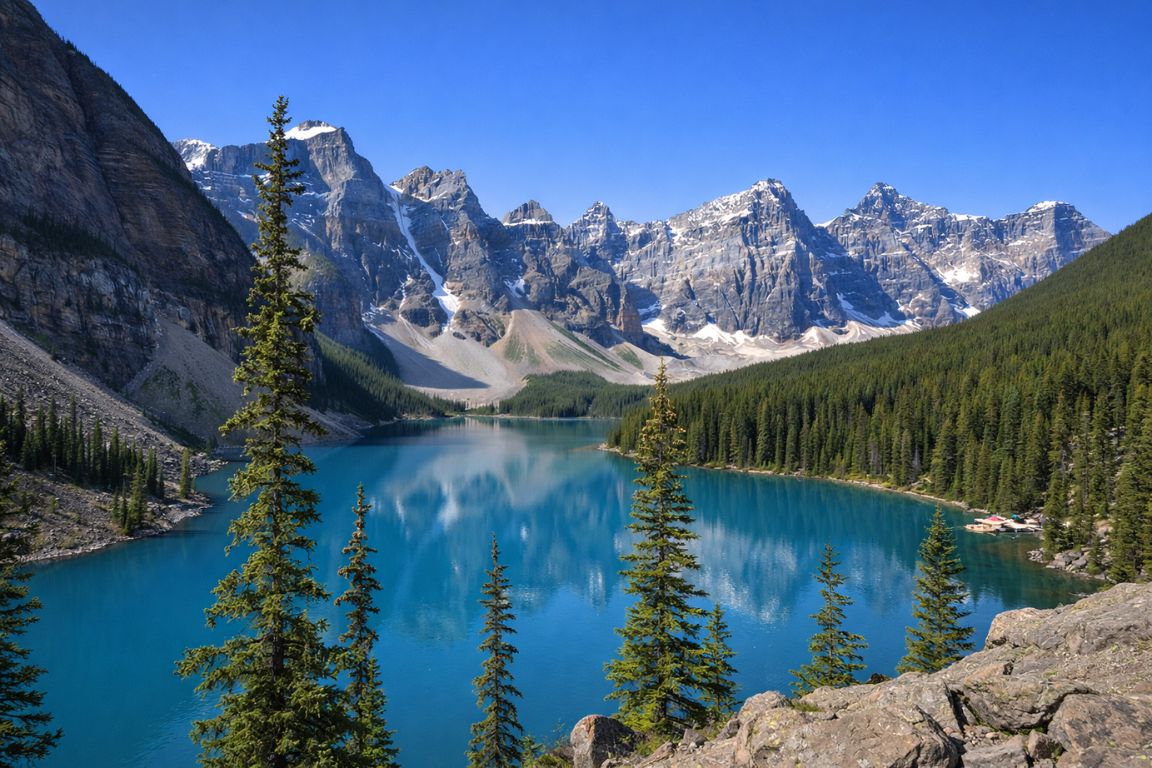 Fall in Banff is, by a reasonable margin, the season locals prefer. Crowds drop sharply after Labour Day. Hotel rates follow. The alpine larch trees turn gold in late September, the elk rut fills the valleys with bugling, grizzly bears fatten up along the Bow Valley Parkway before hibernation, and the peaks collect their first snow. It is, in short, multiple seasons occupying the same two weeks. Whether it’s worth the trip depends on what you’re after. If it’s larches, absolutely yes. If it’s open water and warm hiking weather, early September is your window. If it’s total quiet, October is the answer.
There’s a version of Banff that most summer visitors never get to experience. It shows up sometime around the second week of September. The tour buses are fewer. The lineups at the gondola aren’t wrapping around the building. You can walk into a restaurant on Banff Avenue without a reservation. And the mountains, which were spectacular in July, have become something else entirely, their slopes going from green to gold to white within the span of a few weeks.
September is genuinely the third-busiest month in the park after July and August, so the word “quiet” is relative. Larch-trail weekends in late September draw serious crowds, full shuttle queues, and trailhead lineups before dawn. But the rest of the park, the valley drives, the lower trails, the town itself, operates at a tempo closer to what Banff was before the Instagram era. That contrast with peak summer is real, and for most travelers, it’s a significant one.
October shifts things further. The shuttle to Moraine Lake closes after Canadian Thanksgiving (second Monday in October). Some seasonal businesses wind down. Nights start approaching freezing by mid-month. What you gain is space, lower prices, and the particular clarity that comes from cold air and angled autumn light over snowcapped peaks. The park looks different in October. More austere. More like itself.
We’ve been running fall tours since 2014, and the question we get most from groups who did fall trips is: when can we do it again? Not whether they’d recommend it. The answer to that is already obvious to them. If you’re ready to plan your fall trip, compare dates on the Banff National Park tours list before you book flights.
We’ve mapped out the best time to visit Banff National Park tours month by month so you know when the larches turn golden, when Lake Louise freezes, and when to avoid peak season insanity.
When Exactly Do The Larch Trees Turn Gold In Banff?
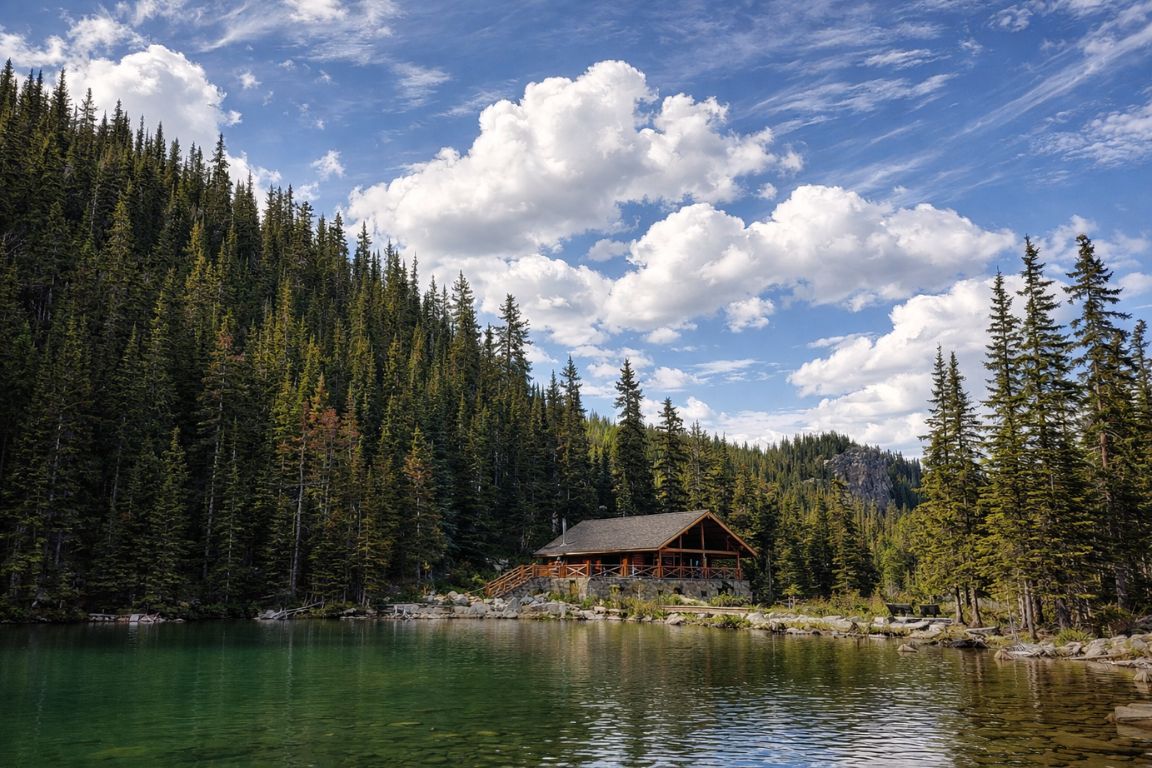 Peak larch color in Banff typically runs from September 20 to October 5, though the exact timing shifts a few days either way depending on that year’s temperatures. The third week of September is the safest target if you’re building a trip around the color. By the second week of October, most larch needles have dropped. There is no guaranteed date. Plan for a range, not a single day.
The larches in Banff are alpine larches, Larix lyallii, which behave unlike most conifers. They’re deciduous, which means every fall their needles turn a deep, specific gold before dropping entirely. The color isn’t like the muted yellows of aspen. It’s saturated, almost amber in direct sunlight, backlit against the grey rock and white peaks. A good year in Larch Valley looks like someone lit the mountainside from below.
The trees grow between roughly 1,800 and 2,400 metres elevation, which puts the best larch hikes in the alpine zone. Larch Valley above Moraine Lake is the most famous location. But the Healy Pass trail near Sunshine Village, the Saddleback Pass trail above Lake Louise, and the upper section of the Plain of Six Glaciers trail all have larches, often with significantly fewer people. The larches also appear scattered around Lake Agnes. Anyone who’s had the timing right and been there when the light is low knows that even a single larch tree against a grey October sky is worth the climb.
One honest warning: cold years push the peak earlier, warm years push it later. The color can peak in the third week of September one year and the first week of October the next. If you’re building a trip specifically around the larches, give yourself at least three days in the area. A one-night trip timed to a single date is a gamble. Spread the window and you’ll catch it.
| Early September (1-15) | Still green. No color yet | Dry, excellent grip, clear passes | Moderate. Post-Labour Day dip |
| Mid September (15-22) | Green fading to yellow-green on higher elevations | Good. Snow possible above 2,400 m | Building on weekends |
| Late September (22 to Oct 1) | Peak gold. Most reliable color window | Morning frost possible. Microspikes useful for alpine sections | High on larch trails. Shuttle sell-out zone |
| Early October (1-10) | Gold to fading gold. Can still be excellent if weather was warm | Snow and frost more likely. Some passes rough | Dropping. Weekends still busy on larch trails |
| Mid October (10 onward) | Needles dropping. Color mostly gone | Winter conditions arrive at alpine elevation. Moraine Lake closes | Quiet. True shoulder season |
What Are The Best Fall Hikes In Banff For Larch Season?
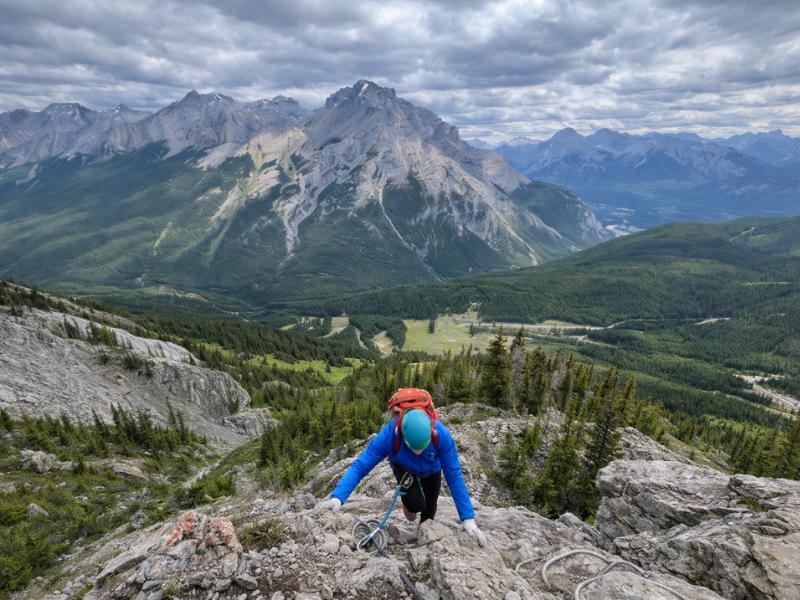 Larch Valley via Moraine Lake is the iconic route, 4.5 km one way with 570 m of gain, and the most photographed in the park during fall. For less competition on trail and equal larch density, Healy Pass near Sunshine Village and Saddleback Pass above Lake Louise both offer outstanding fall color with noticeably fewer hikers. All three require an early start. Larch Valley specifically requires a shuttle reservation to Moraine Lake, booked at reservation.pc.gc.ca, which sells out weeks before peak weekends.
Larch Valley earns its reputation and its crowds. The trail starts at Moraine Lake, climbs through dense forest on sustained switchbacks, and opens into a high alpine basin where the larches grow in clusters across the rocky slopes. In peak color, the contrast between the gold needles, the blue-grey of Moraine Lake far below, and the snow beginning to collect on the Ten Peaks is extraordinary. It’s genuinely one of the most striking landscapes in the country during that two-week window.
The practical reality: shuttle seats to Moraine Lake sell out during larch season weekends. Not sold-out-by-afternoon. Sold-out before 9 am on the day reservations open. If you want Larch Valley in late September, treat the shuttle booking with the same urgency as a concert ticket. Parks Canada releases 40% of seats on April 15 at 8 am MT and the remaining 60% on a rolling 48-hour window. Both windows disappear fast for peak fall dates.
Healy Pass is the alternative that regular Banff visitors tend to protect as their own. The trailhead sits at the base of Sunshine Village and the route climbs through a long forested valley before breaking into a larch meadow near the pass. Total distance is about 18.4 km return. The larch display at the pass is as dense as Larch Valley, the views extend south toward Mount Assiniboine, and you will share the trail with a fraction of the people. No shuttle required. Park at the Sunshine Village base and walk from there.
For the full cross-link: if you want a complete trail breakdown for each of these hikes including distances, elevation gain, and what to expect beyond larch season, our best hiking trails in Banff guide covers the full year-round picture.
| Larch Valley / Sentinel Pass | 9-11.6 km | 570-725 m | Yes (Moraine Lake shuttle) | Very high |
| Healy Pass | 18.4 km | 655 m | No | Moderate |
| Saddleback Pass | 7.2 km | 600 m | No (Lake Louise shuttle available) | Low to moderate |
| Lake Agnes + Big Beehive | 11.6 km | 520 m | No (Lake Louise shuttle available) | Moderate |
| Plain of Six Glaciers | 14 km | 365 m | No (Lake Louise shuttle available) | Moderate |
| Arnica Lake | 9.2 km | 490 m | No | Low |
Larch Valley shuttle sold out for your dates? It happens to a lot of visitors. The Lake Louise and Moraine Lake tour reaches both lakes through a licensed operator, so you do not have to depend on the public shuttle window. Check fall dates for the Lake Louise and Moraine Lake tour.
What Else Is There To Do In Banff In Fall Beyond Hiking?
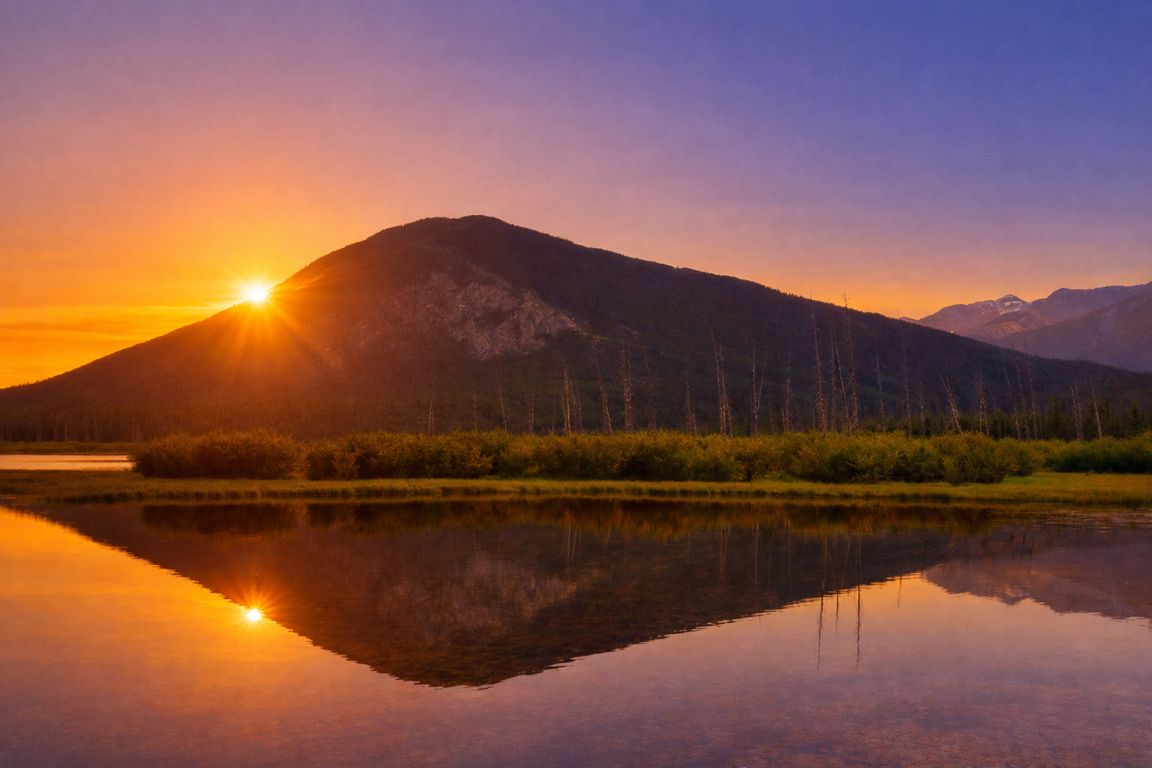 The elk rut is September and October’s most dramatic non-hiking experience. Bull elk bugle through the valleys and appear frequently in meadows near Vermilion Lakes and along the Bow Valley Parkway. The Icefields Parkway in fall is a quieter, more atmospheric drive than summer. The Banff Upper Hot Springs stay open year-round. The Banff Centre Mountain Film and Book Festival runs in late October. And the Bow Valley Parkway closes its eastern 17 km to vehicles from September 1 to October 2, making it one of the most scenic cycling routes in the country.
The elk rut is something you’re likely to encounter whether you look for it or not. Banff National Park holds thousands of elk, and in September and October the bulls become completely unsubtle. The bugling is one of those sounds that doesn’t translate well in description. It starts as a low moan and lifts into a high-pitched whistle, echoing off the valley walls at dawn in a way that sounds ancient. Groups of females and their attendant bulls frequently appear along roadsides near Vermilion Lakes and around the Fairmont Banff Springs. It is genuinely dramatic to witness. It is also worth noting that a 1,200 lb bull elk in rut will charge a car, a dog, or a person it perceives as a threat. Keep your distance. The Parks Canada recommendation is 30 metres minimum.
The Icefields Parkway is worth a dedicated day in fall. The road connects Banff to Jasper through 230 km of alpine scenery, and the September and October light does things to that landscape that summer simply can’t replicate. Low-angle sun, snow on the peaks, golden aspen and larch at valley edges, turquoise lakes at Bow and Peyto that haven’t yet frozen. Traffic is a fraction of August. You can stop at every pullout without competing for shoulder space. Bow Lake and Peyto Lake alone justify the drive.
For something off the trail entirely, the Banff Centre Mountain Film and Book Festival runs in late October every year. It’s a world-class event showcasing adventure and mountain films from across the globe. Locals attend every year. Many visitors plan trips specifically around it. Check banffcentre.ca for current year dates and ticket availability.
The cycling window on the Bow Valley Parkway, September 1 through October 2, is overlooked by most visitors. Parks Canada closes the eastern 17 km to vehicles during this period to promote a dedicated cycling experience on one of the most beautiful roads in the Rockies. If you have a bike or can rent one in town, this is genuinely one of the better fall mornings available in the park.
We’ve done the legwork comparing the best Banff National Park tours so you don’t have to sort through dozens of operators with identical-sounding itineraries.
What Should You Pack For A Fall Trip To Banff?
The core challenge of packing for fall Banff is a 15-degree temperature swing across a single day. Early September can feel like summer by 2 pm and like November by 6 am. Late September adds potential frost, early snow above 2,000 m, and cold wind on exposed ridges. The gear list below covers a standard fall trip. Everything on it gets used.
Layers are not optional in the Canadian Rockies in fall. They’re the system. A base layer, a mid-layer fleece, a wind-resistant shell, and a packable insulating jacket give you the coverage to manage a day that starts at 2°C at a trailhead and reaches 15°C by midday before clouding over and dropping back to 5°C at the summit. People who show up with a single medium-weight jacket discover this the hard way, usually at an exposed viewpoint with no option but to turn back.
Footwear matters more in fall than summer. Dry summer trails become frost-covered, damp, and occasionally icy above 2,000 m from mid-September onward. Waterproof hiking boots are not a luxury in late September. For anyone doing Sentinel Pass or Healy Pass in peak larch season, microspikes are worth carrying. They weigh almost nothing and the difference between crampons and confidence on a frosty rocky section is substantial.
| Layers (essential) | Moisture-wicking base layer, mid-layer fleece, packable down or synthetic jacket, wind/waterproof shell | All four get used on a single long hike in late September |
| Footwear | Waterproof hiking boots (not trail runners for alpine); consider microspikes for Oct hikes | Frost and early snow above 2,000 m from mid-September |
| Accessories | Warm hat, light gloves, sun protection (sunscreen, sunglasses) | Cold mornings, strong UV at alpine elevation |
| Safety | Bear spray (on outside of pack), satellite communicator or personal locator beacon | Cell coverage fails throughout most of the park. Bears active through October |
| Hydration and nutrition | 2+ litres of water per person, water filter, extra food for cold-weather calorie burn | Cold weather increases calorie use significantly; surface water needs filtering |
| Navigation | Downloaded offline maps (AllTrails or Gaia GPS), park trail map from visitor centre | Do not rely on cell data in the backcountry |
One thing people forget: cold weather increases calorie burn. A long fall hike on Healy Pass or Sentinel Pass burns significantly more energy than the same distance in July. Bring more food than you think you need, especially if your group includes children. Energy bars at the bottom of a cold alpine valley are a different experience from energy bars in a warm car.
How Crowded Is Banff In Fall, And How Do You Avoid The Worst Of It?
 September is still the third-busiest month in Banff after July and August, with around 500,000 visitors. October sees a significant drop. Within September, there’s a split: larch-trail weekends (late September) rival summer for trail-specific congestion, while the rest of the park runs at noticeably lower volumes. The most reliable crowd-avoidance strategies are weekdays over weekends, early starts over mid-morning arrivals, and choosing trails that require effort over trails accessible from parking lots.
The larch exception is real and should be stated plainly. If you’re planning Larch Valley on a Saturday in late September, you are entering a crowd that has booked shuttles weeks in advance, started hiking before sunrise, and may involve a queue at the trailhead. The trail itself is not quiet. The payoff is still worth it for most people. But anyone who’s done Healy Pass on the same day with a tenth of the traffic has a different kind of memory.
The pattern we’ve observed over years of guiding in fall: visitors who arrive expecting shoulder-season tranquility on popular larch trails are sometimes disappointed. Visitors who arrive with a plan that includes one peak-larch hike and a few quieter alternatives leave thinking Banff in fall was the best version of the park they’ve seen. The Icefields Parkway on a Tuesday in early October is empty. Johnston Canyon on a Wednesday morning in late September is manageable. Same week, different experience depending on where you point yourself.
Navigating the fall crowd patterns across the larch hikes and the quieter alternatives is exactly the kind of thing a guide handles without you having to research it. We’ve been building fall itineraries since 2014 and know which trails deliver larch color without the weekend chaos. A full-day guided hike with lunch covers trail logistics if you would rather not plan them yourself.
First time visiting the Canadian Rockies? Here’s how to plan a Banff National Park trip so you don’t show up unprepared for the crowds or miss out on permits for popular hikes.
What Are The Biggest Mistakes People Make Visiting Banff In Fall?
The three most costly mistakes in fall Banff: booking accommodation for larch dates without booking shuttles first (shuttles sell out faster than hotels), treating October weather like September weather and underpacking for cold, and missing the elk rut entirely because they’re focused exclusively on larches. All three are avoidable with about 20 minutes of additional planning.
The shuttle sequence problem catches a surprising number of first-time fall visitors. The logic seems reasonable: book the hotel, then sort out the hikes. But Moraine Lake shuttle seats for larch-season weekends sell out weeks before the hotel rooms do. People arrive in Banff with confirmed accommodation and no way to reach the one place they came to see. The correct order is: decide your larch dates, open reservation.pc.gc.ca on April 15 at 8 am MT, secure the shuttle, then sort accommodation. Reverse that sequence at your own risk.
Don’t drive up expecting to park like you could years ago. This Moraine Lake travel guide covers all the current access restrictions and how to actually reach the lake legally.
The weather underestimation problem is partly about October feeling like it should still be warm because September was fine. The two months are genuinely different. Early October can still offer warm afternoons, but mornings start below freezing and high-alpine sections collect snow fast after mid-month. Anyone planning alpine hikes in October needs microspikes, a proper insulated jacket, and waterproof boots. Not as a precaution. As a baseline.
Wondering what each month looks like? Check out our Banff National Park tours by month guide – it breaks down weather, trail access, and what you’ll actually experience throughout the year.
The elk rut is the thing most visitors don’t build into their fall plans because they haven’t thought about it, and then encounter it in the middle of Banff townsite and realize it’s one of the most visceral wildlife experiences in Canada. Bull elk are routinely spotted on Banff Avenue, in the Fairmont Banff Springs golf course area, and around Vermilion Lakes. The bugling carries for kilometres on still mornings. Dawn drives along the Bow Valley Parkway in late September, when mist sits on the valley floor and elk are moving through the meadows, are a category of experience distinct from anything a larch trail offers. It’s worth building into the itinerary deliberately rather than stumbling into it as an afterthought.
What Our Fall Groups Tell Us Year After Year
After guiding over 8,600 travelers through Banff National Park since 2014, including hundreds of fall-specific trips, patterns emerge. This is what we see in our fall groups repeatedly, not survey data, but direct observation from a decade of autumn guiding.
| Most common regret | Visiting only Larch Valley and skipping Healy Pass | Two very different larch experiences; doing both in one trip is entirely feasible |
| Most common surprise | The elk rut being more dramatic than expected | Plan a dawn Vermilion Lakes drive into every fall itinerary; nobody has ever regretted it |
| Most frequent gear miss | No microspikes for late September alpine hikes | Frosty rocky sections above 2,000 m after mid-September; microspikes cost under $50 and weigh nothing |
| Best timing insight | Late September weekday arrivals for larch hikes | Same color, 30-40% fewer people on trail compared to identical weekend dates |
| Most underrated fall activity | Cycling the Bow Valley Parkway closure window | Sept 1 to Oct 2, vehicle-free 17 km. Consistently the quietest and most beautiful fall activity we run |
| Most repeat-requested experience | Larch Valley at peak, followed by Icefields Parkway drive same afternoon | The contrast between the alpine gold at Moraine Lake and the Parkway’s autumn canyon light is exceptional |
Frequently Asked Questions
Is fall a good time to visit Banff?
Many locals and experienced visitors consider fall the best season in Banff. The larch trees peak in late September, crowds drop after Labour Day, hotel rates decline, and wildlife activity including the elk rut and bears in pre-hibernation hyperphagia is at its most visible. The main trade-off is shorter days, colder temperatures, and some seasonal closures starting mid-October.
How do I see the golden larch trees in Banff?
The best larch hikes in Banff are Larch Valley above Moraine Lake (requires shuttle reservation via reservation.pc.gc.ca), Healy Pass near Sunshine Village (no shuttle needed), and Saddleback Pass above Lake Louise (Lake Louise shuttle available). Peak color runs September 20 to October 5 most years. Book shuttle reservations as early as possible, as larch-season seats sell out weeks before the peak window.
When does Moraine Lake close in the fall?
Moraine Lake Road closes to all traffic after Canadian Thanksgiving, which falls on the second Monday of October (October 13 in 2025). Parks Canada shuttles operate until approximately October 13 as well. The road closes due to avalanche risk from early snowfall. If the road remains snow-free after the official closure, cycling to the lake is sometimes still possible, but this is weather-dependent each year.
Is Banff crowded in September?
September is the third-busiest month in Banff after July and August, with around 500,000 visitors. Larch-trail areas, particularly Moraine Lake and Larch Valley, see high congestion on weekends in late September. Outside of those specific larch trails and popular viewpoints, the park feels noticeably calmer than summer. Weekday visits see significantly fewer people than weekends throughout the month.
What wildlife can you see in Banff in the fall?
Fall is one of the best seasons for wildlife in Banff. The elk rut runs from late August through mid-October, with bull elk bugling and displaying across the valley. Both grizzly and black bears are in hyperphagia, actively feeding before hibernation, and are frequently spotted along the Bow Valley Parkway and Icefields Parkway. Bighorn sheep are commonly seen on lower rocky slopes. Dawn and dusk drives along the Bow Valley Parkway offer the best viewing windows.
What is the Banff Centre Mountain Film and Book Festival?
The Banff Centre Mountain Film and Book Festival is an annual event held in late October at the Banff Centre for Arts and Creativity. It’s one of the world’s premier mountain culture festivals, showcasing films, books, and speakers focused on adventure, climbing, exploration, and the mountain environment. Many visitors plan fall trips specifically around it. Check banffcentre.ca for current year dates and ticket information.
Fall in Banff rewards people who plan it well. The difference between a great larch trip and an expensive disappointment comes down mostly to shuttle reservations, timing, and knowing which trails deliver what you came for. Questions before you book? Check dates on the Banff National Park tours list. Start here.
Written by Avery Claire Thompson
Canadian tour guide since 2014 · Founder, Banff National Park Tours
Avery has guided over 8,600 travelers through Banff National Park and the Canadian Rockies since founding the agency.
Choose Your Fall Banff Day
Compare a guided day with the independent options in this guide. Confirm your date and meeting point before booking.
Match These Options To Your Trip
 Our Starting Recommendation
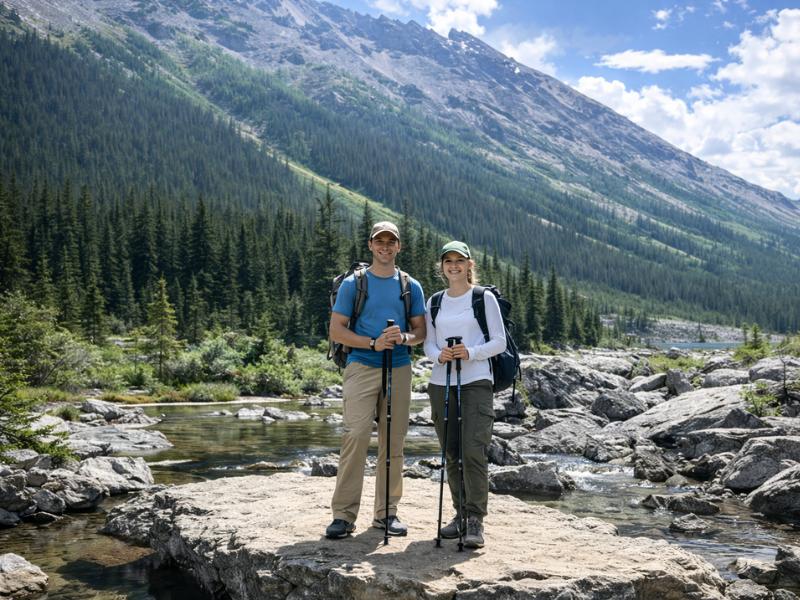
Guided Signature Hike With Lunch
Spend the day on a named mountain trail with a guide, transport and lunch.
7 hours · English
Banff hotel pickup or the listed Mount Royal Hotel meeting point.
Certified guide, picnic lunch, hiking poles and transport. Teahouse purchases extra.
Ages 13+. Route depends on weekday and conditions. The Larch Valley route does not reach the top of Sentinel Pass.
Choose A Guided Hike ↗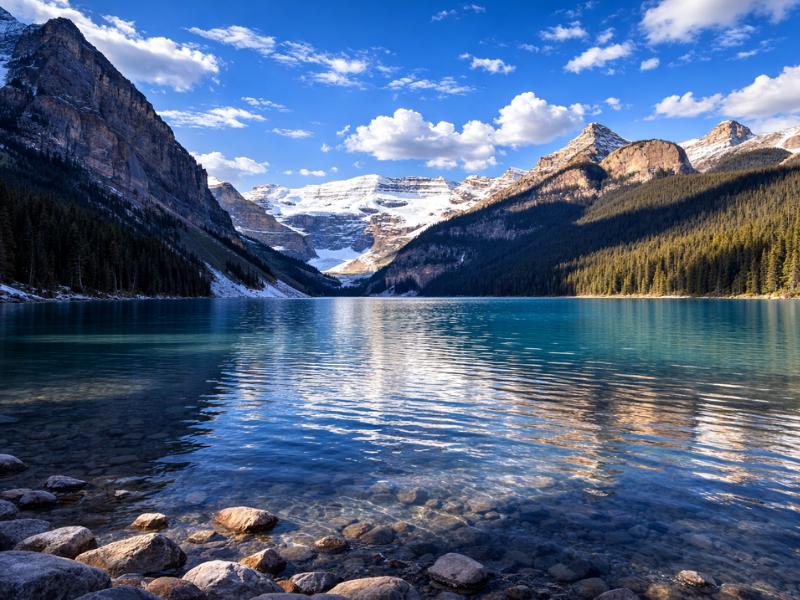 A Different Way To Spend The Day
Lake Louise And Moraine Lake Day Tour
Link the two lakes without organising separate transport.
8–10 hours · English
Pickup in Calgary, Canmore or Banff; confirm the selected meeting and end points.
Guide, transport and listed lake access. Meals and personal expenses extra.
No wheelchair access. Bring your own child seat for children under 7. Moraine Lake is seasonal.
Visit The Two Lakes ↗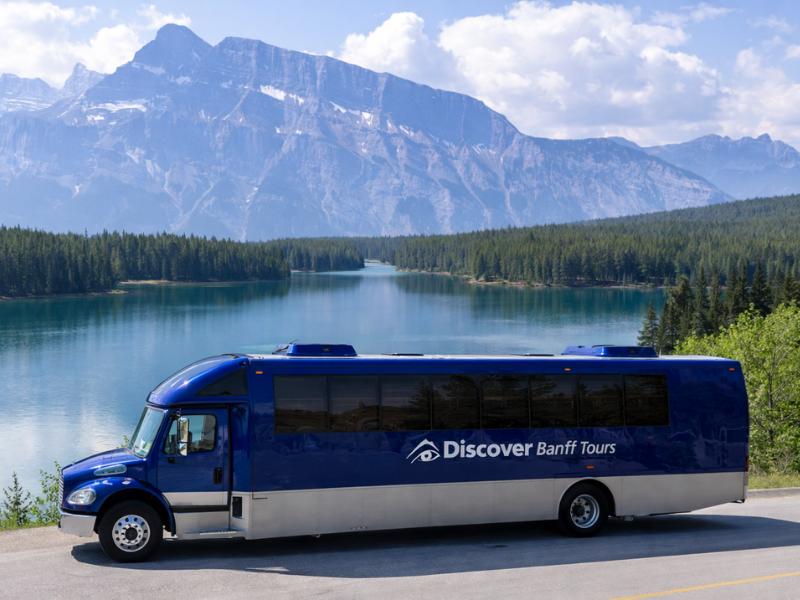 A Different Way To Spend The Day
Banff Wildlife And Viewpoints Minibus
Join Bow Falls, Surprise Corner and Lake Minnewanka in a guided morning.
3½ hours · English
Banff hotel pickup on request; otherwise the Mount Royal Hotel bus parking.
Guide, minibus, cookie and drink. Gratuities extra.
Wildlife sightings are never guaranteed. Ask about child seating and access needs before booking.
Explore Banff’s Viewpoints ↗No choices needed to use the recommendations above.
Work Out The Cost For Your Group
Enter complete quotes in CAD for the same people, date and itinerary. Include transport, parking, entry, food and any other extras on both sides. For shared versus private, enter the shared total first and private total second.
Use current quotes; no prices or savings are assumed.
Turn Your Plan Into A Day Out
Confirm the exact route and operating date before building a fall itinerary around any tour.
Your Next StepGuided Signature Hike With Lunch
Spend the day on a named mountain trail with a guide, transport and lunch.
7 hours · English
Banff hotel pickup or the listed Mount Royal Hotel meeting point.
Certified guide, picnic lunch, hiking poles and transport. Teahouse purchases extra.
Ages 13+. Route depends on weekday and conditions. The Larch Valley route does not reach the top of Sentinel Pass.
Choose A Guided Hike ↗Choose Your Date
Guided Signature Hike With Lunch
Open the provider’s calendar to select your date, party and departure. Availability and prices are confirmed there.
Dates On GetYourGuide
Guided Signature Hike With Lunch
Choose a date and party to see current options. Confirm the meeting point and restrictions on the listing.
More Banff Sightseeing On Viator
Browse the site’s original Viator selection of Banff day tours, wildlife outings and lake excursions. These are additional ideas, not matches to the trip form. Check dates, duration, pickup and suitability on each listing.
Open The Recommended Outing ↗