Banff By Month Guide
Banff is worth visiting year-round but each season feels different. Summer has crowds, winter brings skiing, and shoulder months offer the best value.
The useful tour choice changes with the season: open-water lake logistics, trail access, winter traction, and wildlife patterns solve different problems. Match a Banff Experience to Your Month
Last updated: April 29, 2026
Banff is genuinely worth visiting in every month of the year, but each season is a different park. July and August offer the fullest access but the biggest crowds – over 4.2 million visitors annually, with peak summer accounting for the majority. January and February are the deep-winter ski core; quieter than summer but pricier than shoulder months. May, September, and October give you the best value, real wildlife sightings, and far fewer people than peak. November is the true shoulder; many facilities are shifting, but prices drop and snowfall begins. Know your season before you book.
| January | Low-Moderate | $150-$200 | SnowDays Festival (mid-Jan to early Feb), deep ski season |
| February | Moderate | $180-$260 | Peak ski conditions; Ice Magic at Lake Louise |
| March | Low-Moderate | $150-$220 | Spring skiing; often biggest snowfall month; bears start emerging late month |
| April | Low | $120-$200 | Quietest month; ski resorts still open; bears emerging |
| May | Low-Moderate | $150-$250 | Bow Valley Pkwy cycling (May 1); waterfalls at peak; low-elevation trails open |
| June | Moderate-High | $200-$320 | Everything opening; lakes thawing; Moraine Lake opens June 1; free admission starts June 19 |
| July | Very High | $300-$450 | Peak season; full trail access; lakes at turquoise peak; book everything ahead |
| August | Very High | $300-$450 | Warmest month; all activities available; Banff Mountain Film Fest late Oct (plan ahead) |
| September | Moderate | $200-$300 | Larch season begins late Sept; elk rut; cooler temps; locals’ favorite month |
| October | Low-Moderate | $150-$250 | Larch peak first two weeks; Moraine Lake closes mid-month; prices fall after Thanksgiving |
| November | Low | $120-$180 | True shoulder; ski resorts opening; best prices of the year |
| December | Low-High (holiday spike) | $150-$400 (holiday premium) | Christmas market, festive atmosphere; skating on Lake Louise; ski season building |
Twelve months. One park. The thing most visitors underestimate about Banff is that the calendar doesn’t just change what’s open. It changes what the park fundamentally is. A July morning at Moraine Lake – every shuttle sold out weeks ago, the rockpile viewpoint six people deep, the color of that water so unreasonably turquoise it looks edited – is not the same place as a February afternoon at the same lake, completely frozen, silent, with wolf tracks crossing the ice and no one else in sight.
We’ve guided people through all of it. Every month has a version of Banff worth experiencing. But they’re not interchangeable, and planning for the wrong one is the most common mistake we see.
Your Experience Plan: Use the month selector to start with a season-appropriate option, then confirm live dates and restrictions with the operator.
Is Banff Worth Visiting Year-Round, Or Are Some Months Better Than Others?
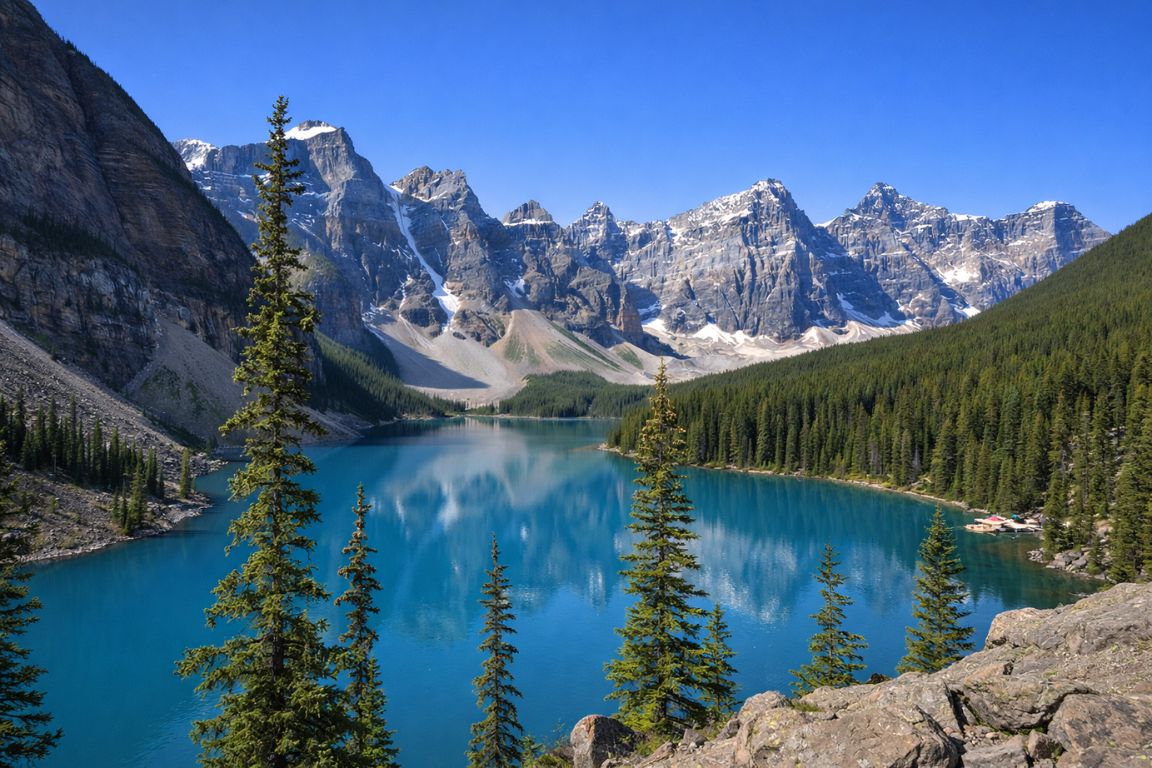 Banff is legitimately worth visiting in every month, but with very different expectations. July and August give you the fullest access and the biggest crowds. January and February deliver world-class skiing and a quieter town. May, September, and October hit a genuine sweet spot of value, wildlife, and reduced congestion. November is underrated. There is no objectively best month – only the right month for what you want.
The park attracted over 4.2 million visitors in fiscal year 2024/25, with roughly 2.5 million of those arriving between April and August alone. That math shapes the experience in every month. When we talk to travelers who’ve been disappointed by Banff, it’s almost always a mismatch between expectations and season – someone who came in mid-July and couldn’t find parking, or someone who came in early April expecting summer hiking and found trails under ice.
The guide below covers each seasonal block honestly. We’ve tried to give you not just what’s available, but what it actually feels like on the ground.
Timing can make or break your Banff experience. The best time to visit Banff National Park tours depends on whether you want summer hiking, fall larches, or winter skiing – and how many tourists you can handle.
What Is Banff Like In Winter? (December, January, February)
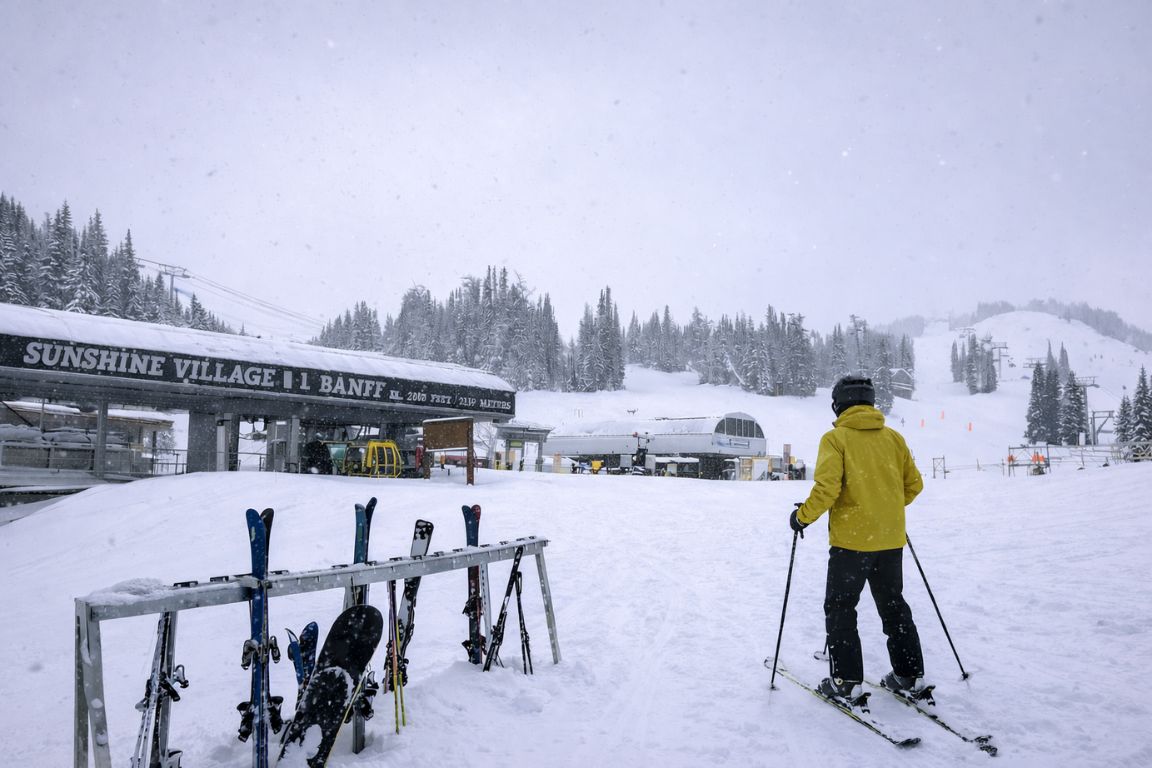 December through February is Banff’s ski season core, with three world-class resorts operating inside a national park: Sunshine Village, Lake Louise, and Mt. Norquay. The town itself is festive and quieter than summer. January is the coldest month but hosts SnowDays Festival (January 17 to February 8, 2026). February brings peak ski conditions. Hotel prices are lower than summer outside of holiday windows, but Christmas and spring break weeks spike sharply.
December has two distinct phases. The first two weeks are genuinely quiet – easiest time to walk into a restaurant without a wait, best prices of the holiday months, ski resorts building their base. Then Christmas week arrives and the park transforms. The Fairmont Banff Springs does Christmas properly: lights, carols, sleigh rides departing from Chateau Lake Louise. Banff Avenue glows. It’s worth experiencing if you book well ahead. If you’re trying to avoid the crowds, the first week of December and the first week of January (after New Year’s) are both underused windows.
January and February are when the skiing is best. The three SkiBig3 resorts, Sunshine Village, Lake Louise, and Mt. Norquay, collectively have some of the longest seasons in North America. Sunshine sometimes runs into May. The powder in January is some of the driest in the country, and the runs aren’t nearly as congested as February’s school break weeks. Lake Louise Ski Resort opened its highly anticipated Richardson’s Ridge expansion in December 2025, adding over 200 acres of new terrain including five beginner and intermediate runs and a new high-speed quad. Mt. Norquay celebrates its 100th anniversary this season.
Beyond skiing, winter Banff has more going on than most people expect. Ice skating on Lake Louise, the Fairmont resurfacing it nightly so conditions are always maintained, is genuinely one of the most surreal experiences in the park. The Johnston Canyon ice walk, frozen waterfalls illuminated by headlamp, runs from around December through late March. SnowDays Festival runs January 17 to February 8, 2026, filling downtown Banff with snow sculptures, skijoring on Banff Avenue (horses pulling skiers through obstacle courses), and the ice carving competition at Lake Louise.
Winter temperatures run from around -10°C overnight in January up to -2°C to +4°C on warmer February days. Dress in real layers. Wind chill on exposed ridgelines cuts hard.
If you’d rather have someone else figure out which resort to ski when, which ice walks need crampons, and how to time the shuttle to Lake Louise before the crowds arrive, start with the winter tours that cover this season.
Visiting in the cold months? I’ve rounded up all the Banff National Park tours winter activities so you know what’s possible when the lakes freeze and the ski hills open.
What Is Banff Like In Early Spring? (March And April)
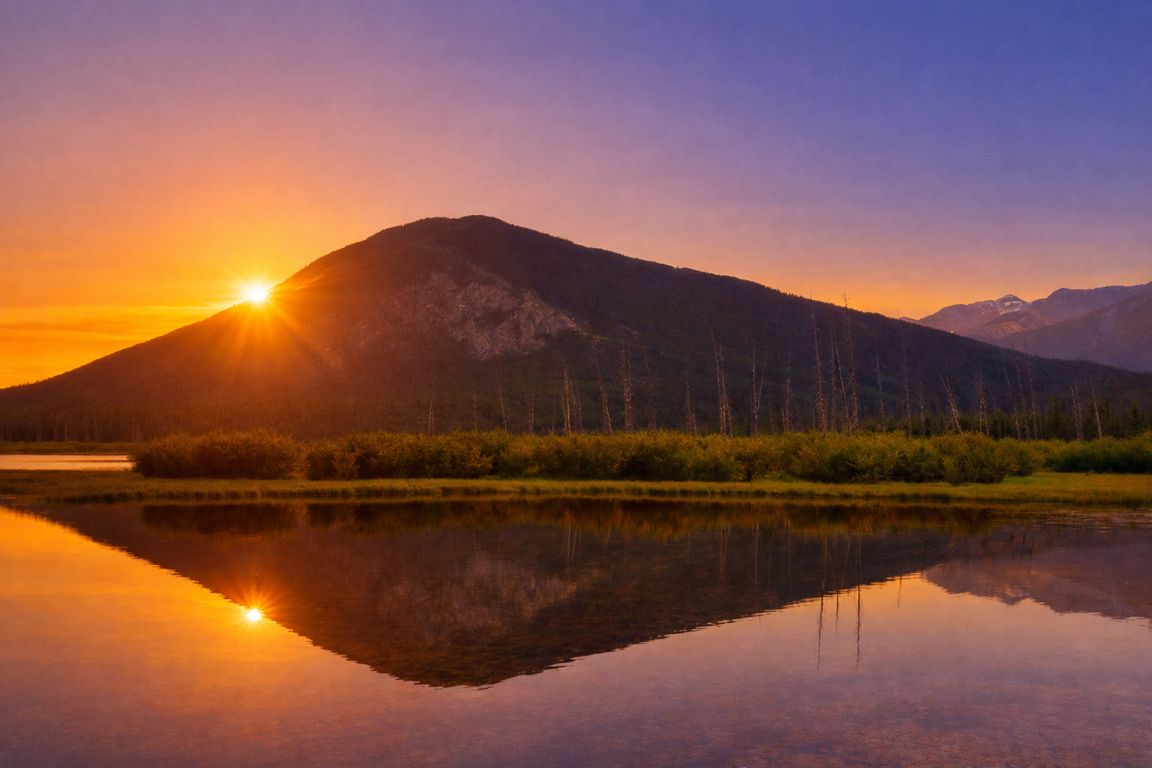 March is still fully winter in Banff – often the month with the biggest snowfall – but with longer daylight and warming afternoons. Ski conditions can be excellent. April is the quietest month in the park year-round, with low prices and low crowds, but limited hiking. Large male grizzlies begin emerging from dens mid to late March; females and cubs follow in April and May. Lakes are frozen through April.
March is a strange and underrated month. The snowpack is deep. Ski conditions at Sunshine and Lake Louise tend to be at their most consistent because temperatures aren’t yet swinging enough to create the freeze-thaw cycle that makes March skiing at lower elevations unpredictable. Backcountry skiing is popular in March as the snowpack stabilizes, though avalanche risk requires proper training and equipment. The daylight is returning fast – by late March you have evening light in a way that changes the feel of the mountains entirely.
Planning a visit? Check out our complete Lake Louise guide – it covers parking nightmares, best viewing times, and activities most visitors don’t know about.
April is what we think of as the park’s exhale. The ski crowds are thinning. Summer hasn’t begun. Hotel rates in April run $120 to $200 per night for mid-range properties, compared to $300 to $450 in peak summer. The townsite is genuinely relaxed in a way it isn’t in any other warmer month. Restaurants are easier to get into. Staff are less stretched.
The wildlife story is one of April’s best features. Large male grizzlies start appearing in the valley bottom in mid to late March. By April, single females are out. The Bow Valley Parkway and Vermilion Lakes Drive are the prime routes – early morning, slow driving, eyes on the roadside grass where the first green of the year appears. Bears come there because it’s the first food. You come there for the same reason.
What doesn’t work in April: most hikes above 1,700 m are still snow-covered and icy. The turquoise lakes are frozen. Moraine Lake is completely inaccessible. Don’t come to April expecting a hiking trip. Come for the skiing, the quiet town, the wildlife, and the transition energy of a mountain park waking up.
For our deeper breakdown of this season, including trail opening timelines and gear specifics, see our complete guide to Banff in spring.
What Is Banff Like In Late Spring? (May And June)
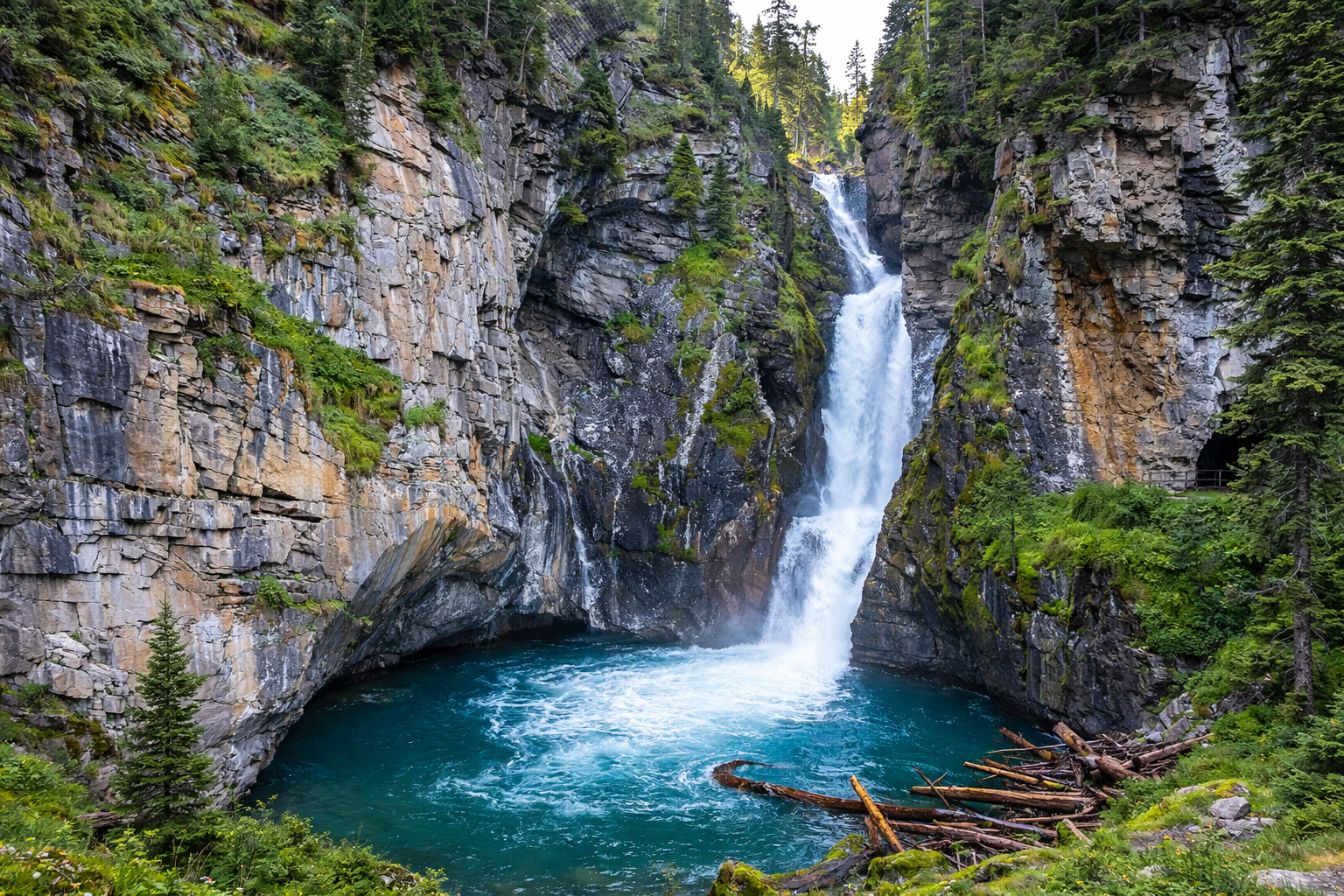 May and June are when the park accelerates from winter into summer. May opens the Bow Valley Parkway cycling window (May 1 to June 25), brings waterfalls to peak volume from snowmelt, and delivers the best wildlife viewing of the year at valley level. June finishes the transition: Moraine Lake Road opens June 1, the Lakes approach peak turquoise by late June, free park admission begins June 19, and alpine passes start clearing by mid-July. Crowds build noticeably through June.
May is the secret month. The park is not crowded yet. Prices are 30 to 50% below summer. And the Bow Valley Parkway cycling experience opens May 1: the eastern 17 km of the parkway is closed to public vehicles through June 25, giving cyclists and walkers the full road to themselves. This corridor, where grizzlies and wolves use the montane zone heavily in spring, becomes one of the best wildlife-watching routes in the Rockies. E-bike rentals are available in town if the 24 km round trip sounds like too much elevation gain.
Waterfall volume peaks in May as snowmelt charges every creek in the park. Johnston Canyon runs hard. Silverton Falls off the Bow Valley Parkway flows in ways that look genuinely forceful. Bow Falls near the townsite fills. If you care about waterfalls, late May is the time to be here.
June is a turning point month. A lot happens quickly: Moraine Lake Road opens June 1 (shuttles begin the same day, reservations through reservation.pc.gc.ca with 40% of seats released April 15 and the remaining 60% on a rolling 48-hour window). Lake Louise shuttles run from May 16. Free admission under the Canada Strong Pass kicks in June 19, running through September 7, 2026. By late June, the lakes are approaching their peak turquoise color and the park’s full summer infrastructure is running. Crowds arrive to match.
One planning note: June is the wettest month in Banff. Brief afternoon thunderstorms are common. Pack a real waterproof shell, not just a water-resistant layer.
What Is Banff Like In Summer? (July And August)
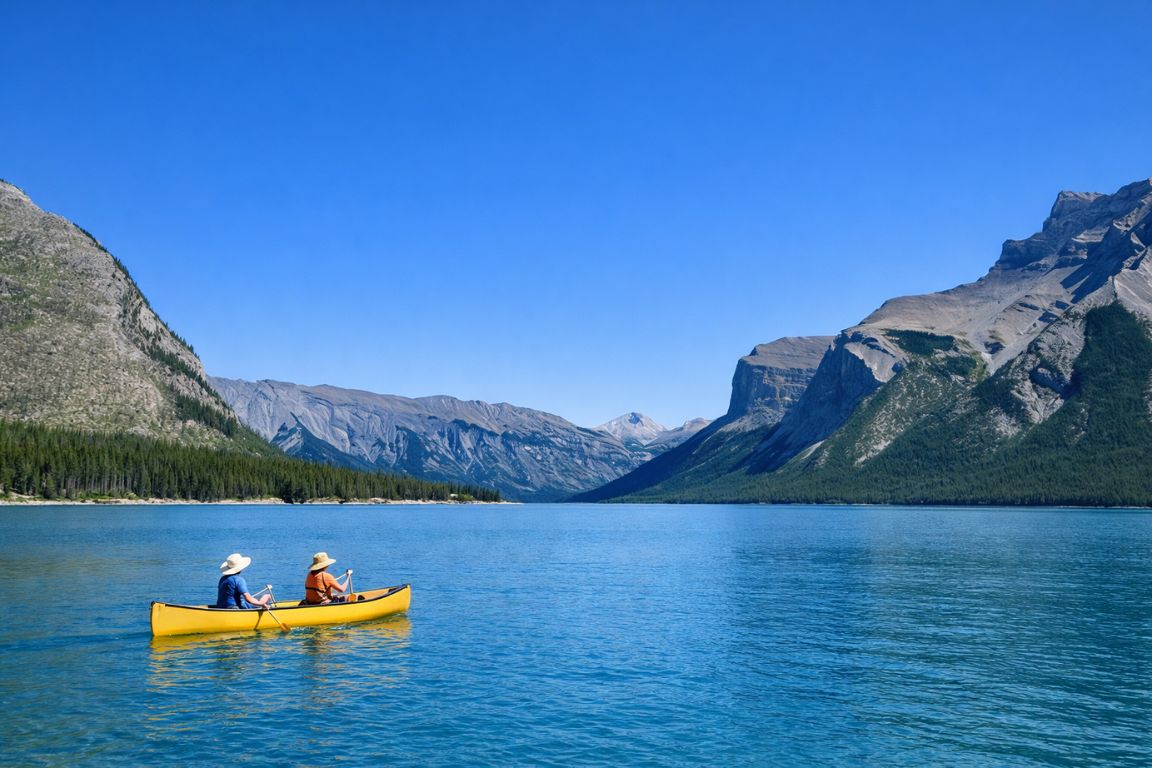 July and August are peak Banff. Every trail is open, the lakes are at full turquoise, temperatures reach 20-25°C in the valley, and visitor volume is at its highest. In peak summer, 1.76 million vehicles move in and out of the park in July and August combined. Book shuttles to Moraine Lake and Lake Louise months ahead, start hikes before 7 am, and have a backup plan for every major attraction. The park is spectacular. So are the crowds.
There’s no softening it: summer in Banff is busy in a way that now requires active management. Moraine Lake Road has been closed to private vehicles since June 2023. Parks Canada shuttles to Moraine Lake and Lake Louise sell out, often within hours of release. The Moraine Lake rockpile viewpoint can have 200 people on it by 9 am. None of this makes it not worth going. But it changes how you have to think about the visit.
What summer actually delivers that no other season can match: every trail is accessible, including the high alpine passes like Sentinel Pass and the Plain of Six Glaciers. The lakes are at turquoise peak. Wildflower meadows in the subalpine. Paddling on Lake Minnewanka. Scrambling the ridgelines above the Bow Valley with long evenings and no rush to get off before dark. If you’re a serious hiker with a target list of alpine routes, late July and August are your window.
The logistics require planning. Moraine Lake shuttle reservations open April 15, 2026 at 8 am MT, with 40% of seats available that day and the remaining 60% releasing on a rolling 48-hour window. The Parks Canada shuttle costs CAD $8 per adult return, plus your park pass. Sunrise departures from Lake Louise Lakeshore at 4 am and 5 am are available for those wanting Moraine Lake before the crowds. Roam Route 8X runs between Banff and Lake Louise without a reservation as a walk-up option. None of this is impossible to navigate – it just takes a plan made ahead of time, not the night before.
Early morning is the single highest-leverage strategy in summer. The difference between arriving at Lake Louise at 6 am versus 10 am is not marginal. The parking lot at the Park and Ride fills, the crowds stack up, and the light changes. Get there early or use a guided Lake Louise and Moraine Lake tour that takes care of the timing.
If you’re visiting June through August, here are the Banff National Park tours summer activities that take advantage of long days, open trails, and warm weather.
What Is Banff Like In Fall? (September And October)
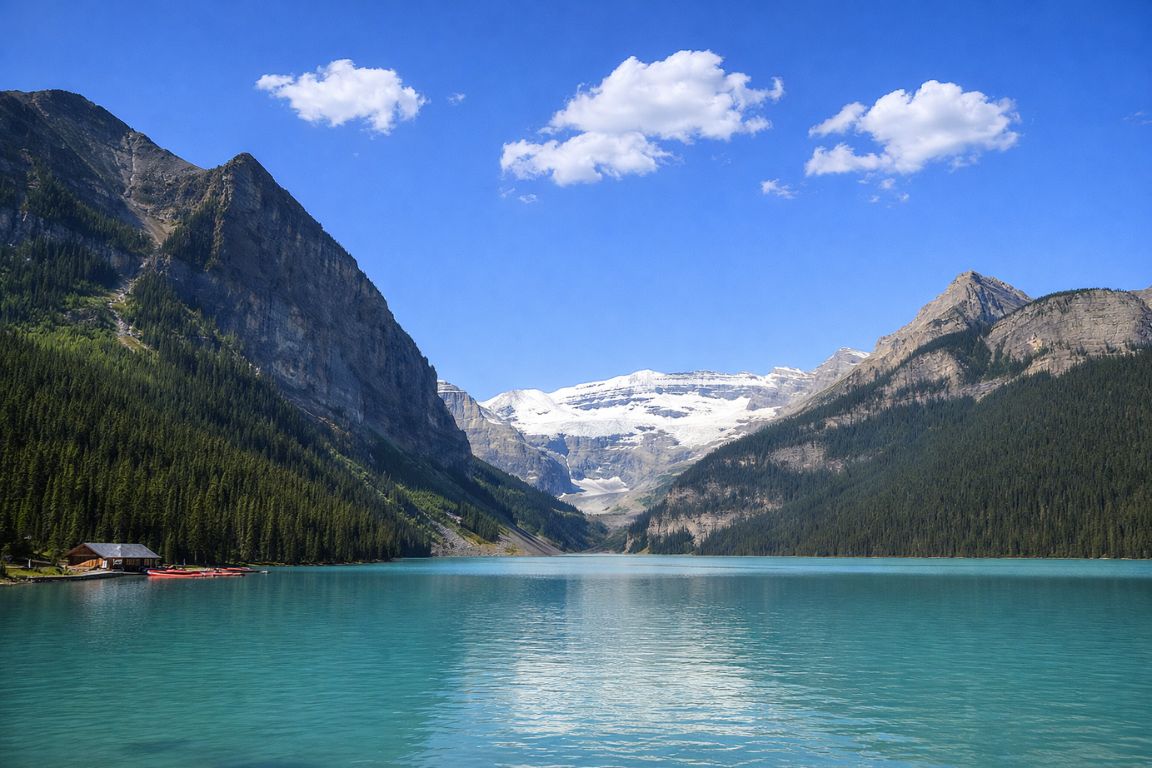 September and October bring Banff’s most celebrated seasonal event: larch season. Alpine larches at elevations of 1,800 to 2,400 m turn gold in late September, typically peaking September 20 to October 5. Elk rut runs late August through mid-October. Crowds thin compared to summer, prices begin dropping, and the trails are still largely open. October brings the park’s second vehicle-free cycling window (August 28 to October 2 on the Bow Valley Parkway) and Moraine Lake Road closing around Canadian Thanksgiving.
September is what locals call the best month. The summer visitors have gone home. The trails are dry and in the best condition of the year. Temperatures run 15 to 17°C in the valley during the day and drop to around 2°C overnight, which is ideal hiking weather. There’s almost no dust. The light changes in September, flatter and more even, and the mountains look different for it. Wildlife is active – bears in hyperphagia moving through the subalpine, elk rut creating noise and movement in the valleys.
The larch season is worth planning specifically around. Alpine larches are deciduous conifers, unusual enough in a mountain context to make people stop walking when they see them. The turn typically starts in the third week of September and peaks around September 20 to October 5, though colder years can push it earlier. The best larch hikes, Larch Valley via Moraine Lake, Healy Pass, Saddleback Pass, draw significant crowds in that window. Weekday visits are 30 to 40% less congested than weekend visits on the larch trails. For our full breakdown, see the Banff in fall guide.
October brings a clear dividing line at Canadian Thanksgiving (second Monday in October, October 13 in 2025). Before Thanksgiving, fall is still running. After Thanksgiving, Moraine Lake Road closes, summer facilities start shutting down, and prices drop sharply. The last week of October can feel like finding Banff with a discount applied and nobody else using it.
The elk rut is something to approach correctly. Bulls are territorial and aggressive from late August through mid-October. The bugling you hear at dusk from inside Banff townsite is real and close. Keep 30 metres. A bull elk charging a car is not a rare event in this window; it’s a documented annual occurrence. The wildlife is worth watching closely. Not closely enough to think it won’t react.
What Is Banff Like In Late Fall And Early Winter? (November)
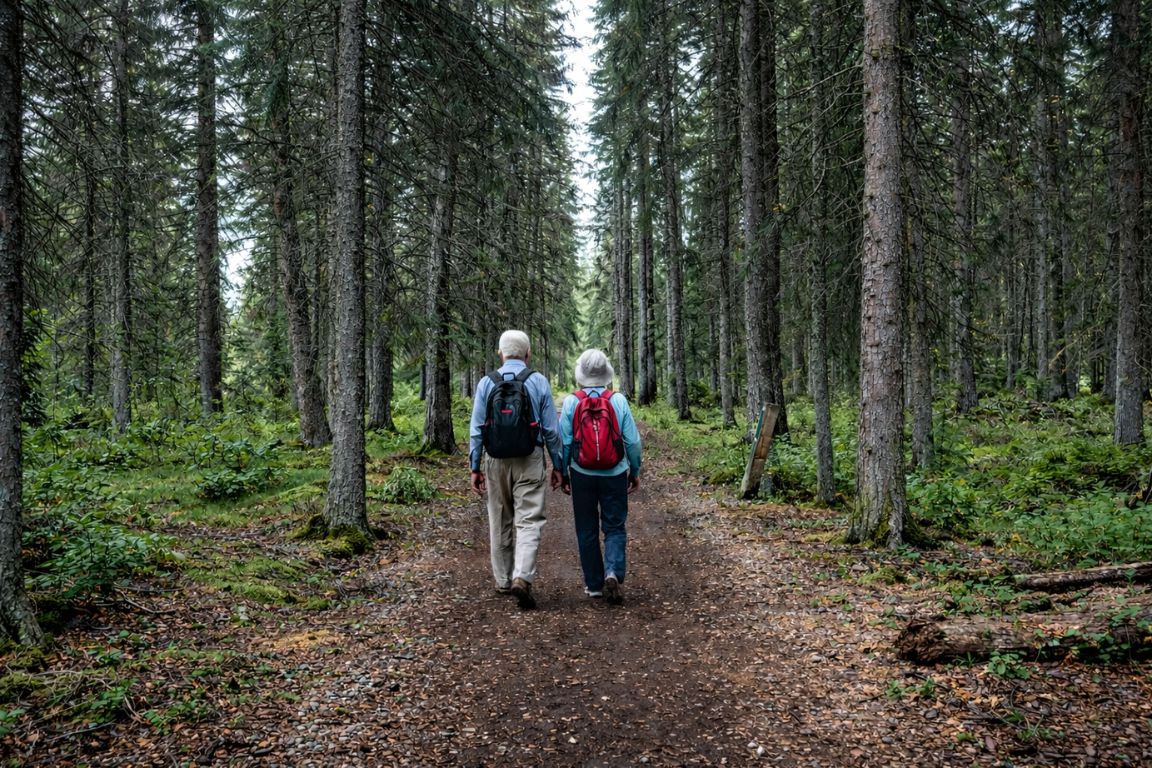 November is the park’s quietest month and its most underrated. Ski resorts open through the month (typically Mt. Norquay first in early November, Lake Louise and Sunshine later). Prices are at their annual low outside of the first two weeks of December. Most hiking trails near town stay accessible. The park takes on a stillness that’s genuinely hard to find in any other month. The trade-off: shorter days, some facilities on reduced hours, and weather that can be genuinely raw.
We mention November to travelers who ask about value and quiet, and almost everyone is surprised. The park doesn’t disappear in November. What disappears is most of the tourism infrastructure built around peak season. That’s either a problem or the entire point, depending on what you’re looking for.
November is when the Banff Christmas Market runs in late November (November 20 to 30 in 2025 based on prior year’s dates), a small but genuinely local market near Banff Train Station with artisan vendors and a Clydesdale horse that has become its own attraction. Ski resorts are opening or just opened. The Hot Chocolate Trail, running from November 13, 2025 to February 8, 2026, connects the best spots in town for a warm drink in a way that makes a cold grey day more appealing than it sounds.
Lower elevation hikes, Tunnel Mountain, Fenland Trail, Johnston Canyon, are all still accessible in November with the right footwear. The first real snowfall usually arrives in November in the alpine and can come to the valley too. Check conditions before heading out and carry microspikes from mid-November onward.
Hotel rates in November are as low as they get outside April: $120 to $180 for mid-range properties in the townsite. If a quiet mountain town with early ski season, long evenings, and dramatically fewer visitors is what you want, November is the month.
When Our Travelers Come: Booking Patterns Across Seasons
Based on booking data across our guided tours, here is how travel timing breaks down among our guests and what they reported afterward.
| Summer (Jul-Aug) | ~42% | Full trail access, family schedules | Crowds at Moraine Lake, shuttle logistics |
| Fall (Sep-Oct) | ~27% | Larch season, cooler temps | Didn’t plan weekday vs weekend on larch trails |
| Spring (May-Jun) | ~18% | Lower prices, wildlife, quiet | Expected more trail access than May provides |
| Winter (Dec-Mar) | ~13% | Skiing, holiday ambiance | Underestimated cold; some activities closed on coldest days |
Which Month Is Best For Your Trip To Banff?
The best month depends entirely on what you’re there for. July and August for full access and hiking. January and February for skiing. September for the best combination of weather, wildlife, and manageable crowds. May for value and spring energy. October for larches and falling prices. April and November for genuine solitude and the lowest rates. There is no universally correct answer, only what matters to you.
The clearest decision framework we’ve found after guiding thousands of travelers through this: start with your non-negotiables, then find the month that serves them.
| Seeing Moraine Lake and Lake Louise | June (early, less crowded) or July | Shuttle required; book April 15; road opens June 1 |
| Alpine hiking (Sentinel Pass, Plain of Six Glaciers) | Late July through mid-September | Passes snow-free by mid-July most years |
| Larch trees turning gold | Late September to early October | Peak typically Sept 20 to Oct 5; weekdays quieter |
| World-class skiing | January, February, March | Sunshine opens into May; new terrain at Lake Louise this season |
| Wildlife (especially bears) | April, May | Valley-bottom bear sightings best in spring; Bow Valley Pkwy corridor |
| Lowest prices and fewest crowds | April or November | $120-$200/night mid-range; most attractions still accessible |
| Best overall value with good conditions | May or September | 30-50% below summer rates; wildlife active; weather workable |
| Cycling Bow Valley Parkway car-free | May 1 to June 25 or Aug 28 to Oct 2 | Vehicle closure pilot through 2030; 17 km eastern section |
| Christmas experience, festive atmosphere | Mid to late December | Book 4-6 months ahead for holiday dates; prices spike |
| No park admission fee | June 19 to September 7, 2026 | Canada Strong Pass; youth 17 and under always free |
One honest note about timing expectations in 2026: the Canada Strong Pass, offering free admission June 19 to September 7, will likely push summer visitor numbers higher than in previous years. Parks Canada projections point to continued growth. If the crowds in peak summer were already challenging for you in 2024 or 2025, factor in that the free admission window may intensify the July to early September experience this year.
However you decide to time it, Banff rewards people who come prepared. Know your season. Have your logistics sorted before you arrive. Carry bear spray from May onward. And if you want the park without the planning overhead, guided tours handle permit windows, crowd patterns, and seasonal logistics.
Want to get the planning right? This breakdown of how to plan a Banff National Park trip covers all the details most visitors only figure out after they’ve already arrived and realized they should have booked months ago.
Frequently Asked Questions
What is the best month to visit Banff?
September is the month most guides and locals consistently rate highest, and our experience with guests backs that up. Trails are dry and fully accessible, larch season begins in the last week of the month, hotel prices are 20 to 30% below peak summer, wildlife is active, and the summer crowds have thinned. July and August offer the fullest access if you need specific alpine hikes or the iconic turquoise lake photos. May and October are the best value months overall.
Is Banff too crowded in July and August?
The park receives over 4.2 million visitors annually, with the majority concentrated in July and August. Moraine Lake requires a shuttle reservation (no private vehicles since 2023). Lake Louise parking fills before 7 am in peak summer. Johnston Canyon trailhead fills by mid-morning. That said, the crowds are manageable with early starts and advance reservations. Nobody should be deterred from visiting in summer – they just need a plan.
When is Banff cheapest?
April and November are the cheapest months, with mid-range hotel rates running $120 to $180 per night. May and October are the next most affordable, at $150 to $250. Summer (July and August) peaks at $300 to $450 for mid-range, and holiday weeks in December can spike to comparable or higher levels despite being outside peak season.
Can you visit Banff in winter without skiing?
Yes, and plenty of people do. Ice skating on Lake Louise, the Johnston Canyon ice walk, snowshoeing, fat biking, dog sledding, the Banff Gondola, the Banff Upper Hot Springs, and the SnowDays Festival in January are all viable without skis. Winter in Banff is a full season, not just a backdrop for skiing.
When do the lakes turn turquoise in Banff?
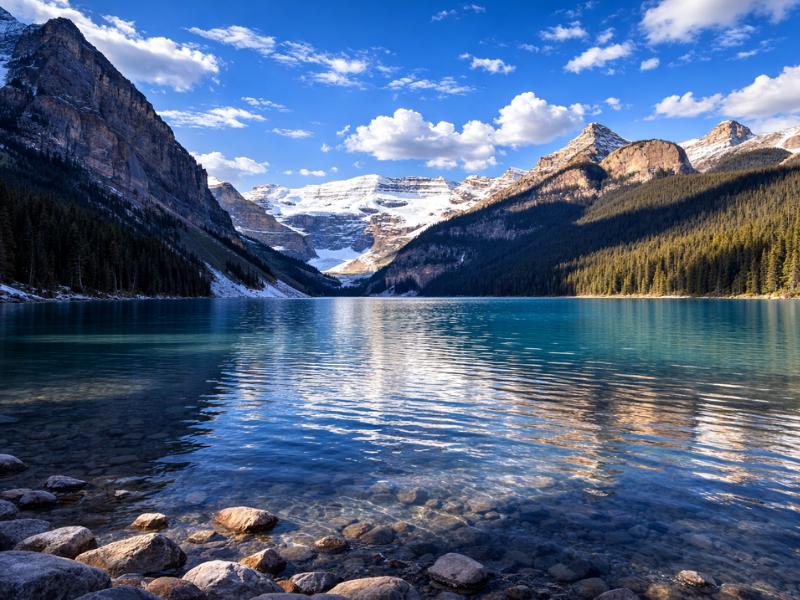
Lake Louise and Moraine Lake typically reach peak turquoise by late June or early July. The color comes from glacial rock flour suspended in meltwater and intensifies as summer sun hits higher angles. In April and May, both lakes are frozen or just thawing. The color builds from late May onward.
When is larch season in Banff?
Alpine larches turn gold in late September, typically peaking from September 20 to October 5. The exact timing shifts by a few days year to year depending on temperatures. Larch Valley at Moraine Lake and Healy Pass are the most popular routes. Weekday visits during peak larch are significantly less congested than weekends, and crowds ease noticeably after the larches have dropped their needles, usually in the first week of October.
Not sure which month works for your trip?
Every week of the year, travelers try to match their schedule to the right season in Banff. Whether you’re trying to hit larch season on the right weekend, time a May wildlife morning on the Bow Valley Parkway, or figure out when to book Moraine Lake before the reservations disappear – start with the tours that match that season.
Written by Avery Claire ThompsonCanadian tour guide since 2014 · Founder, Banff National Park Tours
Avery has guided over 8,600 travelers through Banff National Park and the Canadian Rockies since founding the agency.
Match A Banff Experience To Your Month
Compare a guided day with the independent options in this guide. Confirm your date and meeting point before booking.
Match These Options To Your Trip
 Our Starting Recommendation
Lake Louise And Moraine Lake Day Tour
Link the two lakes without organising separate transport.
8–10 hours · English
Pickup in Calgary, Canmore or Banff; confirm the selected meeting and end points.
Guide, transport and listed lake access. Meals and personal expenses extra.
No wheelchair access. Bring your own child seat for children under 7. Moraine Lake is seasonal.
Visit The Two Lakes ↗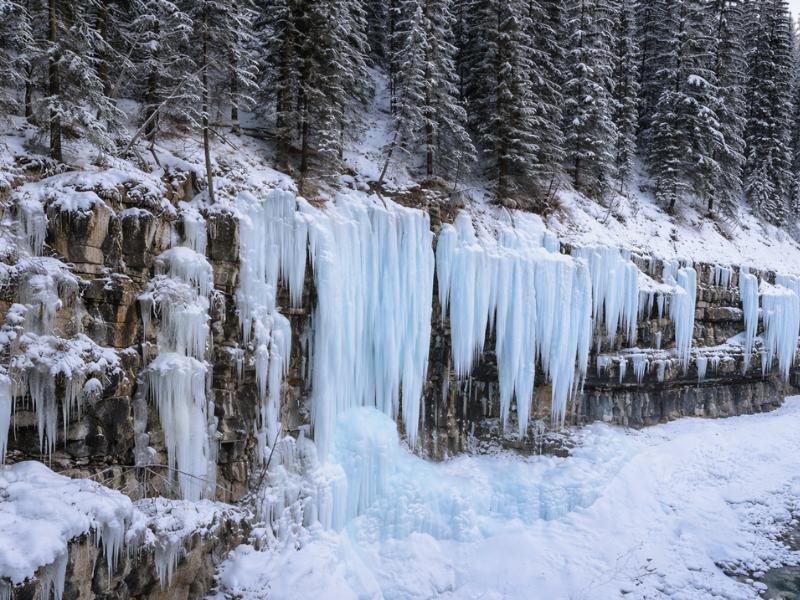 A Different Way To Spend The Day
Johnston Canyon Guided Icewalk
Walk to frozen waterfalls with a guide, ice cleats and poles provided.
4 hours · English
Banff pickup; confirm the listed morning or afternoon meeting time.
Guide, transport, ice cleats, poles, hot chocolate and cookie. Tips extra.
Ages 8+. A 5.4 km round trip with 135 m elevation gain. Moderate fitness and your own winter clothing needed.
Walk The Frozen Canyon ↗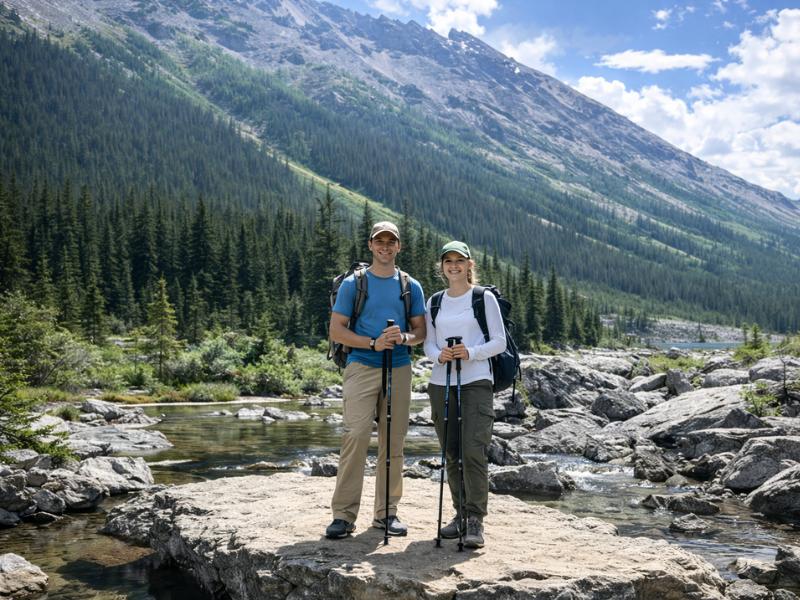 A Different Way To Spend The Day
Guided Signature Hike With Lunch
Spend the day on a named mountain trail with a guide, transport and lunch.
7 hours · English
Banff hotel pickup or the listed Mount Royal Hotel meeting point.
Certified guide, picnic lunch, hiking poles and transport. Teahouse purchases extra.
Ages 13+. Route depends on weekday and conditions. The Larch Valley route does not reach the top of Sentinel Pass.
Choose A Guided Hike ↗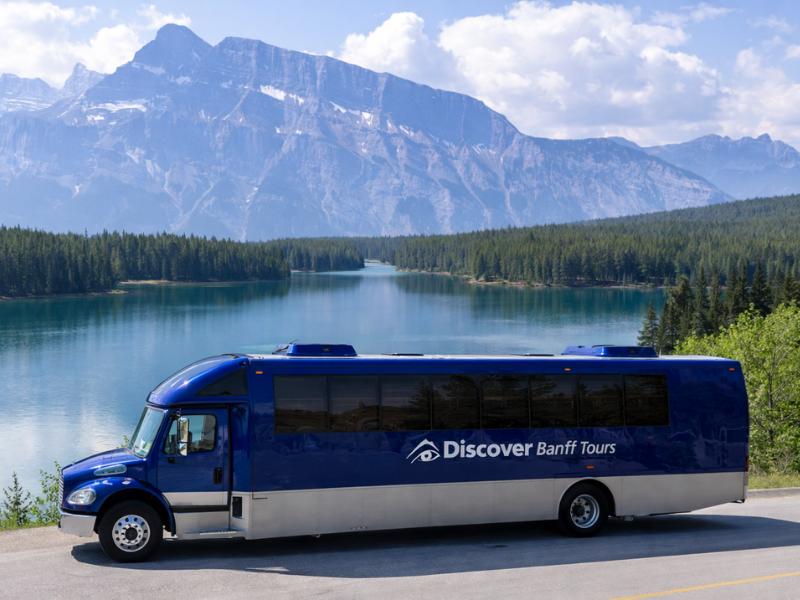 A Different Way To Spend The Day
Banff Wildlife And Viewpoints Minibus
Join Bow Falls, Surprise Corner and Lake Minnewanka in a guided morning.
3½ hours · English
Banff hotel pickup on request; otherwise the Mount Royal Hotel bus parking.
Guide, minibus, cookie and drink. Gratuities extra.
Wildlife sightings are never guaranteed. Ask about child seating and access needs before booking.
Explore Banff’s Viewpoints ↗No choices needed to use the recommendations above.
Work Out The Cost For Your Group
Enter complete quotes in CAD for the same people, date and itinerary. Include transport, parking, entry, food and any other extras on both sides. For shared versus private, enter the shared total first and private total second.
Use current quotes; no prices or savings are assumed.
Turn Your Plan Into A Day Out
Choose the season first, then reserve the one experience whose access or timing would be hardest to improvise.
Your Next StepLake Louise And Moraine Lake Day Tour
Link the two lakes without organising separate transport.
8–10 hours · English
Pickup in Calgary, Canmore or Banff; confirm the selected meeting and end points.
Guide, transport and listed lake access. Meals and personal expenses extra.
No wheelchair access. Bring your own child seat for children under 7. Moraine Lake is seasonal.
Visit The Two Lakes ↗Choose Your Date
Lake Louise And Moraine Lake Day Tour
Open the provider’s calendar to select your date, party and departure. Availability and prices are confirmed there.
Dates On GetYourGuide
Johnston Canyon Guided Icewalk
Choose a date and party to see current options. Confirm the meeting point and restrictions on the listing.
More Banff Sightseeing On Viator
Browse the site’s original Viator selection of Banff day tours, wildlife outings and lake excursions. These are additional ideas, not matches to the trip form. Check dates, duration, pickup and suitability on each listing.
Open The Recommended Outing ↗