Banff Winter Activities
Winter in Banff brings world-class skiing, frozen canyon walks, snowshoe trails, and stunning alpine light - here’s why it’s one of the park’s best seasons.
A winter booking is most valuable when it supplies required traction, keeps the outing compact, or gives non-skiers a clear anchor day. Choose a Winter Day Beyond the Ski Slopes
Last updated: April 30, 2026
Winter in Banff runs roughly November through April and offers three world-class ski resorts sharing nearly 8,000 acres of terrain, the Johnston Canyon icewalk through frozen waterfalls, snowshoeing and cross-country skiing on hundreds of kilometres of groomed trails, the SnowDays Festival through January and early February, and some of the best après-ski in the Canadian Rockies. Cold temperatures – often -15°C to -25°C overnight in January – are balanced by low humidity and extraordinary light on the mountains. With the right layers and a bit of planning, it’s one of the best versions of this park.
| Winter window | Mid-November through late April; peak ski season December through March |
| Average January temps | -15°C to -25°C overnight; -5°C to -10°C daytime; dry cold, not damp |
| Park pass (daily adult) | CAD $12.25 – Verified March 2026; youth 17 and under always free |
| Total SkiBig3 terrain | ~8,000 acres across three resorts (Lake Louise now ~4,400 acres with Richardson’s Ridge) |
| SkiBig3 season length | One of the longest in North America – mid-November to late May |
| Lift ticket pricing | Dynamic; check skibig3.com for current date-specific rates; book in advance for best price |
| Ikon Pass | SkiBig3 is an Ikon Pass partner destination; pass holders get days at all three resorts |
| Mt. Norquay 2025-26 | 100th anniversary season; opens mid-November; 7 minutes from Banff townsite |
| Lake Louise 2025-26 new terrain | Richardson’s Ridge: 200 acres, 5 new beginner/intermediate runs, high-speed quad; opened December 17, 2025 |
| Johnston Canyon icewalk | Self-guided year-round; guided tours with Discover Banff Tours and White Mountain Adventures; microspikes required |
| SnowDays Festival 2026 | January 16 to February 8, 2026; skijoring Jan 17-18; Ice Magic at Lake Louise Feb 5-8 |
| Hot Chocolate Trail | November 13, 2025 to February 8, 2026 |
| Banff Upper Hot Springs | Closed for maintenance; reopening planned early 2026 – confirm at Parks Canada before visiting |
| Bow Valley Pkwy wildlife closure | March 1 to June 25, 8 pm to 8 am nightly – all travel including cyclists and walkers |
| Emergency / Banff Dispatch | 403-762-1470; cell coverage unreliable throughout park |
The temperature in Banff in January does something that surprises most first-time winter visitors. It drops hard overnight – sometimes past -25°C – and then the next morning you’re standing in a clear cold valley with the mountains catching the first light and the snow making that specific sound it makes at -15°C when you walk on it. Dry and hollow and very Canadian. You put on every layer you brought and you go outside and you understand immediately why people keep coming back.
We’ve been running winter tours in this park since 2014. The version most people experience – a few ski days, some après, maybe the gondola – is good. But there is a fuller version of winter here that involves frozen canyons and candlelit evenings and the specific pleasure of being somewhere genuinely cold and having everything work out anyway. This guide covers all of it.
Your Experience Plan: Start with the Johnston Canyon icewalk for a guided winter activity, then compare a seated sleigh ride, summit visit, or short wildlife drive.
What Are The Best Things To Do In Banff In Winter?
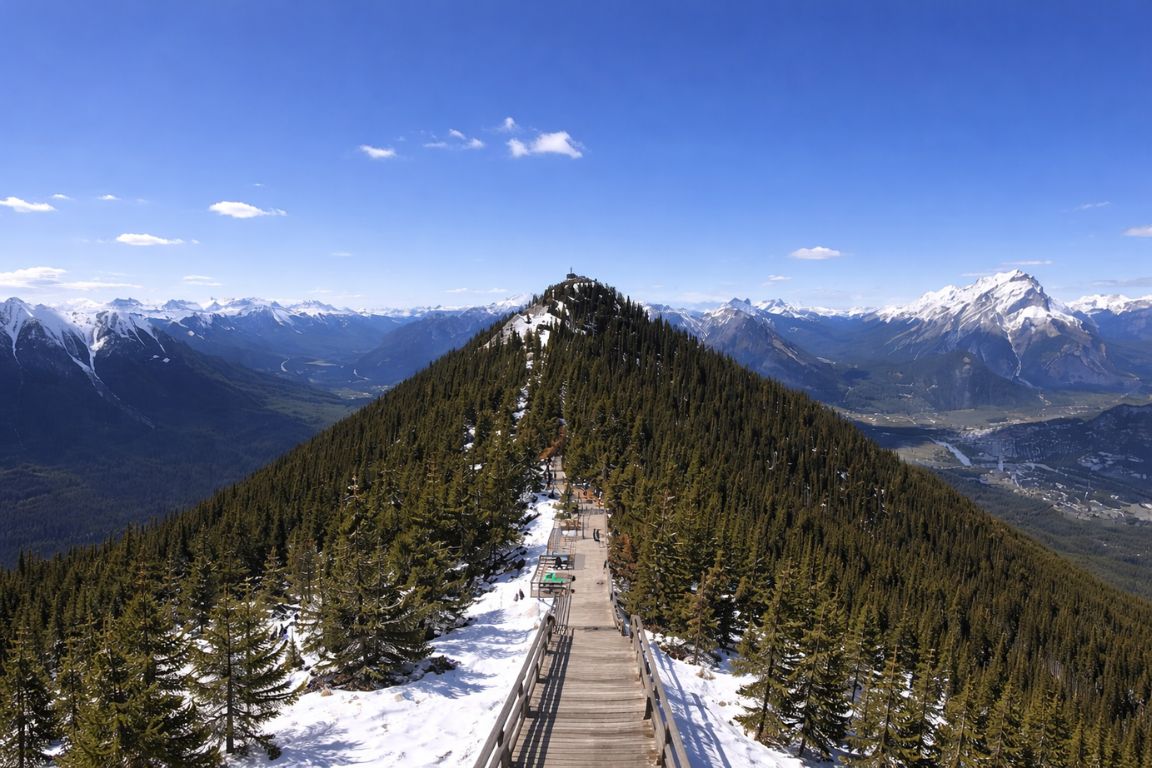 Winter Banff centres on three world-class ski resorts with shared lift access across nearly 8,000 acres. Beyond skiing and snowboarding, the highlights are: the Johnston Canyon icewalk through frozen waterfalls, snowshoeing on groomed backcountry-adjacent trails, the Banff Gondola to the Sulphur Mountain summit, skating at the Fairmont Château Lake Louise, the SnowDays Festival from mid-January through early February, and evening events ranging from sleigh rides to SnowNights cultural programming. The Banff Upper Hot Springs is closed for maintenance — confirm reopening at Parks Canada before planning a visit.
Winter here is not a consolation prize for people who couldn’t make it in summer. It is a distinct thing. The crowds that make July at Moraine Lake feel like a lineup for a theme park are gone. Johnston Canyon, which runs 2 to 3 kilometres of suspended catwalks through a limestone slot canyon, has virtually nobody on it in January. The same trails that feel crowded in August are quiet and completely transformed by snow. And the ski terrain – three resorts, shared ticket, a combined season that stretches from mid-November into late May – is among the best in North America by any honest measure.
Not all seasons are equal in the Rockies. The best time to visit Banff National Park tours changes dramatically based on crowds, snow conditions, and whether you prioritize hiking or winter sports.
What makes winter Banff work requires the same thing summer does: planning. Hotel rates in January run $150 to $200 per night, significantly below the $300 to $450 peak summer range. Lift tickets are dynamic-priced and significantly cheaper when booked in advance versus at the window. The cold is manageable with proper layers – the dry air at this elevation makes -15°C feel different than damp cold at the same temperature. Dress right and this park is absolutely open for business in the deep of winter.
What Are The Best Ski Resorts In Banff And How Do They Compare?
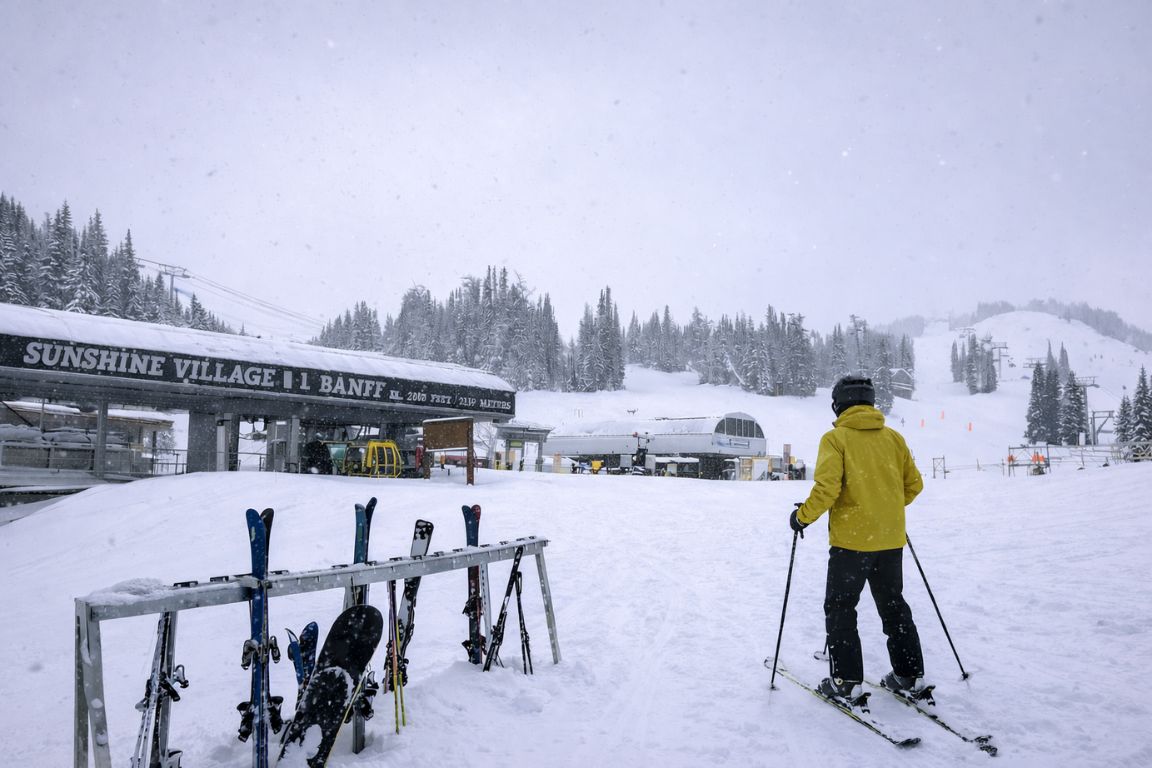 Banff has three ski resorts accessible on one SkiBig3 lift ticket: Lake Louise Ski Resort (4,200+ acres, four mountain faces, largest and most diverse terrain), Banff Sunshine Village (3,358 acres, sitting on the Continental Divide, best natural snowfall), and Mt. Norquay (190 acres, 7 minutes from the townsite, best for beginners and a day warm-up). SkiBig3 is an Ikon Pass partner destination. Together the three resorts cover roughly 8,000 acres – one of the largest ski areas in North America.
Lake Louise is the headliner. Four mountain faces, 164 named runs (now 169 with Richardson’s Ridge), and a vertical drop over 1,000 m. This season’s big news is Richardson’s Ridge: 200 acres of new beginner and intermediate terrain opened ahead of schedule on December 17, 2025, increasing the resort’s skiable area by nearly 15%. The Ridge sits in the Back Bowls, accessed by the new Richardson’s Ridge Express high-speed quad, with views down Pika Valley toward Mt. Temple. It’s specifically designed for families, first-timers, and progressing skiers who felt the Back Bowls were too committing. Lake Louise also operates a heated gondola to the Ptarmigan area, making upper mountain access comfortable on cold mornings.
Sunshine Village has a character all its own. It’s the only resort in the park where you ride a gondola just to reach the base village, because the base village itself sits above 2,100 m on the Continental Divide. That elevation is the source of Sunshine’s legendary natural snow – the resort averages over 9 metres per season – and it’s also why the season runs from around November through May, often the latest closing date of any Alberta resort. The terrain skews intermediate to expert, and the Delirium Dive, a mandatory-guide, gate-access expert area, is some of the most serious inbounds skiing in Canada.
Norquay is the local’s hill. It sits 7 minutes from the Banff townsite, runs a compact 190 acres, and has been teaching Albertans to ski for 100 years – the 2025-26 season marks its centennial. For a family with young children or beginners, Norquay’s learning area is the gentlest and most accessible entry point into the SkiBig3 system. It also has Tube Town, the largest snow tubing park in Alberta, and night skiing on select dates. Don’t underestimate it as a first-morning warm-up day while you figure out the bigger mountains.
| Lake Louise | ~4,400 (incl. Richardson’s Ridge) | 1,000 m+ | All levels; best variety; families with Richardson’s Ridge; advanced skiers in Back Bowls | ~Nov to early May |
| Sunshine Village | 3,358 | 1,070 m | Best natural snow; intermediate to expert; powder days; longest season | ~Nov to late May |
| Mt. Norquay | 190 | 503 m | Beginners; families with young kids; warm-up days; snow tubing; locals’ hill | ~Nov to mid-April |
The SkiBig3 lift ticket covers all three resorts and includes Ikon Pass days for international visitors who already hold a pass. Dynamic pricing means the earlier you buy, the less you pay. Buying at the window on a Saturday in February is the most expensive option. The SkiBig3 Adventure Hub in Banff and Canmore handles rentals and offers in-room fitting services so you don’t have to haul gear from your hotel. If you’re doing more than two ski days, run the numbers on a season pass – it covers all three resorts with no blackout dates and pays for itself quickly.
We’ve done the legwork comparing the best Banff National Park tours so you don’t have to sort through dozens of operators with identical-sounding itineraries.
What Non-Skiing Winter Activities Are Worth Your Time In Banff?
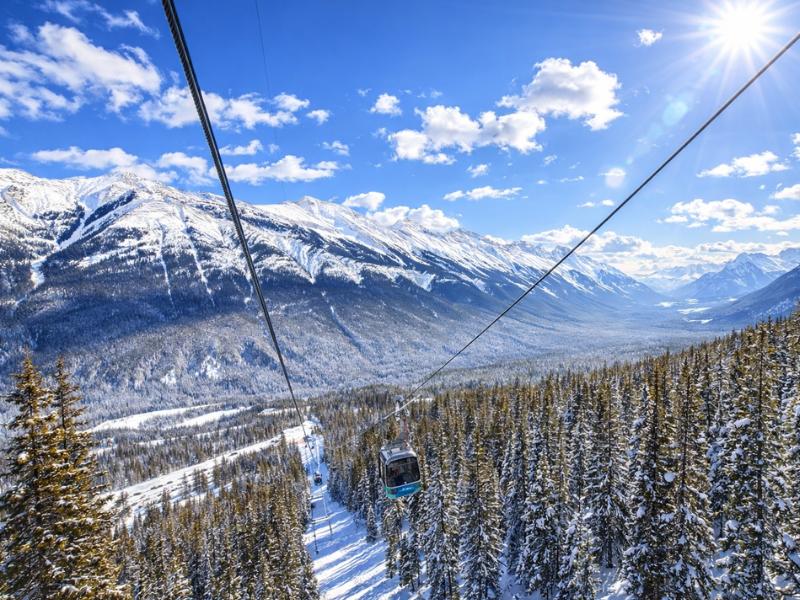
The best non-skiing winter activities in Banff are: the Johnston Canyon icewalk (5 km RT through a frozen limestone canyon to a 30-metre pillar of ice at the Upper Falls), snowshoeing on beginner-friendly trails around the townsite and at Lake Louise, the Banff Gondola to the Sulphur Mountain summit in winter light, ice skating at the Fairmont Château Lake Louise and Banff train station, horse-drawn sleigh rides, snow tubing at Mt. Norquay’s Tube Town, and ice climbing introductions at Johnston Canyon for the adventurous.
Johnston Canyon in winter is the single best non-skiing experience in this park. The waterfall that draws tens of thousands of visitors on summer weekends transforms into something almost unreal from December through March. The Lower Falls becomes a mass of hanging icicles. The Upper Falls – already dramatic at 30 metres – builds into what guides call the Cathedral of Ice: a pillar of turquoise-blue ice that rises from the canyon floor and regularly attracts ice climbers scaling its face while you stand at the base watching. The canyon’s steel catwalks are open year-round and the trail runs about 2.5 km each way to the Upper Falls. You will need microspikes on your boots, available for rent at gear shops in the townsite. Budget 2.5 to 4 hours for the full out-and-back.
Guided icewalk tours run daily with multiple operators including Discover Banff Tours and White Mountain Adventures, both offering morning and afternoon departures with hotel pickup from Banff. The guided option adds context about the canyon’s geology, the fossil corals visible in the limestone walls, and the history of the area. It’s worth it for first-timers. If you’d prefer to go independently, the trailhead is accessible by car via the Bow Valley Parkway – parking is easy in winter, rarely congested outside the holiday window.
Ice skating at the Fairmont Château Lake Louise is something visitors treat as a bonus but often end up calling the best thing they did. The rink sits at the far end of the lake with Victoria Glacier behind it and the château behind you. It operates daily through winter with skate rentals available on-site. No booking required, just show up. The Banff train station rink is the lower-key alternative right in town, smaller and without the dramatic backdrop but convenient and free once you have skates.
Snow tubing at Mt. Norquay deserves more attention than it typically gets. The Tube Town park is the largest in Alberta, with dedicated lanes, a conveyor belt back to the top, and enough speed to make adults stop being adults for a few minutes. It requires nothing – no skills, no gear, no experience. It’s pure and it’s fun. Runs are sold in timed sessions; book ahead on busy days in January and February. If you’re traveling with mixed-ability kids or non-skiers, an afternoon at Tube Town paired with a morning icewalk is close to the perfect winter day in this park.
We’ve covered Banff National Park tours with kids in detail so you know which trails are manageable, what activities work for different ages, and how to handle altitude and weather with children.
What Are The Best Winter Hikes And Snowshoe Trails In Banff?
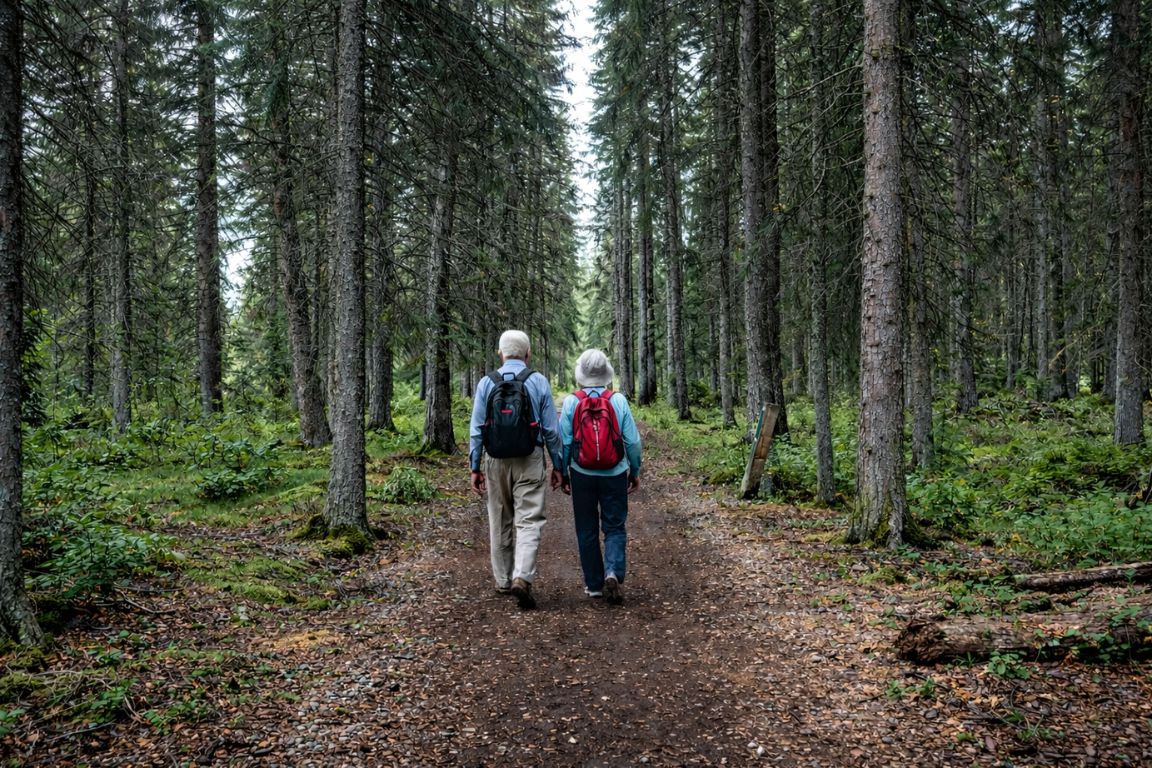 Winter hiking and snowshoeing in Banff is feasible from mid-November through April on lower-elevation trails. The best accessible routes are: Johnston Canyon to the Upper Falls (5 km RT, minimal gain, microspikes required), the Tunnel Mountain loop (4.8 km, good views of the Bow Valley and Rundle), the Fenland Trail near the townsite (2 km loop, flat, elk habitat), Bow River Loop (4.8 km, easy, connects to the townsite), and at Lake Louise, the Fairview lookout trail (4.8 km RT from the lakeshore). Alpine routes above 1,800 m carry avalanche risk through the entire winter season and require experience, avalanche gear, and a companion rescue system.
The single most important thing to understand about winter hiking in Banff is the avalanche terrain boundary. Everything above roughly 1,800 m – which in practice means any trail that gains significant elevation off the valley floor – carries avalanche risk from November through May, sometimes later. The popular summer hikes like Lake Agnes, Plain of Six Glaciers, and any alpine pass are not appropriate for casual winter hiking without proper avalanche training and equipment.
For most winter visitors the valley floor trails are the right choice, and they are genuinely good. The Fenland Trail is a 2 km flat loop through a spruce and fir wetland near the Forty Mile Creek picnic area, and it’s consistently one of the best elk-spotting routes in winter because the animals move down to valley bottom when the high country fills with deep snow. Early morning in December or January you might walk this trail and have elk watching you from 30 m. Keep the mandatory distance, don’t approach, and keep moving. The Tunnel Mountain summit loop gives you a solid 260 m of gain and views of the Bow Valley that look entirely different with snow on the peaks – worth doing on a clear cold morning.
| Johnston Canyon to Upper Falls | 5 km | Microspikes essential | Frozen waterfall Cathedral of Ice; ice climbers on upper falls; guided tours available |
| Tunnel Mountain loop | 4.8 km | Microspikes on icy sections | 260 m gain; panoramic Bow Valley views; walkable from townsite |
| Fenland Trail | 2 km loop | Microspikes optional | Flat; wetland; excellent elk habitat in winter; near townsite |
| Bow River Loop | 4.8 km | Microspikes on icy days | Easy; connects Banff Ave to Bow Falls; Vermilion Lakes turnoff nearby |
| Fairview Lookout (Lake Louise) | 4.8 km RT | Microspikes; trekking poles useful | Good lake and Victoria Glacier view; starts from lakeshore parking |
| Lake Louise lakeshore | 4 km RT | Microspikes | Easy; beautiful glacier and mountain views; skating rink at far end |
Snowshoeing opens up a different version of these same trails and adds a few routes that aren’t reasonable without flotation. The Moraine Lake Road trail is a multi-use snowshoe and cross-country ski route in winter – the road that’s closed to vehicles becomes a popular groomed trail. The Sunshine Meadows area at the top of the Sunshine Village gondola has snowshoe terrain above treeline with views that rank among the best winter panoramas in the park. A guided snowshoe day may simplify winter logistics; compare current guided winter options because no Sunshine Meadows snowshoe product is verified in this shortlist.
Wondering where to hike? Check out our breakdown of the best hiking trails in Banff National Park tours – from easy lakeside walks to alpine scrambles that require early starts.
How Crowded Is Banff In Winter And When Should You Go?
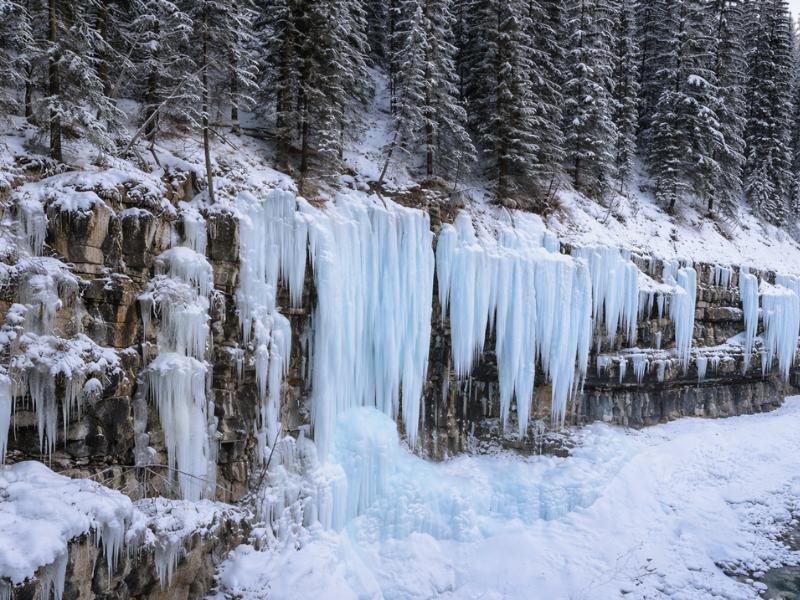
Winter is Banff’s quieter season compared to July and August, but it’s not empty. The holiday window (December 20 to January 5) and SnowDays Festival weekends (January 16 to February 8) bring meaningful crowds. February and March are the sweet spot: snow conditions are typically best, hotel rates are lower than December holidays, and the major festival traffic has eased. Weekdays are noticeably quieter than weekends year-round. January midweek is the quietest the park gets during winter.
The contrast with summer is real and it matters to how you plan. The Bow Valley Parkway, which has specific vehicle closures in spring to protect nesting birds, is wide open for winter driving. Johnston Canyon parking, which fills by 9 am on a July weekend, is manageable on most winter days. Hotels that run $300 to $450 per night in July drop to $150 to $200 in January outside the holiday window. If your goal is to experience the park’s landscape and skiing without crowd friction, January to mid-February on weekdays is the right window.
One genuine winter crowd pressure point: the slopes on powder days after a significant snowfall. After a storm cycle at Sunshine or Lake Louise, Albertans drive up from Calgary in force and lift queues build. This is the best kind of crowd problem, it means the snow is good but it’s worth knowing. Weekday powder days are a gift. Weekend powder days are a shared experience with several thousand of your fellow powder-hungry Albertans and you should arrive early, be patient with queues, and enjoy the runs rather than fighting the system.
If you want the full picture before choosing dates, here’s our Banff National Park tours by month guide showing you what changes from winter skiing to summer hiking to fall larches.
What Should You Pack For Banff In Winter?
Winter packing for Banff is a layering problem. January valley temperatures hit -20°C to -25°C overnight with daytime highs around -5°C to -10°C. The dry air at elevation makes it feel different from coastal or Great Lakes cold, but it’s still serious cold. On-slope layers need to accommodate a wide swing – cold at the top of the mountain, warm at the base by midday. Base layer, mid layer, waterproof insulated shell, neck gaiter, and proper ski gloves or mittens are non-negotiable for any ski day. Off-slope, a heavy parka handles everything below -15°C.
Boot warmers are one item almost nobody thinks to pack and almost everyone wishes they had by day three of a ski trip. Disposable chemical warmers work fine and are available at gear shops in the townsite. Ski goggle fog is a consistent problem when you’re moving from cold outside to warm gondola cabins and back; a proper anti-fog goggle with good ventilation is worth the investment over a cheap pair. Face protection matters more than people expect at elevation – wind chill on a high ridge at Lake Louise with a brisk day can turn exposed skin red in under ten minutes.
| Moisture-wicking base layer (top and bottom) | Cotton kills warmth when wet; merino wool or synthetic is essential on ski days and long hikes |
| Insulating mid-layer (fleece or down) | Down packs small and is very warm in dry Rockies cold; fleece handles wet conditions better |
| Waterproof insulated ski jacket and pants | On-slope essential; lift chairs are cold; storms come fast at elevation |
| Warm parka (for off-slope, town walking) | Heavy synthetic or down rated to -25°C; January nights demand it |
| Neck gaiter or balaclava | Face protection on ridgeline runs; windchill at elevation is significant |
| Ski gloves or mittens (waterproof) | Mittens are warmer than gloves; bring both if you want dexterity on lift equipment |
| Ski goggles with anti-fog lens | Temperature transitions between gondola and outside fog up cheap goggles; ventilation matters |
| Insulated waterproof boots (off-slope) | Rated to at least -30°C; sidewalks in town are icy; regular winter boots often insufficient |
| Microspikes (slip-over boot traction) | Essential for Johnston Canyon and any icy trail; rent or buy in Banff |
| Hand and foot warmers (chemical) | One of the most-wished-for items by day three; cheap and effective in ski boots and gloves |
| Lip balm with SPF + moisturiser | Dry cold air and UV at elevation wreck lips and exposed skin fast |
| Sunglasses (not just goggles) | UV glare off snow is intense even at -20°C; needed for non-skiing days outside |
What Are The Best Winter Events In Banff?
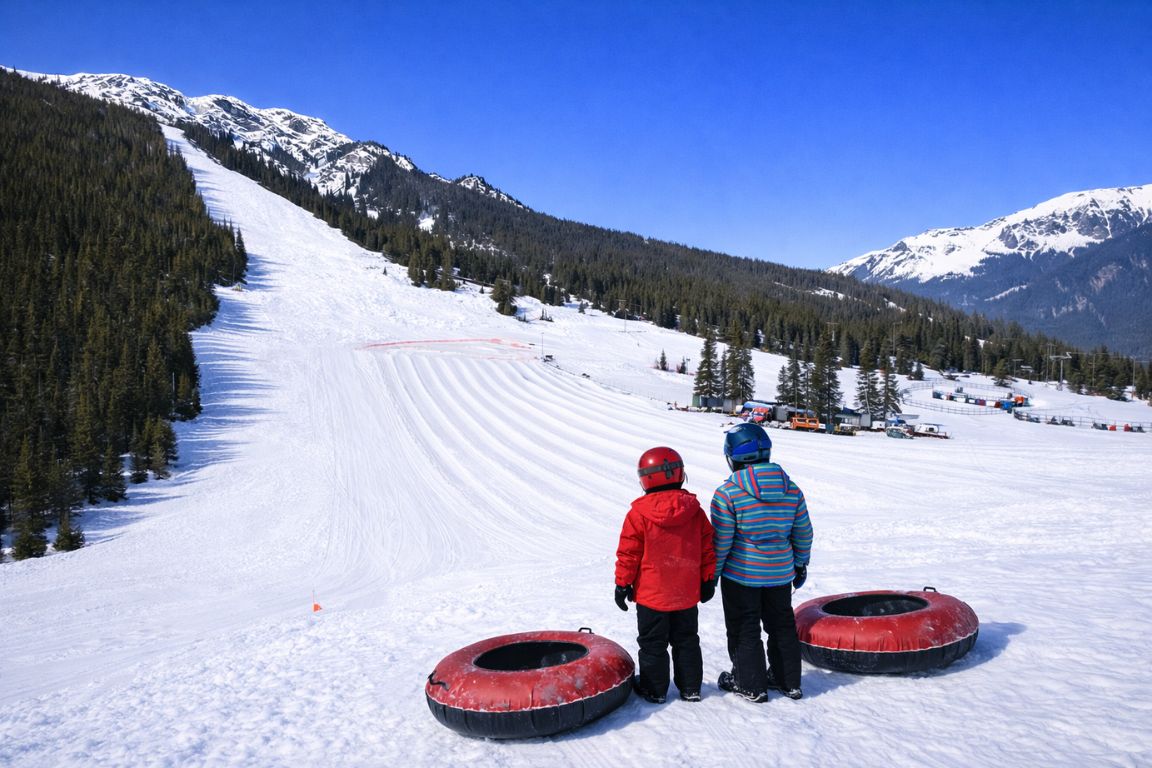 The main winter events in Banff are SnowDays Festival (January 16 to February 8, 2026), which includes skijoring on Banff Avenue, snow sculpture displays downtown, the SnowDays Play Zone in Central Park, SnowNights evening programming, and Ice Magic at Lake Louise (February 5 to 8, 2026). The Hot Chocolate Trail runs November 13, 2025 to February 8, 2026. The Banff Centre Mountain Film Festival returns in late October. Mt. Norquay’s 100th anniversary celebrations run through the 2025-26 season.
SnowDays is the centrepiece of the Banff winter social calendar. The festival runs four weeks from mid-January and it’s genuinely the best argument for planning a winter trip around a specific date window. Skijoring on January 17 and 18 is the crowd highlight – horses pulling skiers down Banff Avenue through a freestyle jump course while the street fills with spectators in parkas. It’s chaotic and uniquely mountain-town and it’s free. Snow sculpture displays along Bear Street and Central Park run through early February, with carvers working in public so you can watch the process. The SnowDays Play Zone in Central Park runs Wednesday through Sunday with ice slides, fat bikes, cross-country loops, and a supervised area for kids.
Ice Magic at Lake Louise (February 5 to 8, 2026) is a separate ticketed event centred on the Fairmont Château property. International ice carvers produce large-scale sculptures over the event window, displayed against the lake and mountain backdrop. The 2026 theme is Natural Athletes – Wild Games, with wildlife-themed carving. Access is through accommodation partnerships – guests of partner hotels including the Fairmont Château Lake Louise, Baker Creek by Basecamp, Lake Louise Inn, and others receive complimentary tickets. If you’re not staying at a partner property, free shuttle access is available from the Lake Louise Park and Ride on event weekends. Confirm access details before your visit as the system changes year to year.
The Hot Chocolate Trail is the low-key companion event that runs through most of winter and almost never gets mentioned in the same breath as SnowDays. Local cafés and restaurants across Banff and Lake Louise create signature hot chocolate variants – spiced, spiked, local-ingredient variations, and the trail maps them on a self-guided walking tour. It’s free to walk, you pay per drink, and it turns an afternoon between ski days into something worth doing rather than just a recovery session in the hotel lobby.
What Are The Biggest Mistakes People Make In Banff In Winter?
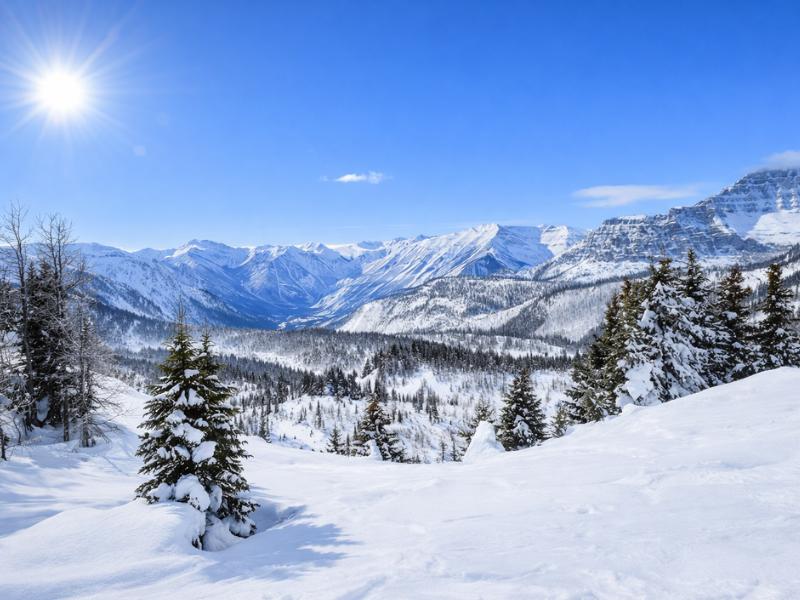
The five biggest winter mistakes: underpacking for cold (the park is significantly colder than most visitors expect), not booking lift tickets in advance and paying full dynamic pricing at the window, hiking above 1,800 m without avalanche gear, driving to Johnston Canyon without knowing the trailhead requires microspikes, and visiting the Banff Upper Hot Springs without confirming it has reopened from its current maintenance closure.
The cold is the first one to address directly. January in Banff is genuinely, seriously cold. Not cold in the way that most cities describe as cold. Overnight temperatures regularly drop to -20°C or below. Casual footwear, fashion-forward outerwear without insulation, thin gloves, and no face coverage are fine for a downtown dinner but will make any outdoor activity miserable. The dry air at elevation means there’s no dampness to penetrate your layers, which is a real advantage over coastal cold but you still need proper gear. The layering list in the previous section is not exaggeration. Pack it.
Lift ticket pricing at the window versus booked in advance is a consistent money drain for spontaneous visitors. SkiBig3 uses dynamic pricing that rewards early planning significantly. The same ticket that costs $X if you book weeks out can be meaningfully more expensive if you buy it day-of at the resort window on a busy February Saturday. Check skibig3.com when you confirm your travel dates and book lift tickets at the same time. It takes ten minutes and saves real money.
The avalanche terrain boundary issue is the most serious mistake on this list and the one with actual life-safety implications. We see visitors every winter who assume that because a trail is shown on a map and is open in summer, it’s fine to hike in January. That is not how avalanche terrain works. Any trail that gains significant elevation into alpine or subalpine zones carries risk from November through May. Check avalanche.ca before any off-valley hiking. If the forecast is anything above Low, stay on valley trails. If you want to access higher terrain, hire a guide with formal avalanche training – it is not optional.
The hot springs question keeps coming up. The Banff Upper Hot Springs was undergoing maintenance at the time of writing with a planned early 2026 reopening. Confirm current status at Parks Canada before building it into your itinerary. When it is open, it’s a 38°C natural mineral pool at 1,585 m elevation on Sulphur Mountain – one of the best après-ski recovery experiences in the park. Worth the confirmation call.
What Our Winter Guests Get Right and Wrong: Field Observations
Based on guided winter tours and post-trip feedback across multiple seasons.
| Observation | Share of Winter Guests | Notes |
|---|---|---|
| Arrived underpacked for cold – mentioned it on day one | ~41% | Most purchased additional layers in Banff; gear shops on Banff Ave are well-stocked |
| Said Johnston Canyon icewalk was the single best non-ski activity of the trip | ~67% | Consistently the highest-rated non-skiing activity in post-trip feedback |
| Bought lift tickets at the window rather than in advance | ~28% | Almost universally wished they’d booked ahead when told the price difference |
| Wished they’d built a full day for a non-skiing activity rather than squeezing it in | ~53% | Icewalk and snowshoe days consistently rated higher when given full morning-to-afternoon time |
| Tried all three SkiBig3 resorts in one trip | ~38% | Those who did consistently rated the experience higher than single-resort visitors |
Frequently Asked Questions
Is Banff worth visiting in winter if you don’t ski?
Absolutely. The Johnston Canyon icewalk alone is worth the trip – it’s one of the most spectacular and accessible winter experiences in Canada. Add the Banff Gondola, ice skating at Lake Louise, snowshoeing on valley trails, and the SnowDays Festival events, and a non-skier has four to five days of genuinely excellent things to do. Winter hotel rates are also significantly lower than summer, making it a strong value proposition even before the skiing enters the equation.
Which is the best SkiBig3 resort for beginners?
Mt. Norquay for absolute beginners – the learning area is accessible, the terrain is gentle, and the 7-minute drive from Banff townsite means low-pressure access without a major commitment. For intermediate beginners ready to progress, Lake Louise’s new Richardson’s Ridge terrain (opened December 2025) was specifically designed for beginner to intermediate skiers and offers far more variety than Norquay. Start at Norquay, graduate to Richardson’s Ridge.
Do you need a park pass to ski at Banff resorts?
Yes. The daily park entry fee (CAD $12.25 per adult, verified March 2026) applies to all visitors entering Banff National Park, including those heading to Lake Louise and Sunshine Village ski resorts. The Discovery Pass at CAD $83.50 per adult covers unlimited entry for a full year and pays for itself after seven or eight daily entries. Youth 17 and under are always free.
How cold does Banff get in winter and how do you manage it?
January is the coldest month with overnight lows regularly reaching -20°C to -25°C and daytime highs around -5°C to -10°C. The dry air at elevation makes it more manageable than those numbers suggest to coastal visitors, but it still requires serious layering. Proper base layers, a heavy mid-insulation layer, waterproof outerwear, face protection, and insulated footwear rated to -30°C are the minimum. Gear shops on Banff Avenue stock everything you might have forgotten.
When is the best time to visit Banff in winter?
February and early March are the sweet spot: snow base is typically at its deepest, conditions are reliable, the holiday crowd has cleared, hotel rates are below the December peak, and the SnowDays Festival runs through February 8. January midweek is the quietest window of the entire year. December holidays (December 20 to January 5) bring significant crowds and hotel rates that approach summer levels. See our Banff by Month guide for a full seasonal breakdown.
Is the Johnston Canyon icewalk safe in winter?
Yes, with the right footwear. The steel catwalks along the canyon walls are maintained year-round and are safe to walk on in winter. Microspikes over your regular boots are essential – the surface is icy and walking without traction on the frozen sections is a slip risk. Guided tours include ice cleats and hiking poles. Self-guided hikers should rent or buy microspikes in Banff before heading out. The tours run in temperatures from -27°C to +10°C, so dress for whatever the forecast shows.
Ready to plan your Banff winter?
Whether you’re after powder days across three resorts, a frozen canyon walk, or a mix of both, start with the Johnston Canyon icewalk or browse Banff National Park tours for dates that fit around ski days.
Written by Avery Claire ThompsonCanadian tour guide since 2014 · Founder, Banff National Park Tours
Avery has guided over 8,600 travelers through Banff National Park and the Canadian Rockies since founding the agency.
Choose A Winter Day Beyond The Ski Slopes
Compare a guided day with the independent options in this guide. Confirm your date and meeting point before booking.
Match These Options To Your Trip
Our Starting RecommendationJohnston Canyon Guided Icewalk
Walk to frozen waterfalls with a guide, ice cleats and poles provided.
4 hours · English
Banff pickup; confirm the listed morning or afternoon meeting time.
Guide, transport, ice cleats, poles, hot chocolate and cookie. Tips extra.
Ages 8+. A 5.4 km round trip with 135 m elevation gain. Moderate fitness and your own winter clothing needed.
Walk The Frozen Canyon ↗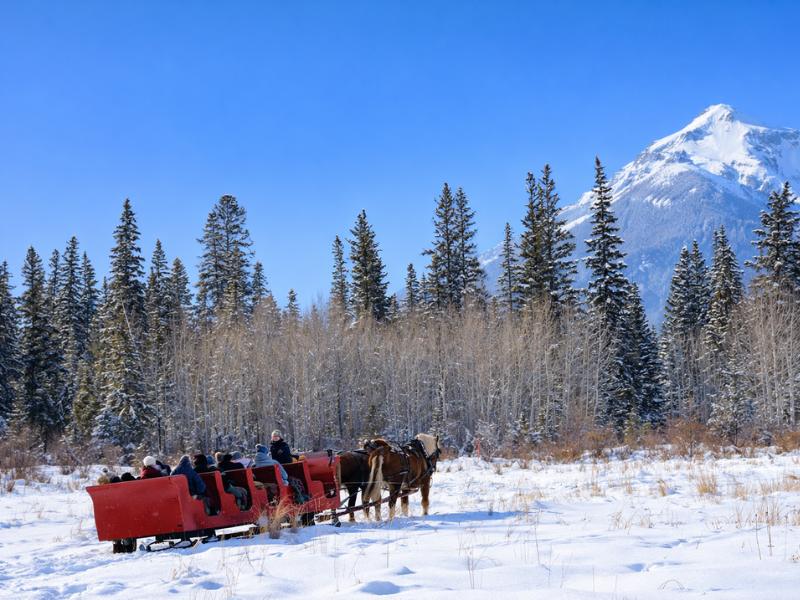 A Different Way To Spend The Day
Banff Horse-Drawn Sleigh Ride
Enjoy a short snow-covered meadow outing followed by a hot drink.
40 minutes; allow extra time for check-in · English
Own arrival at Banff Trail Riders, 100 Sundance Road, Banff.
Driver, hot drink and parking. Hotel transport, souvenir blanket and s’mores kit excluded.
Weather-dependent. Minors need a parent or guardian. Children under 4 may sit on a lap without a separate seat.
Reserve A Banff Sleigh Ride ↗A Different Way To Spend The DayBanff Gondola Summit Ticket
Reach Sulphur Mountain’s views without hiking the ascent.
Timed entry; ticket validity is 1 day · English
Make your own way to the Sulphur Mountain base.
Return gondola ride and summit interpretive facilities. Food, park admission and parking extra.
No strollers. Arrange accessibility requests with the operator at least 72 hours ahead. Confirm your return time.
Book The Summit Ride ↗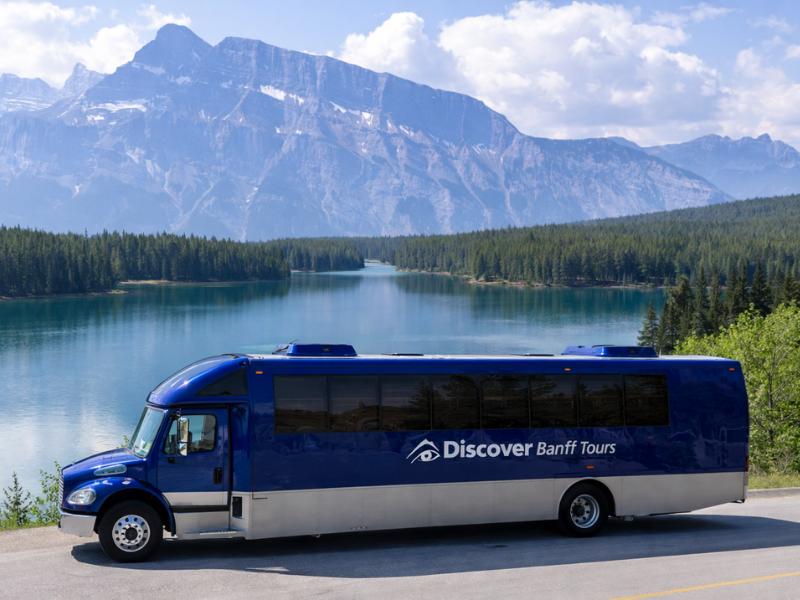 A Different Way To Spend The Day
Banff Wildlife And Viewpoints Minibus
Join Bow Falls, Surprise Corner and Lake Minnewanka in a guided morning.
3½ hours · English
Banff hotel pickup on request; otherwise the Mount Royal Hotel bus parking.
Guide, minibus, cookie and drink. Gratuities extra.
Wildlife sightings are never guaranteed. Ask about child seating and access needs before booking.
Explore Banff’s Viewpoints ↗No choices needed to use the recommendations above.
Work Out The Cost For Your Group
Enter complete quotes in CAD for the same people, date and itinerary. Include transport, parking, entry, food and any other extras on both sides. For shared versus private, enter the shared total first and private total second.
Use current quotes; no prices or savings are assumed.
Turn Your Plan Into A Day Out
Choose one off-slope experience that matches your cold tolerance and leave ski days flexible around conditions.
Your Next StepJohnston Canyon Guided Icewalk
Walk to frozen waterfalls with a guide, ice cleats and poles provided.
4 hours · English
Banff pickup; confirm the listed morning or afternoon meeting time.
Guide, transport, ice cleats, poles, hot chocolate and cookie. Tips extra.
Ages 8+. A 5.4 km round trip with 135 m elevation gain. Moderate fitness and your own winter clothing needed.
Walk The Frozen Canyon ↗Choose Your Date
Johnston Canyon Guided Icewalk
Open the provider’s calendar to select your date, party and departure. Availability and prices are confirmed there.
Dates On GetYourGuide
Johnston Canyon Guided Icewalk
Choose a date and party to see current options. Confirm the meeting point and restrictions on the listing.
More Banff Sightseeing On Viator
Browse the site’s original Viator selection of Banff day tours, wildlife outings and lake excursions. These are additional ideas, not matches to the trip form. Check dates, duration, pickup and suitability on each listing.
Open Viator’s Banff Wildlife Listing ↗