Parking In Banff
Parking in Banff is tough in summer. Use the Train Station lot, shuttles to Lake Louise and Moraine Lake, and Roam Transit - here’s the smarter strategy.
A guided lakes day removes the hardest parking decisions at Lake Louise and Moraine Lake; town parking and transit still have better free or official answers. Choose A Parking-Free Banff Day
Last updated: April 30, 2026
Parking in Banff is genuinely challenging from May through October, and getting harder every year. The short version: park your car at the Train Station lot in the townsite (500 stalls, free, 8-minute walk to Banff Avenue), take the Parks Canada shuttle to Lake Louise and Moraine Lake (book April 15), and use Roam Transit for everything else. Moraine Lake Road is permanently closed to private vehicles. Lake Louise lakeshore parking costs up to $42 per day and fills before sunrise in summer. A new $17.50/day fee for Sulphur Mountain parking starts May 15, 2026. The best parking strategy in Banff is usually not parking at all.
| Banff townsite – downtown paid zone | $7/hr (Nov-Apr); $12/hr (May-Oct) | 8 am-8 pm daily, year-round | Pay via Blinkay app or pay stations; max 9 hours |
| Train Station lot | Free | Up to 9 hours | 500 stalls; 8-min walk to Banff Ave; Roam Transit connection |
| Bear Street Parkade (upper floors) | Free | Up to 9 hours | 187 stalls free; ground floor paid; central downtown location |
| Sulphur Mountain area (NEW 2026) | $17.50/day | May 15-Oct 12, 9 am-9 pm | 3-year pilot; covers Banff Gondola and Upper Hot Springs lots; use Roam Route 1 instead |
| Lake Louise Lakeshore lot | ~$36.75-$42/day (confirm with Parks Canada) | May 15-Oct 12, 3 am-7 pm | Fills before sunrise; no overnight; flat daily rate only |
| Lake Louise Park and Ride | Free | Year-round | At Lake Louise Ski Resort; shuttle connection to lakeshore and Moraine Lake |
| Moraine Lake | No private vehicle access | Year-round closure | Permanently closed to private vehicles since 2023; shuttle or tour only |
| Parks Canada shuttle (Lake Louise / Moraine Lake) | $8/adult RT (youth 17 and under free) | Lake Louise: May 16-Oct 13; Moraine Lake: Jun 1-Oct 12 | Reservations open April 15, 2026 at 8 am MT; book at reservation.pc.gc.ca |
| Roam Route 8X (Banff-Lake Louise) | $12.50/adult one way | Year-round; reservations recommended May-Oct | Departs Banff High School Transit Hub; 3 stops to Lake Louise Lakeshore |
| Roam local routes (Banff) | $2/adult; children 12 and under free | Year-round | Routes 1, 2, 4, 6, 7; some hotels include free pass for guests |
| Banff Now app | Free | Live | Shows real-time parking availability across the park |
The number that tells you everything about parking in Banff: in July and August 2025, the town recorded 1.8 million vehicle entries – the highest ever. That’s four percent more than the year before. The townsite itself covers four square kilometres. The math doesn’t work, and Parks Canada knows it, and the system has been shifting steadily away from car-centric access for years. The good news is that the alternatives are genuinely good. The shuttle system works. Roam Transit covers most of what you’d want to do. The bad news is that none of this matters if you show up at Lake Louise at 10 am in July expecting to park.
This article covers every parking scenario you’ll encounter in Banff – what’s free, what costs money, what’s closed to vehicles permanently, what changed in 2026, and how to structure your trip so the car stays put and you still see everything. We’ve been navigating this for guests since 2014 and the single biggest shift is that the people who have smooth Banff trips are increasingly the ones who treat the car as a way to get to the park, not a way to move around inside it.
Your Experience Plan: Leave the car at your accommodation or the train-station lot, use official transit in town, and consider a guided day only where lake access is the real obstacle.
Is Parking In Banff Really As Bad As People Say?
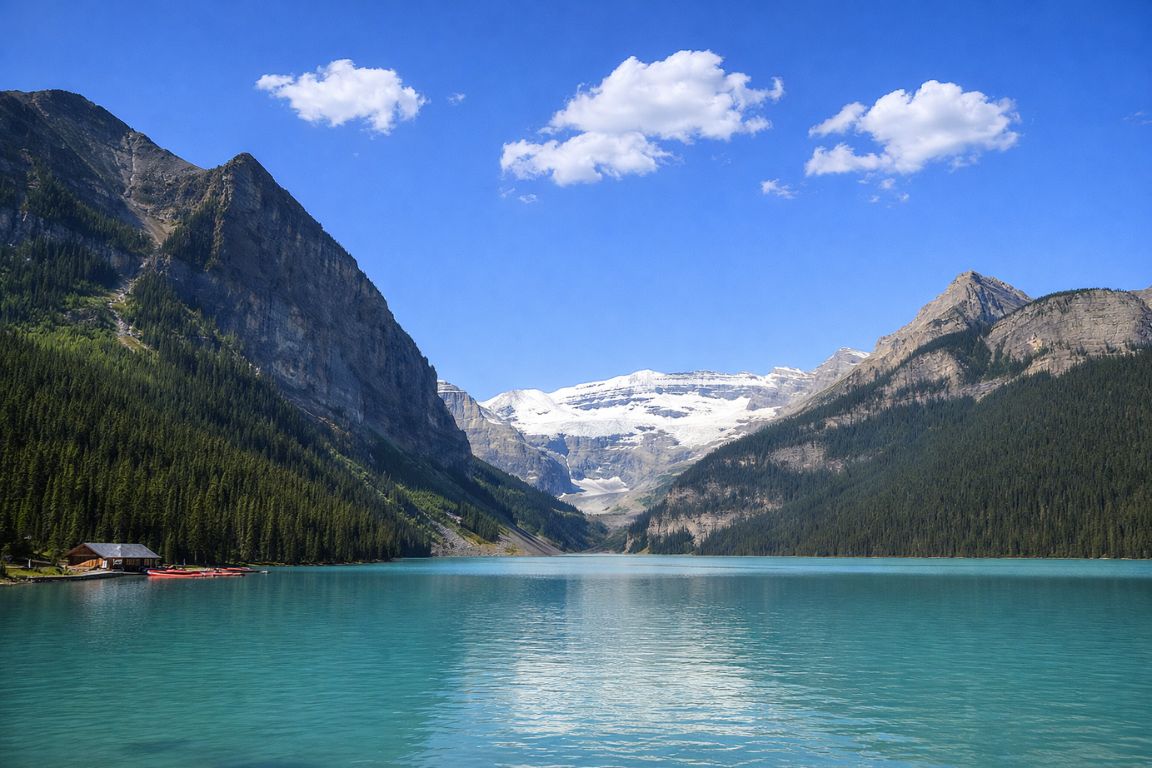 At the two or three most popular spots – the Lake Louise Lakeshore, Moraine Lake, and downtown Banff Avenue on a peak summer day, yes, parking is as bad as the worst reports suggest. At most other locations in the park, including trailheads outside the Lake Louise corridor, campground day-use areas, and the townsite’s free lots, parking is manageable if you arrive by 8 am. The reputation for impossible parking is accurate for a specific subset of locations during specific hours. It’s not an accurate description of the whole park.
The two things that make Banff parking confusing are that the problems are very concentrated and the solutions are genuinely good but require advance planning. Someone who shows up at Lake Louise at 9 am on a Saturday in July without a shuttle reservation will have a bad experience. Someone who booked a Parks Canada shuttle in April, parked free at the Park and Ride, and arrived at the lake by 7 am will have a great one. The difference isn’t luck. It’s a fifteen-minute booking process done months earlier.
A few honest observations after a decade of guiding in this park. The downtown Banff townsite parking situation is irritating but functional – there are 500 free spaces at the Train Station lot and Roam Transit runs constantly. The Lake Louise situation is serious and getting more expensive every year as Parks Canada uses pricing to discourage driving. Moraine Lake is simply closed to private vehicles and has been since 2023. Understanding which category each destination falls into is the whole game.
Need the full breakdown? Our complete Lake Louise guide walks you through everything from parking logistics to hiking options to when the lake actually looks turquoise.
Where Can You Park In Banff Townsite?
 The Banff townsite has a downtown paid zone (8 am to 8 pm, $7/hr in winter, $12/hr in summer), and three large free lots for up to 9 hours each: the Train Station lot (500 stalls, 8-minute walk to Banff Avenue), the upper floors of the Bear Street Parkade (187 stalls, central downtown), and the Fenlands Recreation Centre lot. All parking in Banff requires a valid Parks Canada park pass in addition to any parking fees – the park pass and the parking fee are separate charges administered by separate entities.
The Train Station lot is the one to know. Five hundred stalls, always free, and an 8-minute flat walk along Banff Avenue brings you to the centre of town. On summer weekends it fills by 9 or 10 am, but it’s big enough that it doesn’t fill as fast as downtown street spaces. If you’re staying multiple days in the townsite, this is your base of operations. Park here, walk or take Roam Transit everywhere else, and don’t move the car until you leave for a trailhead or drive out of the park.
The Bear Street Parkade is the best-kept secret for visitors who want to be central. The ground floor spaces are paid, but the upper 187 stalls are free for up to 9 hours. It’s physically in the heart of downtown, a few steps from Bear Street restaurants and the main commercial strip. The catch is that it fills early on busy days – often by 9 am in July and August – because not enough people know about it yet.
One thing that catches visitors off guard: a Parks Canada park pass ($12.25 per adult daily, or $83.50 for an annual Discovery Pass) is required to enter the park and is a separate charge from parking. You cannot pay for parking at the entry gate. Park passes can be purchased online in advance, at the park gates, or at Parks Canada visitor centres. If you’re doing more than seven or eight days in the park across a year, the Discovery Pass pays for itself. Youth 17 and under are always free.
| Train Station lot | Free (9 hr max) | ~500 | Best option for most visitors; 8-min walk to Banff Ave; Roam Transit connection |
| Bear Street Parkade (upper floors) | Free (9 hr max) | 187 | Central; fills early; ground floor paid; covered parking |
| Fenlands Recreation Centre | Free (9 hr max) | Limited | Near townsite edge; quieter; walking distance to Fenland Trail and Bow River |
| Beaver Street lot | Free (9 hr max) | Limited | Small; fills fast; central location |
| Downtown paid street/lots | $7/hr (winter) / $12/hr (summer) | Limited | 8 am-8 pm; pay via Blinkay app or pay stations; max 9 hrs; usually full by 10 am in summer |
| Sulphur Mountain area (NEW 2026) | $17.50/day | Limited | Pilot program May 15-Oct 12, 9 am-9 pm; covers Gondola and Upper Hot Springs lots; Roam Route 1 is the better option |
A note on the 2026 Sulphur Mountain parking change: Parks Canada announced on March 6, 2026 that paid parking of $17.50 per day would apply to the upper and lower lots near the Banff Gondola and Upper Hot Springs, starting May 15 as a three-year pilot. The motivation is straightforward – the only vehicle bridge over the Bow River and the single road up Mountain Avenue create a bottleneck that Parks Canada and the Town of Banff have been trying to manage for years. Transit ridership across the bridge grew from 26% of trips in 2019 to 40% in 2025. The $17.50 fee is a deliberate push for that number to keep climbing. The practical advice: take Roam Route 1 from downtown Banff to the Gondola. It runs year-round, the ride takes a few minutes, and you avoid the fee entirely.
How Do You Get To Lake Louise Without Driving?
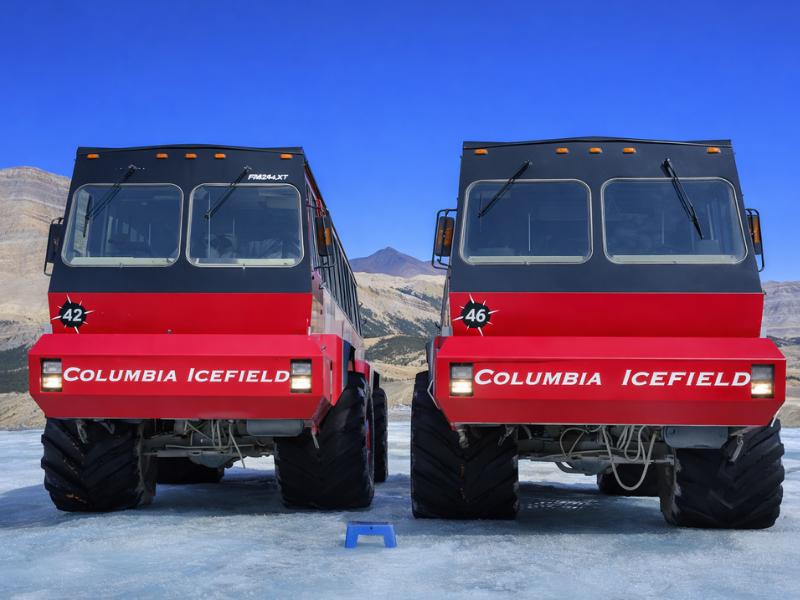
The two main transit options to Lake Louise are the Parks Canada shuttle and Roam Transit Route 8X from Banff High School Transit Hub ($12.50/adult one way; year-round; reservations strongly recommended May through October). Commercial tour operators including Discover Banff Tours and Radventures also run daily trips with hotel pickup. All options leave from the Banff townsite.
The distinction between the Parks Canada shuttle and Roam Route 8X matters depending on what you want to do. The Parks Canada shuttle departs from the Park and Ride lot at Lake Louise Ski Resort – meaning you still need to drive or take another bus to get there first. It’s designed for visitors who are already in the Lake Louise area and want guaranteed access to the lakeshore and Moraine Lake. Roam Route 8X departs directly from Banff townsite and goes all the way to the Lake Louise Lakeshore, making it the cleaner option if you’re based in Banff town and don’t want to move your car at all.
The Lake Louise lakeshore parking lot costs between $36.75 and $42 per vehicle per day (sources vary slightly – confirm current rate with Parks Canada before your trip) and is in effect from 3 am to 7 pm between mid-May and mid-October. On most summer days the lot fills well before 7 am. The combination of the high daily rate and near-certain unavailability on busy summer mornings makes driving to the lakeshore the worst option for most visitors. The shuttle is cheaper, more reliable, and removes all parking stress from the equation.
If you’re coming from Banff town and want to see both Lake Louise and Moraine Lake in one day, the Roam Transit Reservable Super Pass ($30) covers Route 8X from Banff plus the Parks Canada Lake Connector Shuttle between the two lakes. Book it online through Roam Transit before your trip – it’s the most efficient one-day combination ticket for both lakes without a car.
Not planning to drive? Our guide on Banff National Park tours without a car shows you how to reach Lake Louise, Moraine Lake, and the trails using Roam Transit and tour operators.
How Do You Get To Moraine Lake Without A Car?
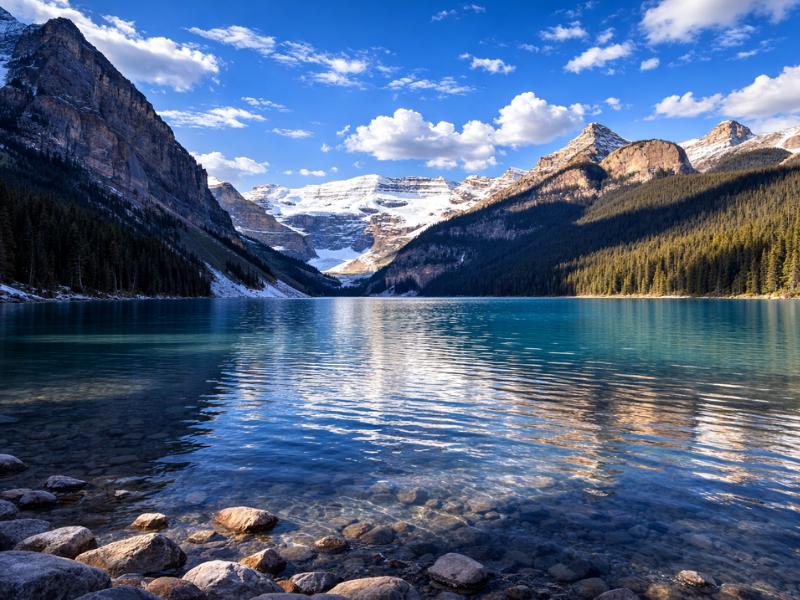
Moraine Lake Road is permanently closed to private vehicles year-round. The only ways in are: a Parks Canada shuttle from the Lake Louise Park and Ride (reservations required; opens April 15, 2026 at 8 am MT at reservation.pc.gc.ca or 1-877-737-3783; $8/adult return; June 1 to October 12, 2026), a commercial shuttle such as the Moraine Lake Bus Company, a licensed guided tour, the Alpine Start shuttle (4 am and 5 am departures from Lake Louise Lakeshore for sunrise access), or on foot or bike on the road outside shuttle hours.
This is the one that catches people most completely off guard. There is no parking lot at Moraine Lake anymore for general visitors. The road closure has been permanent since June 2023 and it is not going to change. If you show up on Moraine Lake Road in a private vehicle during the shuttle season, you will be turned around. Outside shuttle season you can cycle or walk the road, which is a 14-kilometre round trip from the Lake Louise Lakeshore area.
The April 15 shuttle reservation date is the critical planning trigger. Parks Canada releases 40% of the season’s shuttle capacity at 8 am MT on April 15. The remaining 60% rolls out on a 48-hour window – Parks Canada releases availability at 8 am MT exactly two days before each departure date throughout the season. For popular dates in July and August, particularly weekends, the April 15 release window sells out fast. Set a calendar reminder for April 14, be online at 7:59 am MT on April 15, and book before breakfast.
Commercial alternatives exist for when Parks Canada shuttles are sold out. The Moraine Lake Bus Company runs from the Lake Louise Ski Resort area with flexible scheduling. Licensed tour operators including Radventures offer guided Moraine Lake and Lake Louise combinations with hotel pickup from Banff. These cost more than the Parks Canada shuttle but offer flexibility and, in the case of guided tours, expert interpretation of what you’re seeing. If you missed the April 15 window, check the rolling 48-hour release at 8 am MT two days before your intended visit date — it’s a real option and sometimes opens up spots on popular dates.
Need the logistics breakdown? Our Moraine Lake travel guide walks you through everything from booking shuttles to avoiding the crowds to what time you need to wake up.
| Parks Canada shuttle | $8/adult RT | reservation.pc.gc.ca; April 15 launch | Budget travelers; independent visitors; most affordable option |
| Alpine Start shuttle | Parks Canada rate; lakeshore parking fee applies | Required in advance | Sunrise access; photographers; early risers; 4 am and 5 am departures |
| Roam Super Pass (Route 8X + Connector) | $30/person for the day | Online at roamtransit.com | Visitors coming from Banff townsite wanting both lakes in one day |
| Moraine Lake Bus Company | Higher; varies | Online at morainelakebus.com | Flexibility; no April 15 pressure; combo tickets with Lake Louise |
| Guided tour (Radventures, Discover Banff Tours) | Higher; varies by operator | Direct with operator; book in advance | Visitors wanting hotel pickup, guided interpretation, and full planning handled |
| Cycling or walking Moraine Lake Road | Free (park pass required) | No booking; check Parks Canada for access hours | Outside shuttle season; fit travelers comfortable with 14 km RT |
What Are The Best Park And Ride Options In Banff?
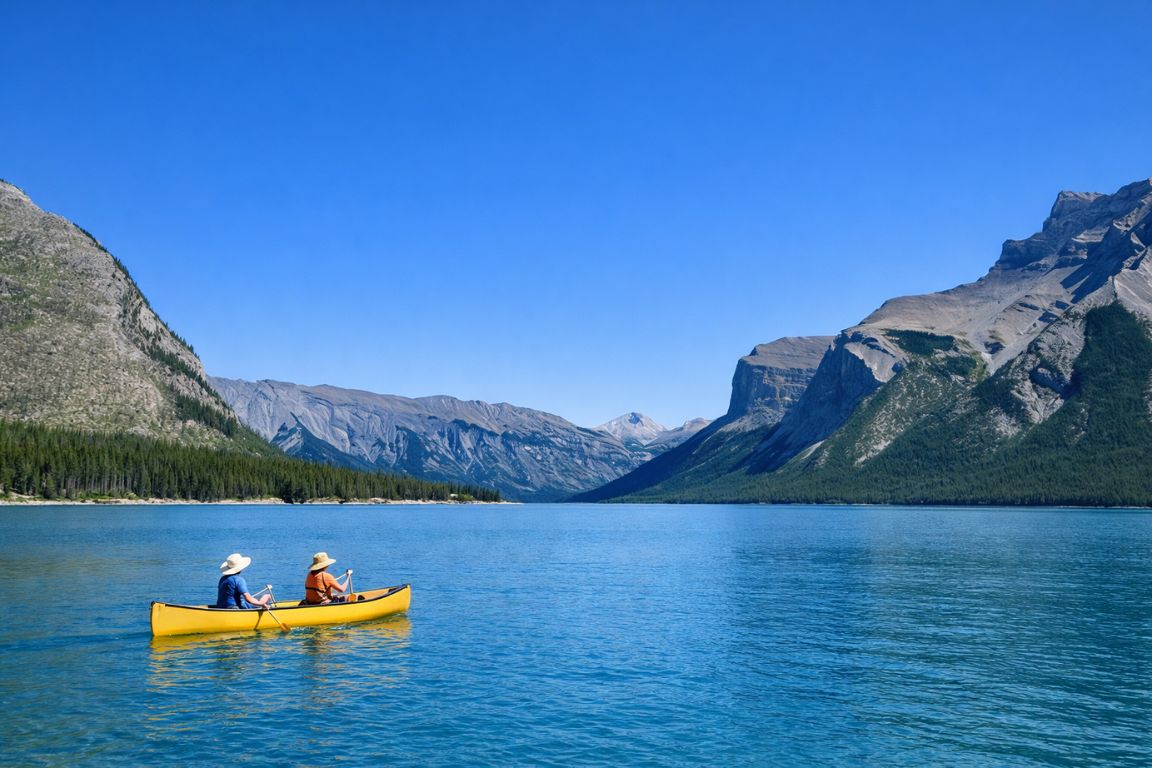 There are two key Park and Ride systems in Banff National Park. In the townsite, the Train Station lot (500 free stalls) functions as the de facto park-and-ride hub for Banff Avenue and Roam Transit connections. At Lake Louise, the Lake Louise Park and Ride at Lake Louise Ski Resort (2,000+ stalls, always free) is the departure point for Parks Canada shuttles to the lakeshore and Moraine Lake, and the winter terminus for Roam Route 8X. Using both correctly removes the parking problem from the equation for most visitors.
The Lake Louise Park and Ride is genuinely large. Over 2,000 parking spaces at the ski resort base, free for all visitors with a Parks Canada shuttle reservation. It rarely fills. If you’ve booked your shuttle in advance and you arrive at the Park and Ride, you will find parking. The shuttle runs every 30 minutes between 6:30 am and 6 pm, with the last return from Lake Louise Lakeshore at 7:30 pm. This is the system working correctly and it works well when visitors engage with it.
Get Official Lake Louise Park And Ride Directions
The problem the Park and Ride solves – but only if you use it – is the lakeshore parking crunch. People who drive directly to the Lake Louise Lakeshore lot on a summer morning and expect to find a space are doing things the hard way. The lot is expensive ($36.75 to $42 per vehicle per day depending on source – confirm with Parks Canada), it fills before 7 am on busy summer days, and there’s no nearby alternative. The Park and Ride costs nothing and has space. The logic is clear; the only barrier is knowing the system exists.
For the Banff townsite, the Train Station lot works as a park-and-ride in practice even without being formally branded as one. You park there, walk eight minutes to Banff Avenue, and then Roam Transit takes you to the Gondola, the Hot Springs, Johnston Canyon, Lake Minnewanka, and other major attractions without touching your car again. Many visitors staying in Banff town for multiple days never move their car after checking into their hotel, which is the correct approach.
If you want to skip the research, here are the best Banff National Park tours based on guide quality, group size, and what you’ll actually experience beyond the standard stops.
How Does The Roam Transit System Work?
Roam Transit is the Bow Valley’s public bus network covering Banff, Canmore, and Lake Louise. Local Banff routes (1, 2, 4, 6, 7) cost $2 per adult per ride and run year-round. The Lake Louise-Banff Express Route 8X costs $12.50 per adult one way and runs year-round with reservations strongly recommended May through October. The Johnston Canyon Regional Route 9 costs $5 per adult. Children 12 and under ride free on all routes. A one-day Reservable Super Pass ($30) covers all routes including the Parks Canada Lake Connector Shuttle to Moraine Lake.
Roam is more useful than most visitors realize before they arrive. Route 1 alone covers the Banff Gondola, Upper Hot Springs, and downtown – which means for the 2026 season, anyone taking Route 1 sidesteps the new $17.50 Sulphur Mountain parking fee entirely. Route 2 covers the Tunnel Mountain campground area and connects campers to the townsite without needing to drive. Route 4 runs to the Lake Minnewanka area. Route 9 handles Johnston Canyon regionally. These aren’t just backup options – for visitors who don’t have a car or who’ve sensibly decided not to move theirs, Roam covers the whole park.
The Route 8X reservation system is the one piece that requires attention. In summer, the bus between Banff and Lake Louise fills up. Walk-ups are accepted but not guaranteed a seat on their preferred departure. Reservations are strongly recommended May through October and can be made at roamtransit.com. The reservation is attached to a specific departure time – arrive at the Banff High School Transit Hub at least 20 minutes early, have your QR code ready, and don’t miss your bus. They leave on time.
Some hotels in Banff include complimentary Roam passes for guests on local routes 1, 2, 4, and 6. If you’re booking accommodation in the townsite, check whether your hotel is a Roam partner – it’s a meaningful perk that eliminates any transit cost during your stay. Campground visitors at Tunnel Mountain and Two Jack Lake can also ride local Roam routes free during summer months as part of Parks Canada’s push to reduce vehicle movement in the park.
What Are The Parking Rules And Fees You Need To Know?
 The key rules: a Parks Canada park pass is required to enter the national park and is separate from any parking fee. Downtown Banff parking is paid 8 am to 8 pm year-round ($7/hr winter, $12/hr summer). The new Sulphur Mountain parking fee of $17.50/day starts May 15, 2026. Lake Louise Lakeshore paid parking applies 3 am to 7 pm from mid-May to mid-October. Moraine Lake Road is permanently closed to private vehicles. Overnight parking at Lake Louise Lakeshore is prohibited except for backcountry permit holders. The maximum parking time at all Banff townsite lots is 9 hours.
The park pass and parking fee being separate charges is the most common source of confusion at the gates. When you enter Banff National Park on the Trans-Canada, you pay the Parks Canada park pass fee at the gate. This is not parking. You then pay separately for parking wherever you park in the park – Town of Banff parking revenue goes to the municipality, not Parks Canada, and there’s no crossover between the two systems. Showing your park pass at a pay station will not get you free parking.
The Blinkay app is the recommended payment method for downtown Banff parking. It lets you pay from your phone without returning to a pay station and you can extend your time remotely up to the 9-hour maximum. Download it before your trip. Pay stations on the street are the physical alternative. Failure to pay results in a parking infringement notice – enforcement is active in peak season.
The accessible parking situation at Lake Louise deserves specific mention. Visitors with valid government-issued accessible parking placards are granted vehicle access to the Lake Louise Lakeshore lot and Moraine Lake, bypassing the shuttle and closure systems. The accessible parking rate at Lake Louise is $8 per day versus the full rate for standard vehicles. This exception is specifically for government-issued placards – not every country’s accessible parking credentials are automatically accepted, so confirm with Parks Canada if you hold a non-Canadian placard.
What Are The Biggest Parking Mistakes Visitors Make?
 The five biggest parking mistakes: arriving at Lake Louise after 7 am expecting to park, not booking Moraine Lake shuttles on April 15, treating the park pass and parking fee as the same charge, driving to the Banff Gondola instead of taking Roam Route 1 (and now paying $17.50 to do so), and parking in the downtown paid zone without knowing the 9-hour maximum and getting a ticket after a long hike.
The Lake Louise timing mistake is the most common and the most recoverable – barely. If you arrive at the Lake Louise Lakeshore lot at 9 am on a busy summer day, the lot is full and there’s nowhere to wait. Parks Canada is explicit that there’s no space to wait for a stall to open. You’ll need to drive to the Park and Ride and join the walk-up shuttle line, which may or may not have room on the next departure. The correct move is to have a shuttle reservation already booked, be at the Park and Ride before the first bus, and arrive at the lake before the crowd gets there. That window starts around 6:30 am. Set the alarm.
The Moraine Lake shuttle booking window is more consequential because missing it can mean not getting to Moraine Lake at all if you’re visiting in peak July or August. Unlike the Lake Louise lot, which at least gives you the option of parking if you’re early enough, Moraine Lake simply doesn’t have a vehicle option. If the Parks Canada shuttle is sold out and the commercial shuttles are also full, your trip to Moraine Lake doesn’t happen. Mark April 15 now. Book in the morning of that day.
The Gondola parking mistake is newly expensive in 2026. Before May 15, driving to the Banff Gondola meant competing for limited parking on Mountain Avenue with no fee. From May 15, it costs $17.50 per vehicle per day to park in those lots. Roam Route 1 from downtown Banff goes directly to the Gondola base, costs $2, and runs constantly. The math on driving has changed significantly.
Finally, the 9-hour parking maximum at free townsite lots is enforced. If you park at the Train Station at 7 am, your legal window closes at 4 pm. That’s a long enough day for most visits but it matters if you’re doing a full hike and then wanting to wander Banff Avenue in the evening. Either time your return or move to the paid zone for evening hours.
What Our Guests Get Wrong About Banff Parking: Field Observations
Based on pre-trip consultations, guided tour debrief conversations, and post-trip feedback across multiple seasons.
| Observation | Share of Guests | Notes |
|---|---|---|
| Arrived at Lake Louise lakeshore by car expecting available parking in summer | ~29% | Nearly all had to redirect to Park and Ride; most recovered fine once they understood the system |
| Did not know Moraine Lake was closed to private vehicles | ~22% | Typically first-time visitors; some had planned Moraine Lake as a drive-up stop |
| Booked shuttle to Moraine Lake in April and had no parking issues the entire trip | ~61% | Advance planning consistently correlated with smoother trip experience overall |
| Used Roam Transit at least once during their Banff visit | ~44% | Those who used it rated it positively; adoption still lower than it could be among first-time visitors |
| Said the Train Station free lot was “the best tip they got” about Banff parking | ~38% | Consistently underrated in mainstream travel content despite being the simplest solution |
Frequently Asked Questions
Is there free parking in Banff?
Yes, in three specific locations. The Train Station lot (about 500 stalls, 8-minute walk to Banff Avenue), the upper floors of the Bear Street Parkade (187 stalls, central downtown), and the Fenlands Recreation Centre lot. All are free for up to 9 hours. The Lake Louise Park and Ride at Lake Louise Ski Resort is also free. Outside these locations, most townsite parking is paid.
Can you drive to Moraine Lake?
No. Moraine Lake Road has been closed to private vehicles permanently since June 2023. The only access is via Parks Canada shuttles (book at reservation.pc.gc.ca starting April 15), commercial shuttles like the Moraine Lake Bus Company, licensed tour operators, or on foot or bike outside shuttle operating hours. There are no exceptions for general visitors without a valid accessible parking placard or Moraine Lake Lodge reservation.
How much does it cost to park at Lake Louise?
The Lake Louise Lakeshore lot costs between $36.75 and $42 per vehicle per day during the paid period (approximately mid-May to mid-October, 3 am to 7 pm). Sources vary slightly on the current rate – confirm with Parks Canada at parks.canada.ca before your visit as pricing is updated annually. The Park and Ride at Lake Louise Ski Resort is free for visitors with a shuttle reservation.
What is the new Sulphur Mountain parking fee in 2026?
Parks Canada introduced a $17.50 per day parking fee at the upper and lower lots near the Banff Gondola and Upper Hot Springs, starting May 15, 2026. This is a three-year pilot program running annually from May 15 to October 12. The alternative is Roam Transit Route 1, which runs from downtown Banff directly to the Gondola base for $2 per adult and bypasses the fee entirely.
What is the Banff Now app?
Banff Now is a real-time parking availability tool for Banff National Park, accessible through the app or web browser. It shows live capacity at major parking areas including the townsite lots, trailheads, and Lake Louise. It won’t conjure a parking space that doesn’t exist, but it lets you check before you drive rather than arriving at a full lot. Worth downloading before your trip.
Can I use my Parks Canada park pass to pay for parking?
No. These are two completely separate systems. The Parks Canada park pass ($12.25 per adult daily) grants entry to the national park and is administered by Parks Canada. Parking fees in the Banff townsite are administered by the Town of Banff municipality, which receives none of the park pass revenue. You need both a valid park pass and to pay for parking wherever it’s required. They do not cancel each other out.
Want to skip the parking problem entirely?
The Lake Louise and Moraine Lake tour can remove the need to park at the lakes. Confirm the exact pickup and return points for your selected departure before relying on hotel collection. We’ve been doing this since 2014 and it’s one of the most consistent things guests tell us they appreciated. Start planning your trip here.
Written by Avery Claire ThompsonCanadian tour guide since 2014 · Founder, Banff National Park Tours
Avery has guided over 8,600 travelers through Banff National Park and the Canadian Rockies since founding the agency.
Choose A Parking-Free Banff Day
Compare a guided day with the independent options in this guide. Confirm your date and meeting point before booking.
Match These Options To Your Trip
Our Starting RecommendationLake Louise And Moraine Lake Day Tour
Link the two lakes without organising separate transport.
8–10 hours · English
Pickup in Calgary, Canmore or Banff; confirm the selected meeting and end points.
Guide, transport and listed lake access. Meals and personal expenses extra.
No wheelchair access. Bring your own child seat for children under 7. Moraine Lake is seasonal.
Visit The Two Lakes ↗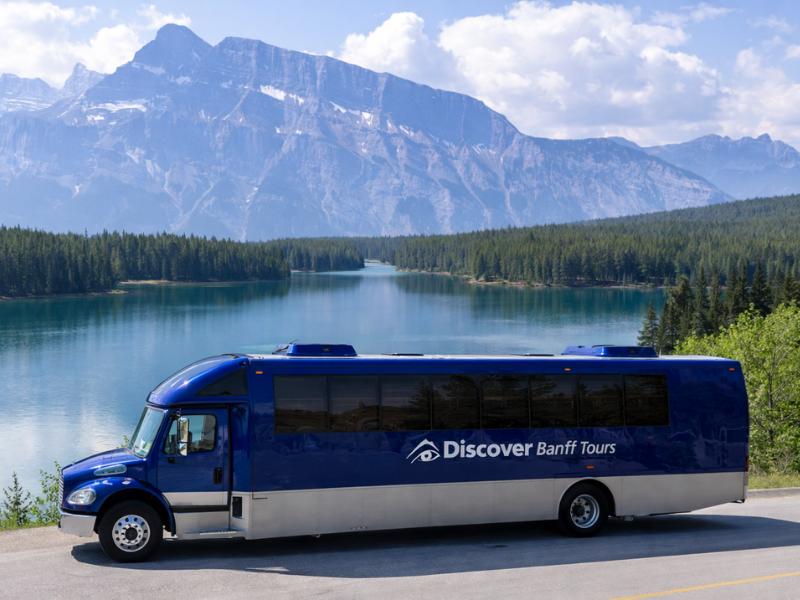 A Different Way To Spend The Day
Banff Wildlife And Viewpoints Minibus
Join Bow Falls, Surprise Corner and Lake Minnewanka in a guided morning.
3½ hours · English
Banff hotel pickup on request; otherwise the Mount Royal Hotel bus parking.
Guide, minibus, cookie and drink. Gratuities extra.
Wildlife sightings are never guaranteed. Ask about child seating and access needs before booking.
Explore Banff’s Viewpoints ↗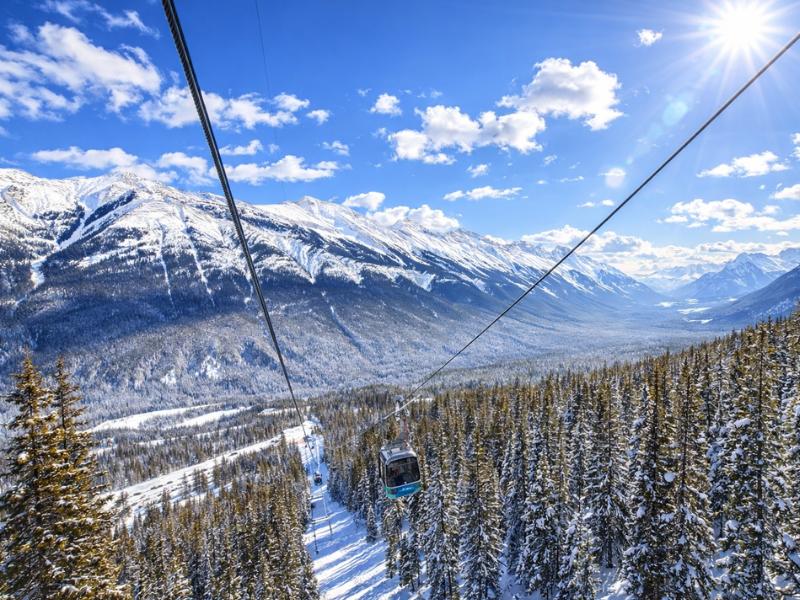 A Different Way To Spend The Day
Banff Gondola Summit Ticket
Reach Sulphur Mountain’s views without hiking the ascent.
Timed entry; ticket validity is 1 day · English
Make your own way to the Sulphur Mountain base.
Return gondola ride and summit interpretive facilities. Food, park admission and parking extra.
No strollers. Arrange accessibility requests with the operator at least 72 hours ahead. Confirm your return time.
Book The Summit Ride ↗No choices needed to use the recommendations above.
Work Out The Cost For Your Group
Enter complete quotes in CAD for the same people, date and itinerary. Include transport, parking, entry, food and any other extras on both sides. For shared versus private, enter the shared total first and private total second.
Use current quotes; no prices or savings are assumed.
Turn Your Plan Into A Day Out
Use Roam or official shuttles for town travel, and choose the shared lakes day only when you want the lake access and driving handled together.
Your Next StepLake Louise And Moraine Lake Day Tour
Link the two lakes without organising separate transport.
8–10 hours · English
Pickup in Calgary, Canmore or Banff; confirm the selected meeting and end points.
Guide, transport and listed lake access. Meals and personal expenses extra.
No wheelchair access. Bring your own child seat for children under 7. Moraine Lake is seasonal.
Visit The Two Lakes ↗Choose Your Date
Lake Louise And Moraine Lake Day Tour
Open the provider’s calendar to select your date, party and departure. Availability and prices are confirmed there.
Dates On GetYourGuide
Banff Wildlife And Viewpoints Minibus
Choose a date and party to see current options. Confirm the meeting point and restrictions on the listing.
More Banff Sightseeing On Viator
Browse the site’s original Viator selection of Banff day tours, wildlife outings and lake excursions. These are additional ideas, not matches to the trip form. Check dates, duration, pickup and suitability on each listing.
Open The Recommended Outing ↗