1, 2 And 3-Day Banff Itineraries
How many days in Banff? One day hits the highlights, two adds the iconic lakes, and three lets you explore without rushing. Book shuttles early.
A single guided day can protect the part of a short Banff itinerary most vulnerable to shuttle, parking, and timing mistakes. Choose the Guided Day That Fits Your Itinerary
Last updated: April 30, 2026
Quick Answer
One day gets you the townsite, the gondola, and one major lake. Two days adds Lake Louise, Moraine Lake, and Johnston Canyon. Three days is enough to feel unhurried – townsite, both iconic lakes, Johnston Canyon, and a drive up the Icefields Parkway. The key to any of these itineraries is booking shuttles to Moraine Lake and Lake Louise before you arrive. The shuttle reservation window opens April 15, 2026. Miss it and your day-two plan falls apart.
Your Experience Plan: Start with the Lake Louise and Moraine Lake day if both lakes are priorities, then keep the townsite and flexible stops independent.
Banff Itinerary Planning: Quick Facts
| Moraine Lake shuttle reservations open | April 15, 2026 at 8:00 am MT – 40% of season seats; rolling 48-hour window for the rest |
| Moraine Lake season | June 1 to October 12, 2026 (no private vehicles; shuttle only) |
| Moraine Lake shuttle cost | CAD $8/adult return (youth 17 and under free) – Verified March 2026 |
| Alpine Start shuttle (Moraine Lake sunrise) | 4 am and 5 am departures; limited seats; books out fast in April |
| Lake Louise parking | ~$36.75-$42/day (May 15-Oct 12, 3 am-7 pm); fills before sunrise in summer |
| Lake Louise Park and Ride | Free; at Lake Louise Ski Resort; 2,000+ stalls; base for all shuttles |
| Roam Super Pass | CAD $30/day; covers all routes + Parks Canada Lake Connector Shuttle to Moraine Lake |
| Banff Gondola | $74/adult; book 48+ hrs ahead; within 2 hrs of opening, free child admission + treat |
| Park pass (adult) | CAD $12.25/day; Discovery Pass $83.50/year; free June 19-Sept 7, 2026 (Canada Strong Pass) |
| Bow Valley Parkway nightly closure | March 1-June 25, 8 pm-8 am (all travel); plan Johnston Canyon timing accordingly |
| Emergency contact | Banff Dispatch: 403-762-1470; cell coverage unreliable in many park areas |
Prices verified March 2026 against Parks Canada and Banff Lake Louise Tourism official sources.
How Do You Make The Most Of 1 Day In Banff National Park?
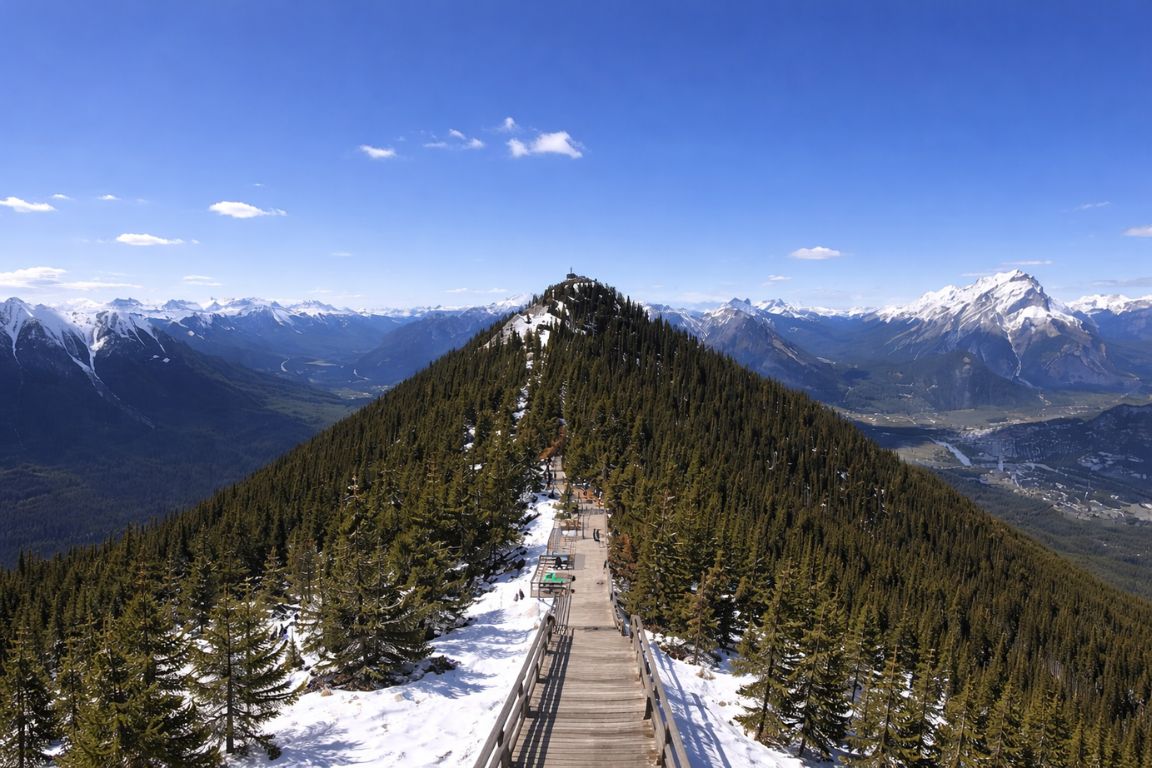 One day in Banff is enough to experience the townsite, ride the gondola to the summit of Sulphur Mountain, walk to Bow Falls, see Vermilion Lakes at golden hour, and have a proper dinner in town. This is the itinerary that works. Don’t add Moraine Lake or Lake Louise – they each deserve half a day and the logistics are too heavy to bolt onto a single-day visit.
The single biggest mistake one-day visitors make is trying to squeeze in the famous lakes. Lake Louise is 55 km from the townsite. Moraine Lake requires a pre-booked shuttle. Stacking both onto a day that also includes the gondola and Johnston Canyon means you spend the whole day in transit and nobody enjoys any of it. One day means Banff townsite and the mountains around it. Done properly, that’s a genuinely great day.
Don’t drive up expecting to park like you could years ago. This Moraine Lake travel guide covers all the current access restrictions and how to actually reach the lake legally.
1-Day Banff Itinerary
7:00 am – Vermilion Lakes
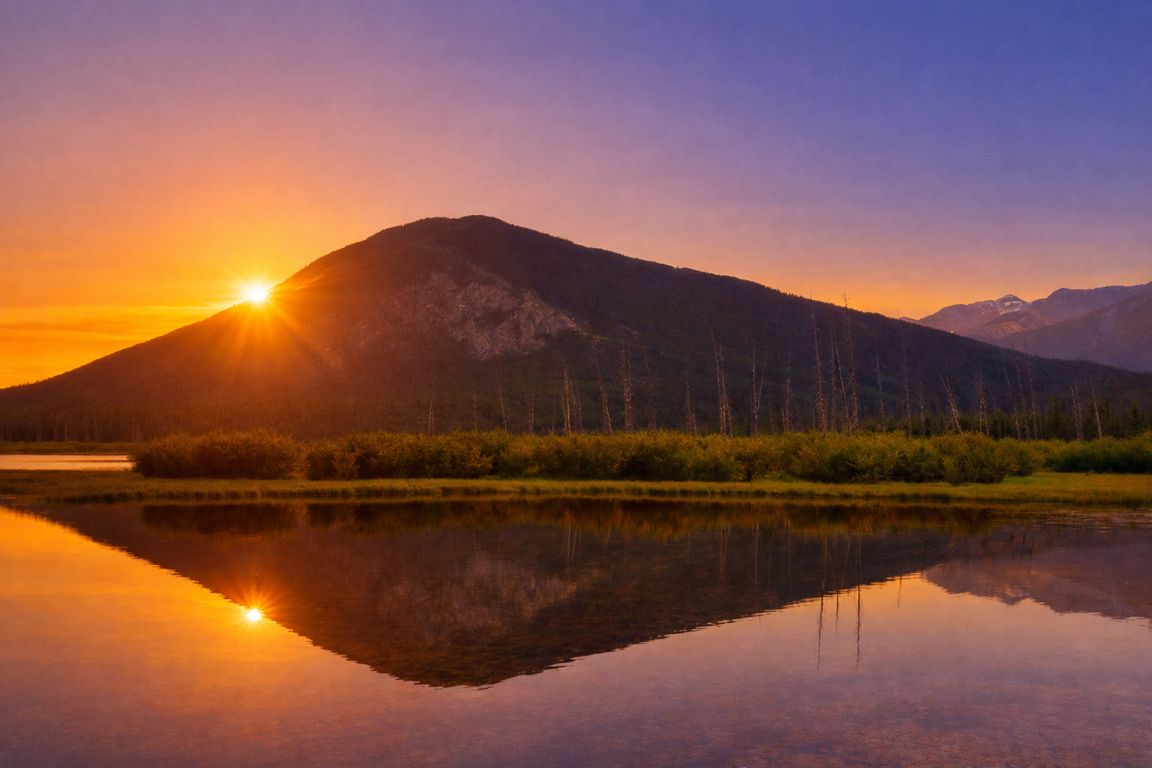
Start here, not at the gondola. Drive or take Roam Route 1 to Vermilion Lakes Road, a flat paved road that winds past three interconnected lakes with Mount Rundle reflected in the water. Early morning light on Rundle is the shot every photographer in Banff is chasing. You don’t need to walk far. Pull over, breathe, and let the mountains arrive. Twenty minutes here is worth more than two hours at a crowded viewpoint at noon.
8:30 am – Breakfast in Townsite
Back to Banff Avenue. The townsite opens slowly in the morning and the best breakfast spots fill up by 9 am. Grab a table before the day-trippers arrive.
10:00 am – Banff Gondola
Book this in advance – at least 48 hours ahead, ideally longer in summer. Arriving within two hours of opening also unlocks free child admission and a treat with adult tickets. The eight-minute ride to 2,281 metres is one of the best single experiences in the park. At the top: two restaurants, a 360-degree viewing deck, the interpretive boardwalk out to Sanson’s Peak, and elevator access between all four levels. Allow 90 minutes to two hours.
12:30 pm – Bow Falls and Surprise Corner
A short drive or walk from the Fairmont Banff Springs. Bow Falls is where the Bow River drops over a ledge of ancient limestone with the castle hotel framed above it. Surprise Corner, just up the hill, gives you the most photographed angle of the Fairmont. Neither requires more than 30 minutes combined, but they’re the kind of views that make people realise where they are.
2:00 pm – Johnston Canyon
This is the only hike on the one-day itinerary. The paved catwalk to Johnston Canyon Lower Falls is 2.7 km round trip – 45 minutes to an hour at an easy pace. The canyon narrows to a slot of dark limestone, the creek loud below, until you step through a short tunnel and the Lower Falls opens up in front of you. Cold spray, turquoise pool, massive scale. If you have energy and time, the Upper Falls are another 2.7 km from there. Note: the Bow Valley Parkway (Highway 1A), which leads to Johnston Canyon, has a nightly closure from March 1 to June 25 between 8 pm and 8 am. Plan accordingly.
5:00 pm – Lake Minnewanka Scenic Drive
On the way back toward the townsite, the Lake Minnewanka loop takes you past the reservoir, Two Jack Lake, and Cascade Ponds. No hiking required. Good elk habitat at dusk. If you booked the Lake Minnewanka Cruise ($72/adult, opens May 8, 2026), this is where it departs.
7:30 pm – Dinner in Banff townsite
Reserve ahead. The best tables on Banff Avenue fill up hours before service, especially in July and August.
If you want someone to handle the logistics so you’re not driving between spots and second-guessing timing all day, guided day tours cover this sequence with a guide who’s done it 8,600 times and knows which gondola time slots are quietest.
What Is The Best 2-Day Itinerary For Banff National Park?
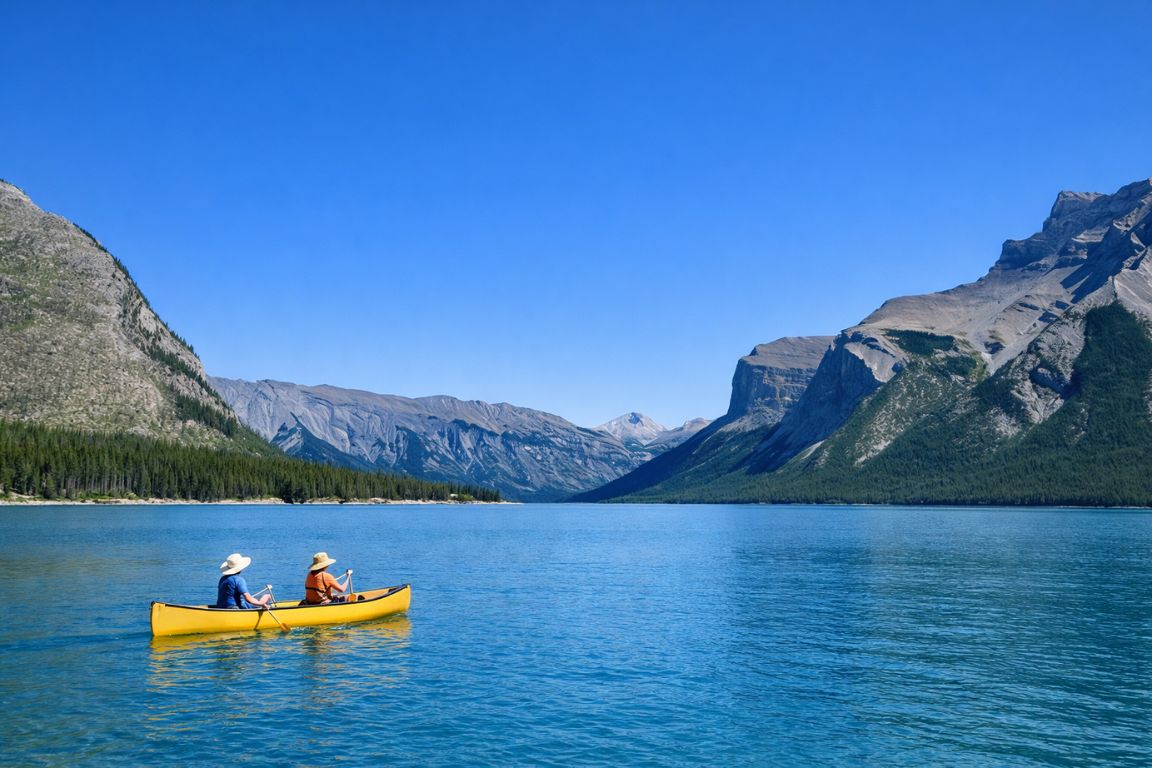 Day 1 covers the townsite, gondola, Bow Falls, and Johnston Canyon. Day 2 is entirely dedicated to Lake Louise and Moraine Lake. Two days is the minimum to do both properly. Book your Moraine Lake shuttle the moment reservations open on April 15, 2026. Everything else follows from that booking.
Two days changes the trip significantly. You’re no longer rushing from viewpoint to viewpoint. Day 1 is the version above with an unhurried pace. Day 2 is the lakes, with time to actually stop and stand at the water rather than turning around to catch a bus.
Want to know everything about the lake? I’ve put together a complete Lake Louise guide covering when to go, how to beat the crowds, and what to do beyond just taking photos.
2-Day Banff Itinerary
Day 1: Townsite, Gondola, Johnston Canyon
Follow the 1-day itinerary above. Same sequence, same logic. The only difference: you don’t need to push through to Lake Minnewanka at the end of the day if you’re tired. You have tomorrow. That mental space makes day one more enjoyable.
Evening suggestion: walk the Bow River path after dinner. Flat, paved, lit by that long mountain dusk. Moose sightings near the river are not unusual in shoulder season.
Day 2: Lake Louise and Moraine Lake
Before 7:00 am – Drive to Lake Louise Park and Ride
The Lake Louise Park and Ride is at the Lake Louise Ski Resort (1 Whitehorn Road). Free parking for 2,000+ vehicles. This is where every shuttle departs. Arriving early matters: the Alpine Start shuttles leave at 4 am and 5 am for those wanting sunrise at Moraine Lake. For everyone else, the first regular shuttles start around 6:30 am. Getting to the Park and Ride by 6:15 am puts you on an early departure and ahead of the main crowd wave.
Moraine Lake First
Book your shuttle to Moraine Lake as your first stop. The logic: Moraine Lake is harder to get to (shuttle-only, no private vehicles at all on Moraine Lake Road) and the light is better in the morning when the sun hits the Valley of the Ten Peaks from the east. From the shuttle drop, the Rockpile – a short scramble up a boulder pile – delivers the view you’ve seen on old Canadian $20 bills. Allow two to three hours here. The lakeshore path runs the full length of the lake if you want more walking. Canoe rentals are available at the lodge.
Midday – Lake Louise via Lake Connector Shuttle
The Parks Canada Lake Connector Shuttle runs every 30 minutes between the two lakes (7 am to 7 pm) on a first-come, first-served basis. No separate reservation needed once you’re at Moraine Lake. Board, ride 20 minutes, arrive at Lake Louise Lakeshore. The lake is different in character: larger, more open, the Victoria Glacier at the far end. The paved lakeshore path is almost flat for its full 3.8 km. The teahouse at the Plain of Six Glaciers sits another 3 km beyond the lake end, if you have the legs for it. Most visitors do the lakeshore and turn around. That’s fine. The lake earns it.
Afternoon at Lake Louise
Canoe rentals at the Fairmont Boathouse are a genuine Banff experience but memorable. The Fairmont Château Lake Louise has a lakeview patio for lunch. If you want a hike, Lake Agnes and the teahouse is 7 km round trip with 385 m elevation gain from the lakeshore trailhead. Give yourself three hours for that one.
Return to Banff
Shuttle back from Lake Louise Lakeshore to the Park and Ride, then drive or take Roam Route 8X back to Banff. The route takes about 45 minutes by car. If you don’t have a car, the Roam Route 8X runs year-round at $12.50 per adult one way.
| Day 1 | Vermilion Lakes at dawn; breakfast in townsite; Banff Gondola | Bow Falls + Surprise Corner; Johnston Canyon (Lower Falls) | Bow River walk; dinner in townsite |
| Day 2 | Early start to Park and Ride; shuttle to Moraine Lake; Rockpile viewpoint | Lake Connector shuttle to Lake Louise; lakeshore walk; lunch at Chateau | Return to Banff; late dinner or early night |
What Is The Best 3-Day Banff Itinerary?
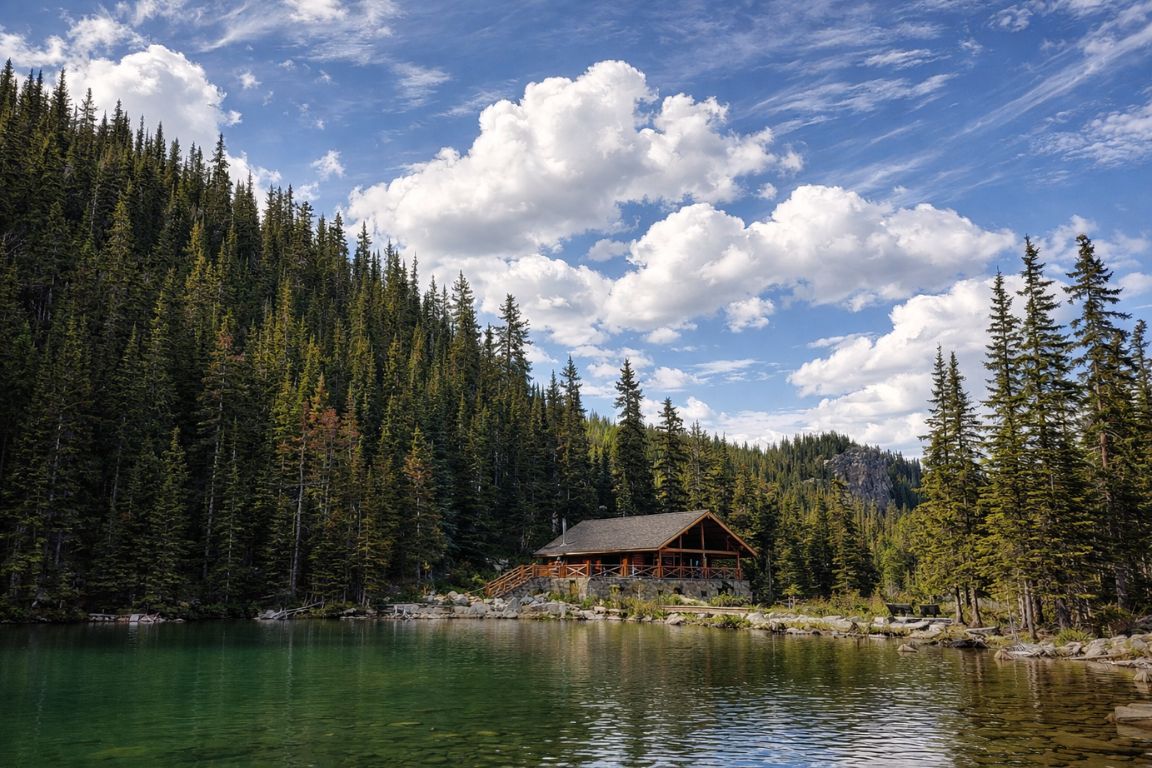 Three days is the sweet spot for a Banff visit. Day 1 covers the townsite and Gondola. Day 2 is Moraine Lake and Lake Louise. Day 3 adds the Icefields Parkway north to Bow Summit or beyond, with Johnston Canyon on the return. Three days leaves room to breathe. You see the core of the park without feeling like you’re sprinting through it.
3-Day Banff Itinerary
Day 1: Arrive, Townsite, Gondola, Vermilion Lakes
Follow the 1-day itinerary above with one adjustment: save Johnston Canyon for Day 3 on the Icefields Parkway return. Day 1 is townsite orientation. You arrive knowing where things are, having ridden the gondola, walked to Bow Falls, and watched the light change over Vermilion Lakes. That context makes the rest of the trip better.
Day 2: Moraine Lake and Lake Louise
Follow the Day 2 plan from the 2-day itinerary above. With three days, you’re not racing back. You can linger longer at each lake. Take the Lake Agnes teahouse hike if the legs are willing. Sit on the Chateau patio a little longer. The pressure is off.
Day 3: Icefields Parkway and Johnston Canyon
7:30 am – Drive north on Highway 93 (Icefields Parkway)
The Icefields Parkway runs 230 km north from Lake Louise to Jasper. You don’t need to drive the whole thing, but getting to Bow Summit (40 km north of Lake Louise) is worth it for the Peyto Lake viewpoint. Peyto Lake is wolf-shaped from above, an impossible electric blue fed by glacial meltwater. The viewpoint is reached by a 500 m walk from the upper parking area – around 20 minutes up and back.
10:00 am – Bow Glacier Falls trailhead (optional)
If you want a proper hike on day three, the trail to Bow Glacier Falls starts near Num-Ti-Jah Lodge at Bow Lake, 2 km north of the Peyto Lake turnoff. It’s 9 km round trip with 175 m elevation gain, ending at a waterfall fed by the Bow Glacier. Genuinely spectacular and significantly less crowded than anything near Banff townsite. Not on most 3-day itineraries. It should be.
1:00 pm – Drive back south; lunch at Lake Louise
Stop at Lake Louise Village for lunch. You’ve seen the lake. You don’t need to drive up again unless you want to. The village has a few good food options and it’s an easy fuel stop before the last stretch back toward Banff.
3:00 pm – Johnston Canyon
Johnston Canyon is on Highway 1A (Bow Valley Parkway), which runs parallel to the Trans-Canada between Banff and Lake Louise. It’s perfectly placed for a Day 3 afternoon stop. Lower Falls is 2.7 km return, Upper Falls adds another 2.7 km. In early afternoon on a weekday, the crowds are thinner than they are on morning rushes. The light inside the canyon is better in the afternoon anyway, the sun angling in above the rim.
5:30 pm – Back to Banff
One more night in town. A proper dinner. The mountains don’t look the same on the last evening as they did on the first. That’s the three-day effect.
| Day 1 | Vermilion Lakes; breakfast; Banff Gondola | Bow Falls; Surprise Corner; Bow River walk; dinner | Gondola (book 48 hrs+ ahead) |
| Day 2 | Early Park and Ride; shuttle to Moraine Lake; Rockpile | Lake Connector to Lake Louise; lakeshore; optional Lake Agnes hike; dinner at Chateau or return to Banff | Moraine Lake shuttle (book April 15+) |
| Day 3 | Icefields Parkway north; Peyto Lake; optional Bow Glacier Falls hike | Return south; Johnston Canyon (Lower + Upper Falls); final dinner in Banff | No bookings needed for Day 3 |
If you’d rather let us handle the routing, timing, and any changes that come up on the day, Banff National Park Tours has been building itineraries like this since 2014. We know which gondola time slots are least busy, when the Moraine Lake crowds thin out, and how to read the Icefields Parkway for wildlife without losing two hours to one elk sighting.
Planning your Canadian Rockies itinerary? This breakdown of how many days you need in Banff National Park tours shows you what’s possible with 2, 3, or 4 days in the park.
How Do You Get Around Banff Without A Car?
 It’s entirely doable without a car. Roam Transit covers the townsite for $2/adult per ride (local routes), and the Route 8X connects Banff to Lake Louise for $12.50 one way. The Roam Super Pass ($30/day) covers all routes including the Parks Canada Lake Connector Shuttle to Moraine Lake. For Calgary Airport arrivals, Brewster Express runs to Banff for $60-90 per person one way.
Most itinerary guides gloss over the car-free logistics. Here’s how it actually works.
Getting to Banff from Calgary Airport: Brewster Express is the standard option. It’s a comfortable coach, runs year-round, and drops off at Banff hotels. Around 90 minutes. Book round-trip and save 25% (discount valid through May 18, 2026).
Within the townsite: Roam Transit local routes run throughout the day. Route 1 covers the gondola base, Fairmont Banff Springs, Cave and Basin, and Tunnel Mountain. Route 2 goes to Tunnel Mountain campgrounds. All local buses are $2/adult per ride.
Getting to Lake Louise and Moraine Lake without a car: take Roam Route 8X to Lake Louise ($12.50 one way, year-round). At Lake Louise, the Park and Ride shuttles to both lakes depart regularly. For Moraine Lake, you still need a reservation through the Parks Canada shuttle system or through a Roam Super Pass. The Super Pass also includes the Lake Connector between the two lakes. Book the Super Pass in advance online at Roam Transit – it’s the most efficient option for a car-free lake day.
The Icefields Parkway without a car is genuinely difficult. There’s no reliable public transit running the full parkway. If the parkway is on your agenda and you have no car, a guided Banff tour is the practical answer. compare current Icefields Parkway options
If you’re relying on public transport, here’s the complete breakdown of Banff National Park tours without a car so you understand shuttle schedules and what’s actually reachable.
What Should You Know Before Starting Any Banff Itinerary?
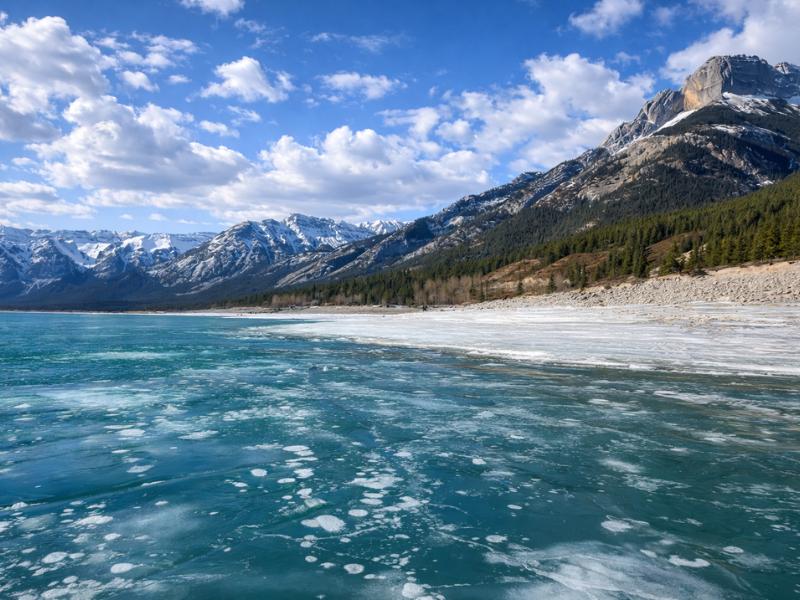
Three things that change every itinerary: buy or print your park pass before you arrive (daily adult pass CAD $12.25; free for everyone June 19 to September 7, 2026 through the Canada Strong Pass), book Moraine Lake shuttles the moment April 15 reservations open, and download Parks Canada’s trail conditions page before any hiking day. Everything else you can figure out as you go.
Park passes. You need one unless you’re visiting between June 19 and September 7, 2026, when the Canada Strong Pass makes entry free for everyone. Outside those dates, the daily pass is CAD $12.25/adult, $9.60/senior (65+), free for youth 17 and under. If you’re visiting for seven or more days, the Discovery Pass ($83.50/adult, $71.50/senior) is cheaper. Both are available online at parks.canada.ca or at the park gate.
Moraine Lake shuttle reservations. This is the single most consequential booking in any Banff itinerary. The shuttle reservation system opens April 15, 2026 at 8:00 am MT. Forty percent of the season’s seats go live on that date. The other 60% are released on a rolling 48-hour window throughout the season. If you’re visiting in July or August and you don’t have a shuttle reservation, you don’t get to Moraine Lake. That’s not an exaggeration; it’s the way the system works now. Book at reservation.pc.gc.ca or call 1-877-737-3783.
Bear spray. Required on all trails. Rent it in town for $10-15/day or buy it for $40-60. The rental shops will show you how to use it. Don’t put it in your bag. It goes on your hip, clipped to a belt loop or chest strap, where you can reach it in under three seconds.
Weather. Mountain weather changes inside an hour. July afternoons in Banff typically bring afternoon thunderstorms above treeline. Always carry a waterproof layer and a mid-layer regardless of what the morning forecast says. The temperature at Lake Louise runs 3 to 5 degrees colder than the townsite. Moraine Lake in early morning in September requires a proper jacket.
Trail conditions. Check pc.gc.ca/pn-np/ab/banff/activ/randonnee-hiking/etat-sentiers-trail-conditions the morning of any hiking day. Spring snowpack and early-season mudslides can close trails without much notice. The conditions page is updated regularly and covers all major trails.
How Do You Adjust Your Banff Itinerary By Season?
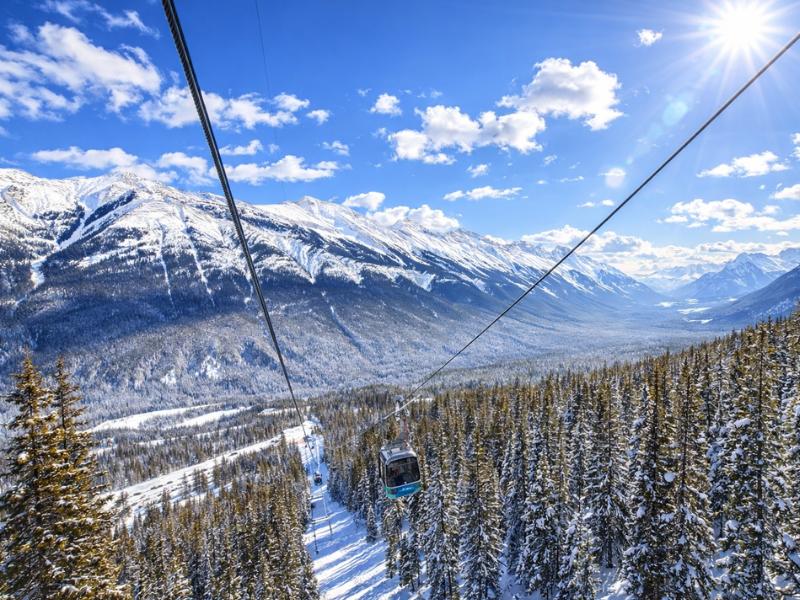
Summer (July-August) itineraries require the most advance booking: shuttle reservations, gondola tickets, and restaurant reservations all need to be locked in before arrival. Spring (May-June) and fall (September-October) itineraries are more flexible but need to account for trail closures and variable road openings. Winter itineraries swap the lakes for ski resorts and icewalks, and some summer attractions are closed entirely.
| May-June | Townsite, gondola, Lake Louise (Lake Louise Lakeshore May 15+); Moraine Lake June 1+ | High alpine trails (Sentinel Pass, Plain of Six Glaciers) often until late June; Bow Valley Parkway nightly wildlife closure until June 25 | Fewer crowds; budget-friendly; spring wildlife; confirm trail conditions before heading out |
| July-August | Everything open; all trails, all shuttles; Lake Minnewanka Cruise, full gondola season | Nothing major closed; parking fills at major lakes before sunrise | Most pre-booking required; free entry (Canada Strong Pass June 19-Sept 7); plan around afternoon thunderstorms |
| September-October | Full access through mid-Oct; larch colour peak late Sept-early Oct; Moraine Lake Road closes Oct 13 | Moraine Lake closed after Oct 13; Bow Valley Parkway fall wildlife closure Aug 28-Oct 2 | Best shoulder-season timing; bears in hyperphagia (active foraging); book Moraine Lake early for September |
| November-April | Ski resorts; Johnston Canyon icewalk; gondola (check seasonal hours); Banff townsite year-round | Moraine Lake Road closed; many alpine trails closed; Lake Minnewanka Cruise closed | Replace lakes with ski day, icewalk, and SnowDays Festival (Jan 16-Feb 8, 2026); microspikes required on icy winter walks |
One contrarian note on September: most Banff itinerary guides treat September as a shoulder-season afterthought. It isn’t. The Rockies in late September, with larch trees turning gold across the alpine meadows and a cool clarity in the morning air, is the single most striking version of this park. September 20 to October 5 is larch peak most years. If you have any flexibility in your travel dates, build your itinerary around those two weeks.
If you want the full picture before choosing dates, here’s our Banff National Park tours by month guide showing you what changes from winter skiing to summer hiking to fall larches.
What Are The Biggest Itinerary Mistakes Visitors Make In Banff?
 The five most common mistakes are: not booking Moraine Lake shuttles in advance, trying to do both lakes on a 1-day trip, skipping Vermilion Lakes because it sounds boring, underestimating drive times between attractions, and treating Johnston Canyon as an add-on rather than a destination. These mistakes consistently show up in traveler forums, and they’re all avoidable.
Not booking the Moraine Lake shuttle. We put this first because it wrecks more itineraries than anything else. The system is not complicated: reservations open April 15, 2026 at 8:00 am MT. Set a reminder. Book that morning. The 40% of seats released on opening day go to people who showed up at the right time. The rolling 60% released 48 hours before each date goes fast in July and August. If you’re visiting in peak season without a reservation, have a backup plan for the day.
Stacking both lakes onto a day trip from Calgary. We see this regularly. People drive from Calgary, try to hit Moraine Lake, Lake Louise, and the gondola, and end up spending most of their time on the Trans-Canada. Neither lake gets its due. If you’re doing a day trip from Calgary, pick one destination and be fully present for it. The drive is 90 minutes each way.
Skipping Vermilion Lakes because it doesn’t have its own trail name. Vermilion Lakes doesn’t appear on most “top 10” lists because it doesn’t require effort. You drive there. You get out. You look at Mount Rundle in the water. But the light quality at those lakes in the morning or evening is extraordinary, and the wildlife density along that road is among the highest in the park. It’s worth 20 minutes of anyone’s itinerary.
Underestimating drive times. Banff to Johnston Canyon is about 25 minutes. Banff to Lake Louise is 45 to 55 minutes. Lake Louise to Bow Summit is another 40 minutes. Add 15 minutes for parking, loading, and general mountain-road unpredictability. The park is not small. Itineraries that look doable on paper collapse when people realise how much time is spent driving between things.
Treating Johnston Canyon as a filler activity. Johnston Canyon is consistently the most popular hike in the park for a reason: the payoff-to-effort ratio is unmatched. Narrow canyon walls, metal catwalk over rushing water, and a waterfall at the end that fills the whole space with sound and spray. Plan 90 minutes minimum for the Lower Falls. Do it on a weekday morning in June or September and the crowds are manageable. Don’t rush it at 3 pm in August and wonder why you’re standing in a queue around every bend.
Questions before you go? Avery and the team at Banff National Park Tours answer Banff logistics questions daily. We’ve been doing this since 2014 and have worked through every version of these itineraries in every season.
How Our Travelers Actually Use Their Banff Days
Based on our 8,600+ guided travelers, this breakdown reflects how visitors actually structure their time in Banff — and where the biggest satisfaction gaps appear:
| Trip Length | % of Guided Clients | Most Common Regret | Most Common Highlight |
|---|---|---|---|
| 1 day | 18% | Tried to fit in the lakes; felt rushed | Gondola summit views |
| 2 days | 31% | Missed Icefields Parkway; no time for it | First sight of Moraine Lake from the Rockpile |
| 3 days | 36% | Wish they’d done a proper alpine hike | Peyto Lake on the Icefields Parkway |
| 4+ days | 15% | Almost no regrets | Unexpected wildlife encounters |
Frequently Asked Questions
Can you do Moraine Lake and Lake Louise in one day?
Yes, both lakes can be visited in a single day. Start at Moraine Lake via the Parks Canada shuttle (requires advance reservation, opening April 15, 2026), then take the free Lake Connector Shuttle to Lake Louise. The connector runs every 30 minutes between 7 am and 7 pm, June 1 to October 12, 2026, on a first-come basis. Give yourself at least two hours at each lake for a relaxed visit. If you want to hike at both, plan a full day and start before 7 am.
Is 2 days enough for Banff?
Two days covers the core of Banff well: townsite, gondola, Johnston Canyon on Day 1, and the two famous lakes on Day 2. You won’t get to the Icefields Parkway or deeper hiking with only two days, but you’ll see the most iconic parts of the park without feeling rushed. The key is booking the Moraine Lake shuttle in advance – without that reservation, Day 2 falls apart in summer.
What is the one thing you should not miss in Banff?
Moraine Lake. The Valley of the Ten Peaks reflected in that improbable turquoise water is the single most striking view in the park. The logistics require advance planning – shuttle reservations open April 15, 2026 – but no other spot in Banff delivers quite that level of impact. The Banff Gondola is the second-best experience for first-timers, particularly for visitors who prefer less walking.
How do you get to Moraine Lake without a car?
Take Roam Transit Route 8X from Banff to Lake Louise ($12.50/adult one way), then use the Parks Canada shuttle system from the Lake Louise Park and Ride. The Roam Super Pass ($30/day) covers all routes including the Parks Canada Lake Connector Shuttle to Moraine Lake. Advance reservation is still required for the first shuttle. Book at reservation.pc.gc.ca starting April 15, 2026.
What is the best time of day to visit Moraine Lake?
Early morning is best for photography – the sun hits the Valley of the Ten Peaks from the east and the lake surface is usually calm before wind picks up mid-morning. The Alpine Start shuttle departs at 4 am and 5 am for those wanting sunrise. For general visitors, the first regular shuttle departure (around 6:30 am) puts you at the lake before the peak crowd wave. Late afternoon is also good; shuttle lines are shorter and the light turns golden on the peaks.
Do you need to book the Banff Gondola in advance?
Yes, in summer. The gondola runs dynamic pricing and tickets sell out on peak days. Book at least 48 hours ahead to secure your preferred time. Arriving within two hours of the gondola’s opening time unlocks free child admission and a treat with each adult ticket in 2026. Adult tickets start at $74; pricing increases closer to the visit date.
Shuttle bookings, gondola timing, trail conditions, wildlife patterns – we’ve been managing all of it for Banff visitors since 2014. Private day tours, custom multi-day itineraries, and expert guides who actually know the park. Plan your trip with Banff National Park Tours.
Written by Avery Claire Thompson
Canadian tour guide since 2014 · Founder, Banff National Park Tours
Avery has guided over 8,600 travelers through Banff National Park and the Canadian Rockies since founding the agency.
Choose The Guided Day That Fits Your Itinerary
Compare a guided day with the independent options in this guide. Confirm your date and meeting point before booking.
Match These Options To Your Trip
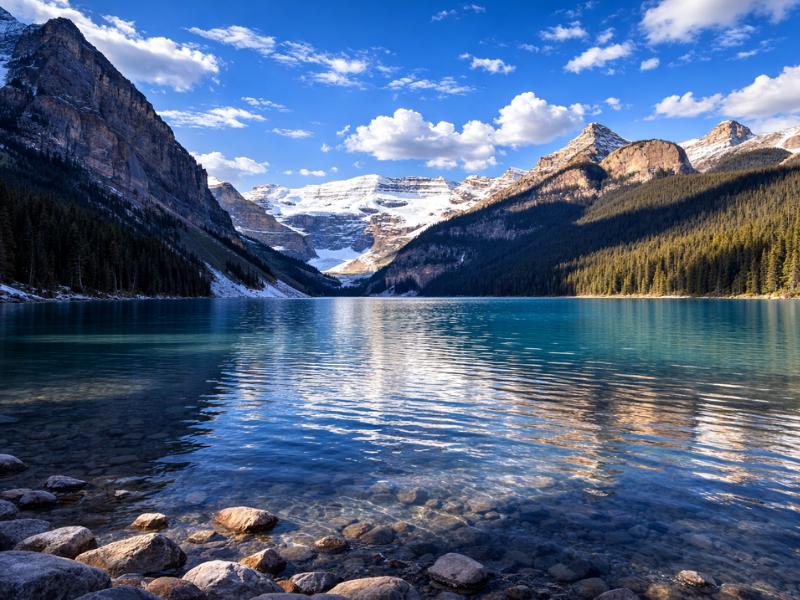 Our Starting Recommendation
Lake Louise And Moraine Lake Day Tour
Link the two lakes without organising separate transport.
8–10 hours · English
Pickup in Calgary, Canmore or Banff; confirm the selected meeting and end points.
Guide, transport and listed lake access. Meals and personal expenses extra.
No wheelchair access. Bring your own child seat for children under 7. Moraine Lake is seasonal.
Visit The Two Lakes ↗A Different Way To Spend The DayBanff Gondola Summit Ticket
Reach Sulphur Mountain’s views without hiking the ascent.
Timed entry; ticket validity is 1 day · English
Make your own way to the Sulphur Mountain base.
Return gondola ride and summit interpretive facilities. Food, park admission and parking extra.
No strollers. Arrange accessibility requests with the operator at least 72 hours ahead. Confirm your return time.
Book The Summit Ride ↗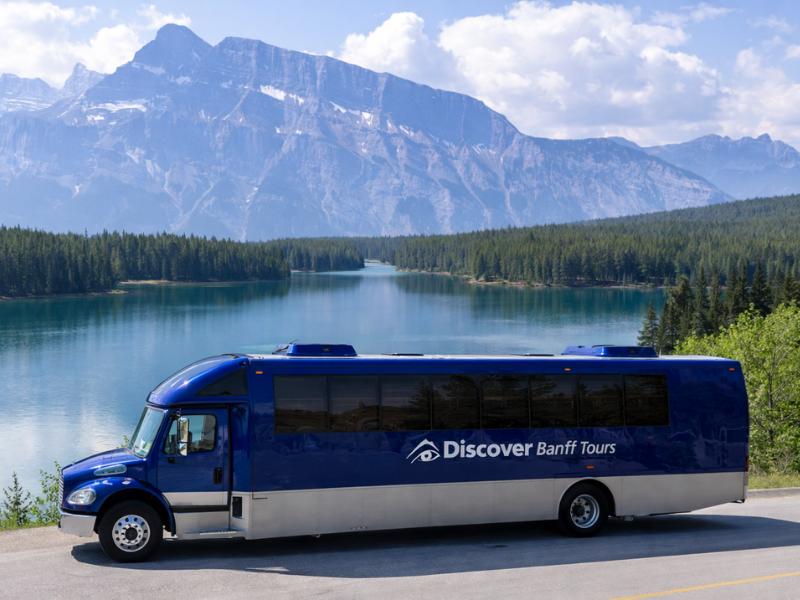 A Different Way To Spend The Day
Banff Wildlife And Viewpoints Minibus
Join Bow Falls, Surprise Corner and Lake Minnewanka in a guided morning.
3½ hours · English
Banff hotel pickup on request; otherwise the Mount Royal Hotel bus parking.
Guide, minibus, cookie and drink. Gratuities extra.
Wildlife sightings are never guaranteed. Ask about child seating and access needs before booking.
Explore Banff’s Viewpoints ↗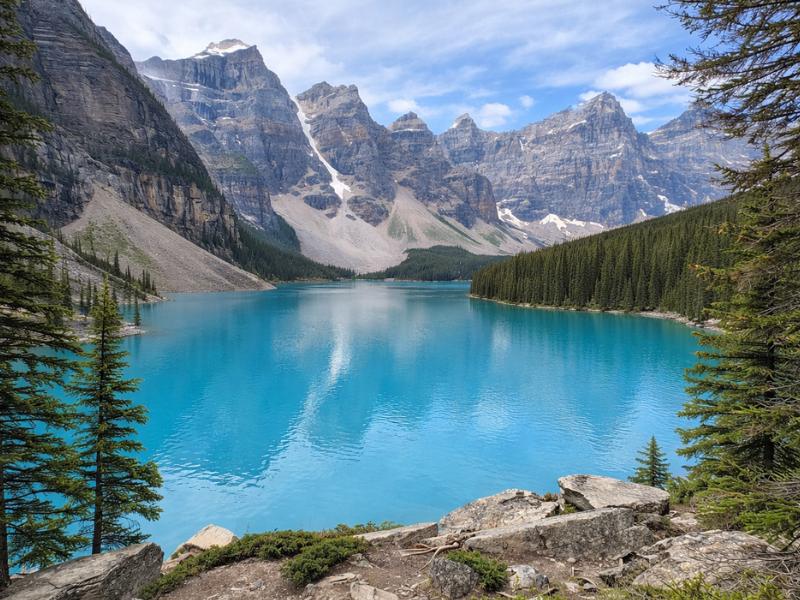 A Different Way To Spend The Day
Private Customisable Banff Day
Agree a sightseeing route around your group’s priorities.
8–11 hours · English
Request pickup or select a meeting point; returns to the meeting point.
Private vehicle, water and Parks Canada fees. Lunch and tips extra.
Moraine Lake access uses a shared shuttle. Not wheelchair accessible; moderate fitness listed. Confirm exact pickup and route.
Plan A Private Banff Day ↗No choices needed to use the recommendations above.
Work Out The Cost For Your Group
Enter complete quotes in CAD for the same people, date and itinerary. Include transport, parking, entry, food and any other extras on both sides. For shared versus private, enter the shared total first and private total second.
Use current quotes; no prices or savings are assumed.
Turn Your Plan Into A Day Out
Lock in the hardest day first, then build the rest of your Banff itinerary around it.
Your Next StepLake Louise And Moraine Lake Day Tour
Link the two lakes without organising separate transport.
8–10 hours · English
Pickup in Calgary, Canmore or Banff; confirm the selected meeting and end points.
Guide, transport and listed lake access. Meals and personal expenses extra.
No wheelchair access. Bring your own child seat for children under 7. Moraine Lake is seasonal.
Visit The Two Lakes ↗Choose Your Date
Lake Louise And Moraine Lake Day Tour
Open the provider’s calendar to select your date, party and departure. Availability and prices are confirmed there.
Dates On GetYourGuide
Banff Gondola Summit Ticket
Choose a date and party to see current options. Confirm the meeting point and restrictions on the listing.
More Banff Sightseeing On Viator
Browse the site’s original Viator selection of Banff day tours, wildlife outings and lake excursions. These are additional ideas, not matches to the trip form. Check dates, duration, pickup and suitability on each listing.
Open The Recommended Outing ↗